
The Third French Invasion of Portugal and …
Years: 1810 - 1810
September
The Third French Invasion of Portugal and the Battle of Buçaco (1810)
In 1810, Napoleon launched his third and largest invasion of Portugal, assigning Marshal André Masséna to command an army of approximately 65,000 men. This was one of the most formidable French offensives of the Peninsular War, aimed at securing Lisbon and ending British intervention in Iberia.
French Advances – The Battle of the Côa (July 24, 1810)
- As Masséna’s forces crossed into Portugal, they encountered resistance at the Côa River near Almeida.
- Robert Crauford’s Light Division, tasked with covering Almeida, engaged French forces under Marshal Ney.
- Outnumbered and overmatched, Crauford’s troops were driven back, allowing the French to tighten their siege of Almeida.
- Almeida fell on August 27, 1810, following a catastrophic magazine explosion, clearing the way for Masséna’s army to advance deeper into Portugal.
Wellington’s Defense at Buçaco (September 27, 1810)
- As the French advanced south, Wellington chose to make a stand at Bussaco (Buçaco), a formidable ridge stretching for ten miles (16 km).
- The Anglo-Portuguese army, well-entrenched on the heights, numbered around 50,000 men, with a strong defensive position.
The Battle of Buçaco – A French Disaster
- On September 27, 1810, Masséna launched a full-scale assault, believing that his veteran French troops could break Wellington’s line.
- The steep, rugged terrain and Anglo-Portuguese firepower turned the battle into a slaughter for the French.
- French casualties were heavy, with losses estimated at 4,500–5,000 men, while the Anglo-Portuguese army suffered only about 1,200 casualties.
- Despite their numerical advantage, the French failed to dislodge Wellington’s forces.
Aftermath – Masséna’s Invasion Stalls
- Though defeated at Buçaco, Masséna continued his advance, realizing that Wellington’s army would eventually have to retreat.
- Instead of forcing a direct breakthrough, he outflanked Wellington by moving toward Coimbra, forcing the British and Portuguese to withdraw.
- However, Wellington had a greater strategy in place—he had already prepared the Lines of Torres Vedras, a massive defensive network north of Lisbon, where he planned to trap and starve the invading French army.
Conclusion – A Tactical Victory for Wellington
The Battle of Buçaco proved Wellington’s defensive genius, showcasing the effectiveness of Anglo-Portuguese forces when fighting from strong positions. Though Masséna continued his invasion, the French had suffered significant losses and were walking into a trap—soon, they would reach the Lines of Torres Vedras, where the fate of the invasion would be decided.
Locations
People
- André Masséna
- Arthur Wellesley, 1st Duke of Wellington
- Michel Ney
- William Carr Beresford, 1st Viscount Beresford
Groups
- Portugal, Bragança Kingdom of
- Britain (United Kingdom of Great Britain and Ireland)
- France, (first) Empire of
- Spain, Bonapartist Kingdom of
Topics
Commodoties
Subjects
Regions
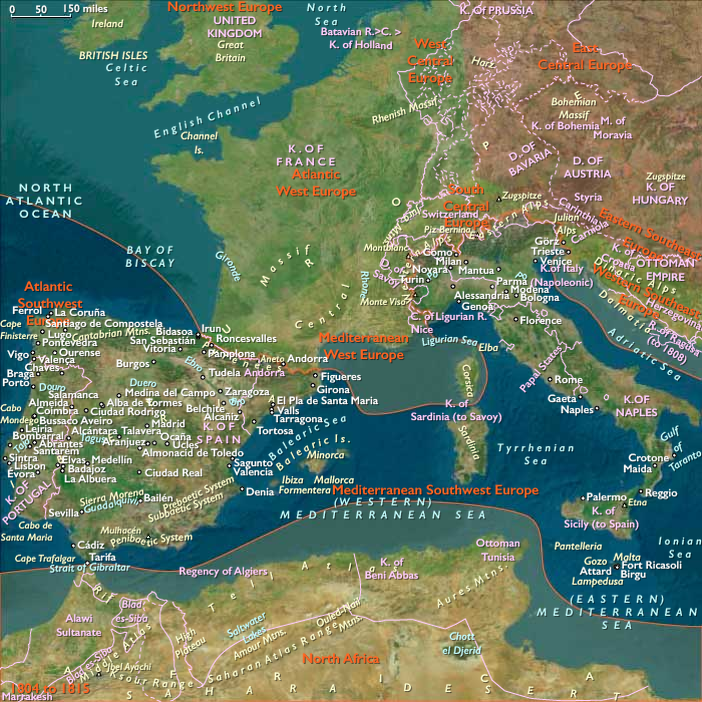
Subregions
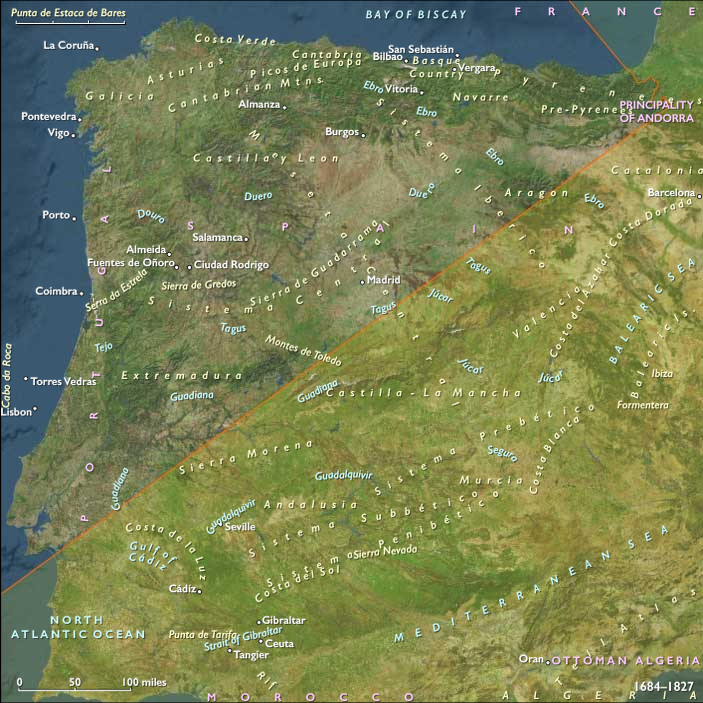
Related Events
Showing 10 events out of 21600 total
Years: 1810 - 1810
September
Locations
People
- André Masséna
- Arthur Wellesley, 1st Duke of Wellington
- Michel Ney
- William Carr Beresford, 1st Viscount Beresford
Groups
- Portugal, Bragança Kingdom of
- Britain (United Kingdom of Great Britain and Ireland)
- France, (first) Empire of
- Spain, Bonapartist Kingdom of
Topics
Commodoties
Subjects
Regions
Subregions