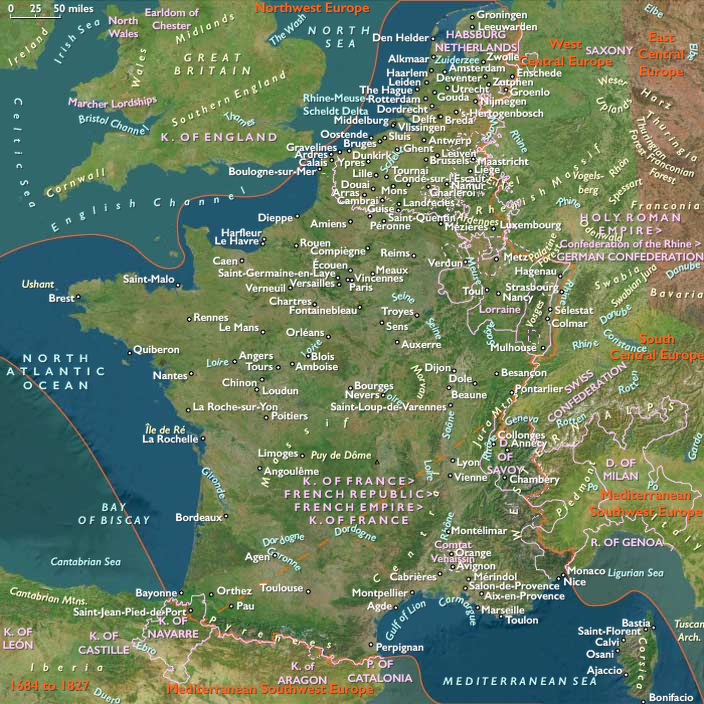
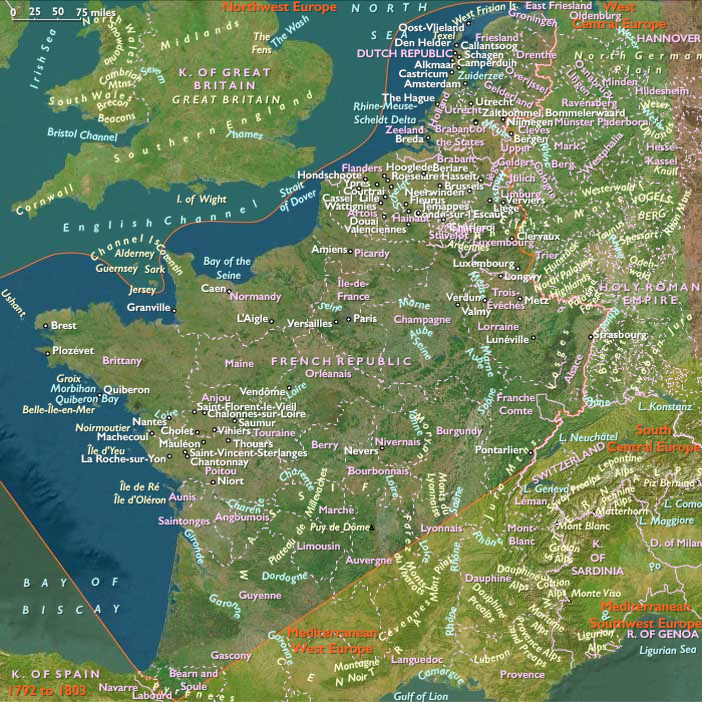
East Central Europe (1804–1815 CE): Napoleonic Wars, Confederation of the Rhine, and the Congress of Vienna
Between 1804 and 1815 CE, East Central Europe—encompassing modern-day Poland, Czechia, Slovakia, Hungary, and territories within eastern Germany and Austria east of 10°E and north of the defined boundary—experienced profound geopolitical upheavals shaped by the dramatic military campaigns of Napoleon Bonaparte, the dismantling and restructuring of the Holy Roman Empire, and the diplomatic settlements culminating in the pivotal Congress of Vienna. This era witnessed dramatic territorial realignments, the rise of national consciousness, intensified military conflicts, and diplomatic negotiations that would shape the region’s political landscape for generations to come.
Political and Military Developments
Dissolution of the Holy Roman Empire (1806)
-
Following decisive defeats by French forces, Austrian Emperor Francis II formally dissolved the millennium-old Holy Roman Empire in 1806, proclaiming himself Francis I of Austria, ruler of the newly established Austrian Empire (1804–1867).
-
This marked a significant historical turning point, ending centuries of imperial continuity and reshaping regional governance.
Confederation of the Rhine (1806–1813)
-
Napoleon established the Confederation of the Rhine, an alliance of German states—including Saxony, Bavaria, and Thuringia—that withdrew allegiance from the Holy Roman Empire and pledged support to France.
-
This French-aligned confederation fundamentally altered political dynamics, enabling considerable administrative, military, and social reforms across member states.
Duchy of Warsaw (1807–1815)
-
Following his victory over Prussia, Napoleon established the Duchy of Warsaw (1807) from Polish lands annexed during previous partitions, restoring limited Polish autonomy under Frederick Augustus I of Saxony.
-
The duchy rekindled Polish national aspirations, significantly boosting Polish nationalism despite remaining largely under French political influence.
Austro-French Wars and Regional Conflict
-
Austria repeatedly opposed Napoleon, notably during the War of the Third Coalition (1805) and the War of the Fifth Coalition (1809), suffering major defeats such as at the Battle of Austerlitz (1805) and Battle of Wagram (1809).
-
These losses forced Austria into disadvantageous treaties, notably the Treaty of Pressburg (1805) and Treaty of Schönbrunn (1809), significantly curtailing Austrian power and territory.
German Campaign and Battle of Leipzig (1813)
-
The pivotal Battle of Leipzig (1813)—the largest European battle before World War I—saw a decisive coalition victory against Napoleon’s forces.
-
Known as the Battle of the Nations, this engagement brought immense devastation but decisively weakened Napoleonic authority across East Central Europe.
Congress of Vienna (1814–1815)
Economic and Technological Developments
Economic Disruption and Reorganization
-
Constant warfare severely disrupted regional economies, especially agricultural production and urban trade networks, necessitating substantial post-war recovery efforts.
-
Subsequent reorganization under post-Vienna settlements fostered renewed economic stability and growth, particularly through infrastructure improvements and new trade regulations.
Cultural and Artistic Developments
Romantic Nationalism and Cultural Awakening
-
The Napoleonic era stimulated significant nationalist sentiment, particularly evident in Polish, Czech, and Hungarian territories, where literature, poetry, and music celebrated national heritage and aspirations.
-
Composers such as Fryderyk Chopin (Polish), writers like Ferenc Kazinczy (Hungarian), and poets such as František Palacký (Czech) emerged as key cultural figures articulating national identity.
Educational Reforms and Enlightenment Influences
-
Napoleon’s administrative reforms introduced significant educational modernization in German states, enhancing literacy, science, and secular scholarship—legacies enduring beyond Napoleonic rule.
Settlement and Urban Development
Urban Devastation and Post-War Reconstruction
-
Cities such as Leipzig, Vienna, and Warsaw experienced substantial wartime damage, prompting extensive reconstruction and urban redevelopment after 1815.
-
Post-war infrastructure projects significantly reshaped urban planning, focusing on military defensibility and economic revitalization.
Social and Religious Developments
Rise of National Consciousness and Social Tensions
-
Wartime upheavals intensified nationalist sentiment among diverse populations, fueling future revolutionary aspirations, especially among Poles, Hungarians, and Czechs.
-
Social tensions heightened between traditional aristocratic elites and increasingly influential middle classes, who demanded greater political participation and national representation.
Long-Term Consequences and Historical Significance
The era 1804–1815 CE proved pivotal in shaping modern East Central Europe, fundamentally altering its geopolitical structure. The dissolution of the Holy Roman Empire, creation of the Confederation of the Rhine and the Duchy of Warsaw, and the landmark Congress of Vienna profoundly redefined political boundaries, territorial sovereignty, and national identities. Rising nationalism, stimulated by Napoleonic reforms and revolutionary ideals, set the stage for significant political and social upheaval throughout the 19th century. These developments established enduring frameworks that shaped the region’s subsequent historical evolution, driving forward nationalist movements, revolutions, and further European integration.