
Mozart's celebrated serenade for orchestra in D …
Years: 1776 - 1776
July
Mozart's celebrated serenade for orchestra in D major, K. 250 (248b), popularly known as the Haffner Serenade, had been commissioned by Mozart's friend and contemporary Sigmund Haffner the Younger to be used in the course of the festivities before the wedding of his sister Marie Elisabeth Haffner and her intended, Franz Xaver Spaeth.
It is first performed in Salzburg on the eve of the wedding, July 21, 1776.
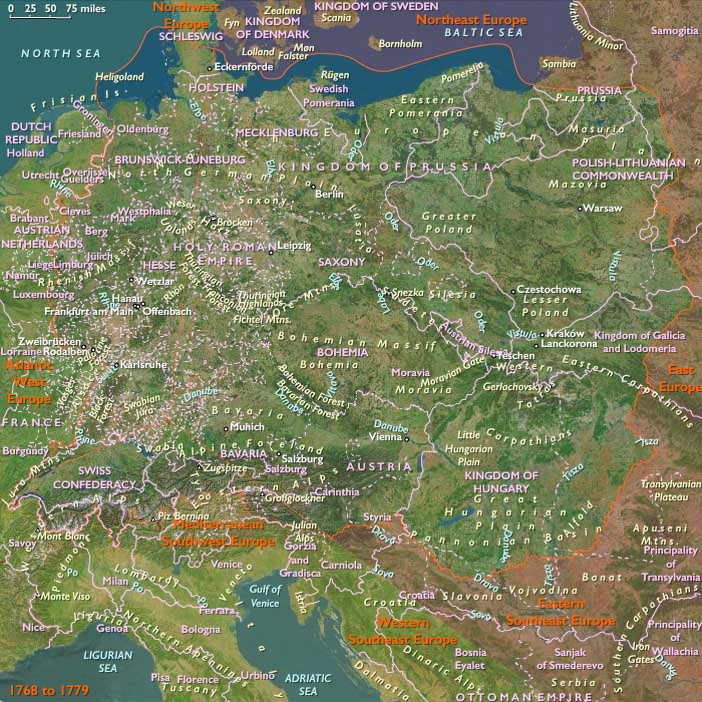
After finally returning with his father from Italy on March 13, 1773, Mozart had found employment as a court musician by the ruler of Salzburg, Prince-Archbishop Hieronymus Colloredo.
The composer has a great number of friends and admirers in Salzburg and has had the opportunity to work in many genres, including symphonies, sonatas, string quartets, masses, serenades, and a few minor operas.
Between April and December 1775, Mozart had developed an enthusiasm for violin concertos, producing a series of five (the only ones he will ever write), which had steadily increased in their musical sophistication.
The last three—K. 216, K. 218, K. 219—are now staples of the repertoire.
In 1776, he had turned his efforts to piano concertos, culminating in the E-flat concerto K. 271 of early 1777, considered by critics to be a breakthrough work.
Despite these artistic successes, Mozart has grown increasingly discontented with Salzburg and had redoubled his efforts to find a position elsewhere.
One reason is his low salary, one hundred and fifty florins a year; Mozart longs to compose operas, and Salzburg provides only rare occasions for these.
The situation had worsened in 1775 when the court theater was closed, especially since the other theater in Salzburg is largely reserved for visiting troupes.
Two long expeditions in search of work had interrupted this long Salzburg stay.
Mozart and his father had visited Vienna from July 14 to September 26, 1773, and Munich from December 6, 1774 to March 1775.
Neither visit had been successful, though the Munich journey resulted in a popular success with the premiere of Mozart's opera La finta giardiniera.
Locations
People
Groups
Topics
Subjects
Regions
Subregions
Years: 1776 - 1776
July
Locations
People
Groups
Topics
Subjects
Regions
Subregions