
Sheikh al-Qurashi dies on July 25, 1878, …
Years: 1878 - 1878
Sheikh al-Qurashi dies on July 25, 1878, and his followers recognize Muhammad Ahmad as their new leader.
Around this time, Muhammad Ahmad first meets Abdallahi bin Muhammad al-Ta'aishi, who is to become his chief deputy and successor in the years to come.
Muhammad Ahmad was born on August 12, 1845, at Port Sudan in present Northern Sudan to a family of descendants of the Prophet Muhammad through the line of his grandson Hassan.
The family had moved to the town of Karari, north of Omdurman, where Muhammad Ahmad's father, Abdullah, could find a supply of timber for his boat-building business.
While his siblings joined his father's trade, Muhammad Ahmad had dsipplayed a proclivity for religious study, studying first under Sheikh al-Amin al-Suwaylih in the Gezira region around Khartoum, and subsequently under Sheikh Muhammad al-Dikayr 'Abdallah Khujali near the town of Berber in North Sudan.
Determined to live a life of asceticism, mysticism and worship, in 1861 he had sought out Sheikh Muhammad Sharif Nur al-Dai'm, the grandson of the founder of the Samaniyya Sufi sect in Sudan, and stayed with him for seven years, during which time Muhammad Ahmad had been recognized for his piety and asceticism.
Near the end of this period, he had been awarded the title of Sheikh himself, and began to travel around the country on religious missions, having permitted to give tariqa (sectarian religious instructions) to new followers.
In 1870, his family had moved again in search for timber, this time to Aba Island on the White Nile south of Khartoum.
On Aba Island, Muhammad Ahmad had built a mosque and started to teach the Qur'an, soon gaining a notable reputation among the local population as an excellent speaker and mystic.
The broad thrust of his teaching had followed that of other reformers, his Islam being one devoted to the words of Muhammad and based on a return to the virtues of strict devotion, prayer, and simplicity as laid down in the Qur'an.
Any deviation from the Qur'an was therefore heresy.
In 1872, Muhammad Ahmad had invited Sheikh Sharif to move to al-Aradayb, an area on the White Nile neighboring Aba Island.
Despite initially amicable relations, in 1878 the two religious leaders have a dispute motivated by Sheikh Sharif's resentment of his former student's growing popularity.
The dispute leads to violence between their followers, and while they temporarily reconcile their differences, the experience reveals to Muhammad Ahmad his mentor's ostensible faults.
At a subsequent celebration in honor of the circumcision of Sheikh Sharif's sons, Muhammad Ahmad expresses his disapproval of the dancing and music, which reignites the latent tension between the two men.
As a result of this second dispute, Sheikh Sharif expels his former student from the Samaniyya order, and despite numerous apologies and emotional appeals, refuses to forgive and readmit him.
After recognizing that the split with Sheikh Sharif is irreconcilable, Muhammad Ahmad approaches the elderly Sheikh al-Qurashi wad al-Zayn, a rival leader of the Samaniyya order, who eagerly accepts him and his followers.
Under his new master, Muhammad Ahmad resumes his life of piety and religious devotion at Aba Island.
During this period, he also travels to the province of Kordofan, west of Khartoum, where he visits with the notables of the capital, el-Obeid, who are enmeshed in a power struggle between two rival claimants to the governorship of the province.
While in Kordofan, he also enhances his reputation by granting baraka (blessings) to the common people who attend his sermons en masse.
Locations
People
Groups
- Islam
- Muslims, Sunni
- Ottoman Empire
- Britain (United Kingdom of Great Britain and Ireland)
- Sudan, Turco-Egyptian
- Egypt, Khedivate of
Subjects
Regions
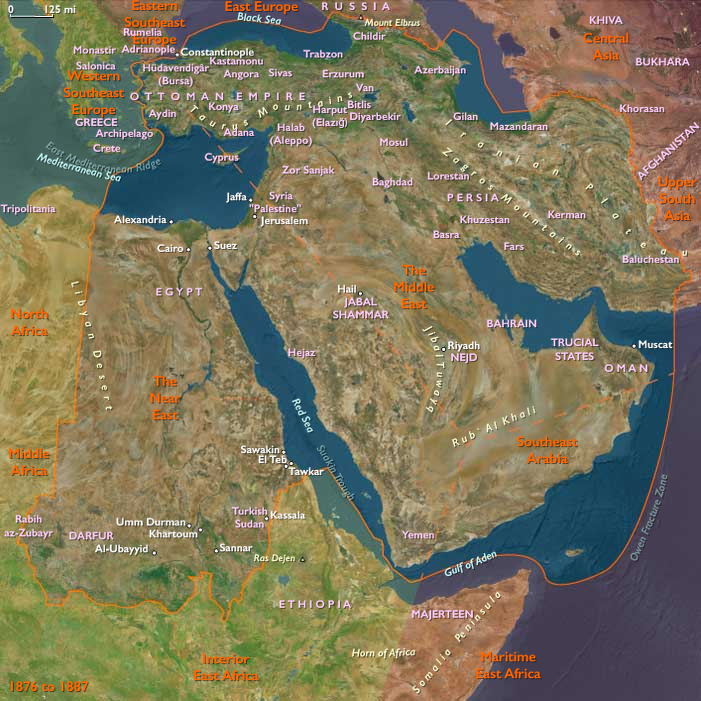
Subregions
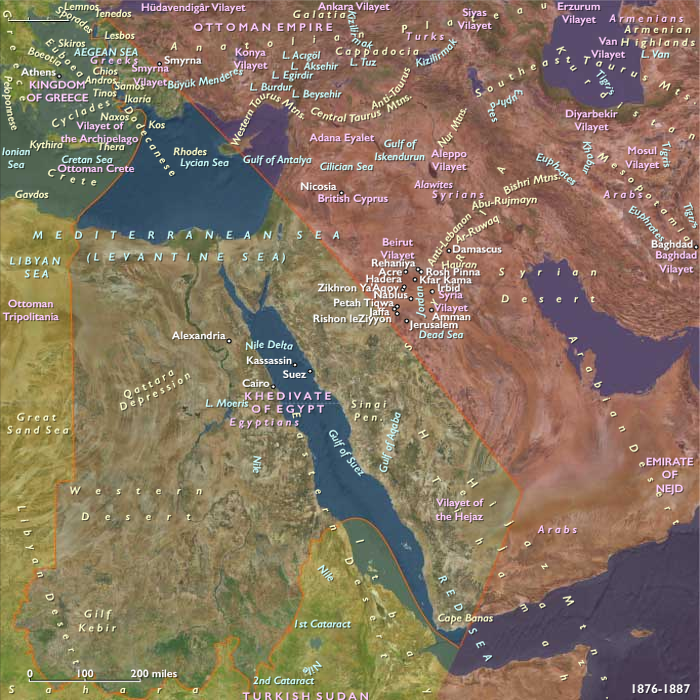
Years: 1878 - 1878
Locations
People
Groups
- Islam
- Muslims, Sunni
- Ottoman Empire
- Britain (United Kingdom of Great Britain and Ireland)
- Sudan, Turco-Egyptian
- Egypt, Khedivate of
Subjects
Regions
Subregions