
Filters:
Muawiyah is considered the architect of the …
Years: 532 - 675
Muawiyah is considered the architect of the Islamic empire and a political genius.
Under his governorship, Syria becomes the most prosperous province of the caliphate.
Muawiyah creates a professional army and, although rigorous in training them, wins the undying loyalty of his troops for his generous and regularly paid salaries.
Heir to Syrian shipyards built for the imperial fleet, he establishes the caliphate's first navy.
He also conceives and establishes an efficient government, including a comptroller of finance and a postal system.
Muawiyah cultivates the goodwill of Christian Syrians by recruiting them for the army at double pay, by appointing Christians to many high offices, and by appointing his son by his Christian wife as his successor.
His sensitivity to human behavior accounts in great part for his political success.
The modern Syrian image of Muawiyah is that of a man with enormous amounts of hilm, a combination of magnanimity, tolerance, and self-discipline, and of duha (political expertise)—qualities Syrians continue to expect of their leaders.
Under his governorship, Syria becomes the most prosperous province of the caliphate.
Muawiyah creates a professional army and, although rigorous in training them, wins the undying loyalty of his troops for his generous and regularly paid salaries.
Heir to Syrian shipyards built for the imperial fleet, he establishes the caliphate's first navy.
He also conceives and establishes an efficient government, including a comptroller of finance and a postal system.
Muawiyah cultivates the goodwill of Christian Syrians by recruiting them for the army at double pay, by appointing Christians to many high offices, and by appointing his son by his Christian wife as his successor.
His sensitivity to human behavior accounts in great part for his political success.
The modern Syrian image of Muawiyah is that of a man with enormous amounts of hilm, a combination of magnanimity, tolerance, and self-discipline, and of duha (political expertise)—qualities Syrians continue to expect of their leaders.
Locations
People
Groups
- Semites
- Aramaeans
- Arab people
- Christians, Miaphysite (Oriental Orthodox)
- Christianity, Chalcedonian
- Ghassan, Kingdom of
- Roman Empire, Eastern: Heraclian dynasty
- Islam
- Muslims, Sunni
- Umayyad Caliphate (Damascus)
Topics
- Byzantine–Sassanid War of 572–591
- Byzantine–Sassanid War of 602–628
- Byzantine-Muslim War of 633-42
- Muslim Conquest of the Levant
Subjects
Regions
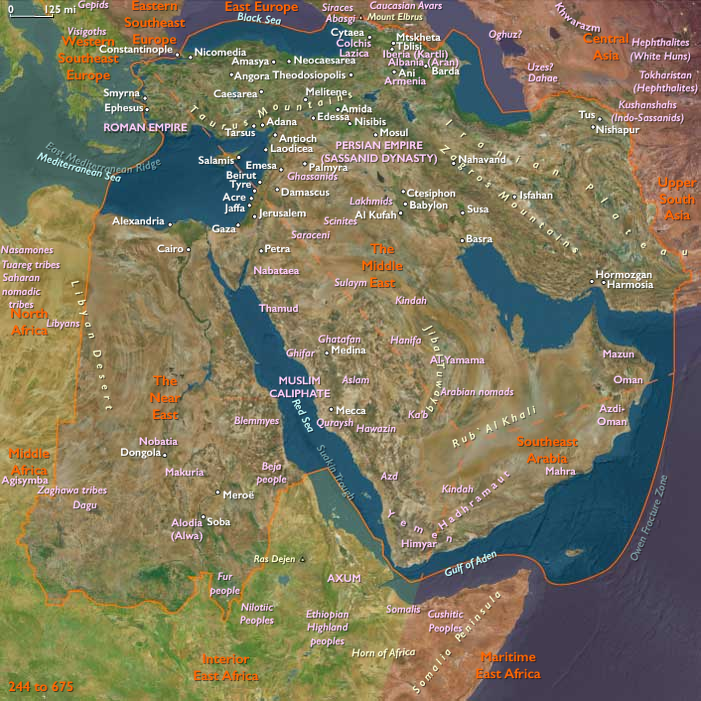
Subregions
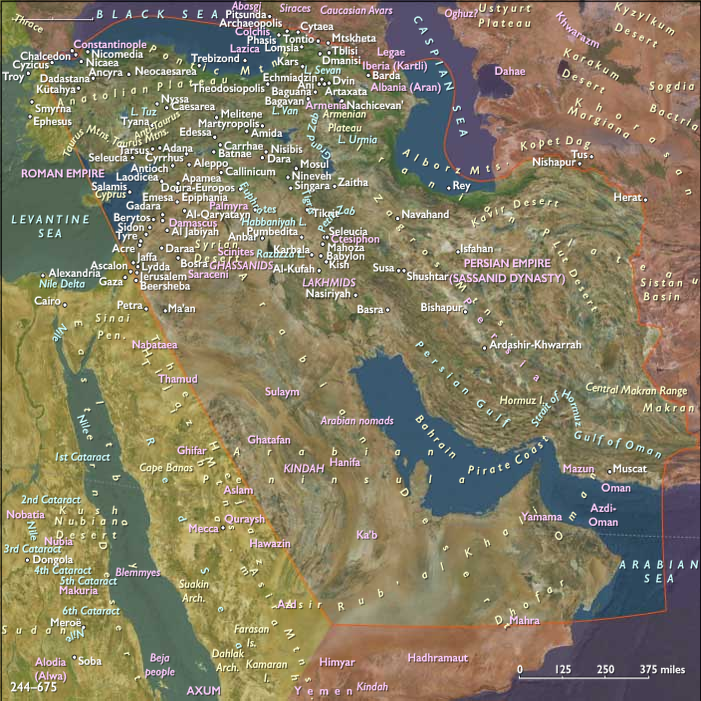
Years: 532 - 675
Locations
People
Groups
- Semites
- Aramaeans
- Arab people
- Christians, Miaphysite (Oriental Orthodox)
- Christianity, Chalcedonian
- Ghassan, Kingdom of
- Roman Empire, Eastern: Heraclian dynasty
- Islam
- Muslims, Sunni
- Umayyad Caliphate (Damascus)
Topics
- Byzantine–Sassanid War of 572–591
- Byzantine–Sassanid War of 602–628
- Byzantine-Muslim War of 633-42
- Muslim Conquest of the Levant
Subjects
Regions
Subregions