
Near Alaca Höyük is the site of …
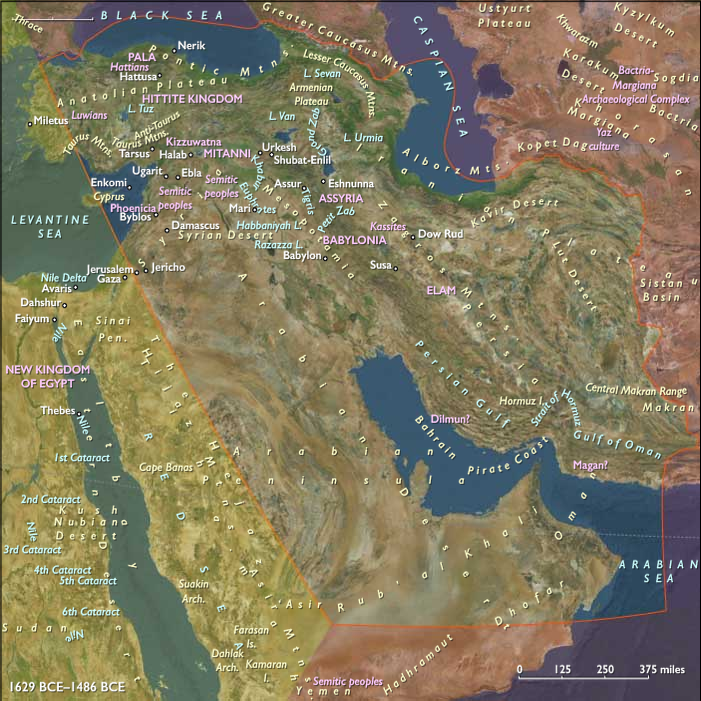
Years: 1629BCE - 1486BCE
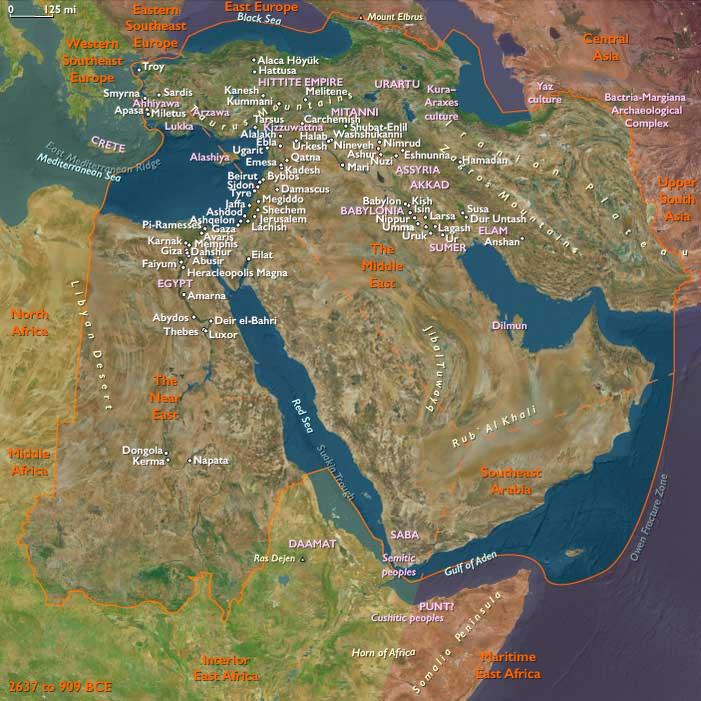
Near Alaca Höyük is the site of present Boğazkale, a village in north central Turkey about one hundred and twenty-five miles (two hundred kilometers) east of Ankara, first inhabited in the late third millennium BCE.
Boğazkale is best known as the site of the ancient Hittite city of Hattusa, within the great loop of the Kizil River, and the rock shrine at Yazilikaya.
A settlement of the apparently indigenous Hatti people had been established before 2000 BCE on sites that had been occupied even earlier.
The earliest traces of settlement on the site are from the sixth millennium BCE.
Merchants from Assur in Assyria established a trading post here in the nineteenth and eighteenth centuries BCE, setting up in their own separate quarter of the city.
The center of their trade network was located in Kanesh (Neša) (modern Kültepe).
Business dealings require record-keeping: the trade network from Assur introduced writing to Hattusa, in the form of cuneiform.
A carbonized layer apparent in excavations attests to the burning and ruin of the city of Hattusa around 1700 BCE.
The responsible party appears to have been King Anitta from Kussara (a city possibly to be identified with Alişar), who took credit for the act and erected an inscribed curse for good measure.
A Hittite-speaking king chooses the site as his residence and capital only a generation later.
The Hittite language had been gaining speakers at Hattic's expense for some time.
The Hattic "Hattus" now becomes Hittite "Hattusa,” and the king takes the name of Hattusili I, the "one from Hattusa.” Hattusili marks the beginning of a non-Hattic-speaking "Hittite" state, and of a royal line of Hittite Great Kings—of whom twenty-seven are now known by name.
Locations
People
Groups
Topics
Commodoties
Subjects
- Origins
- Commerce
- Language
- Symbols
- Environment
- Labor and Service
- Conflict
- Faith
- Government
- Technology
- Archaeology
- Linguistics
Regions
Subregions
Years: 1629BCE - 1486BCE
Locations
People
Groups
Topics
Commodoties
Subjects
- Origins
- Commerce
- Language
- Symbols
- Environment
- Labor and Service
- Conflict
- Faith
- Government
- Technology
- Archaeology
- Linguistics
Regions
Subregions