
Near East (177–166 BCE): The Sixth Syrian …
Years: 177BCE - 166BCE
Near East (177–166 BCE): The Sixth Syrian War and Roman Intervention
The era from 177 to 166 BCE in the Near East is dominated by the tumultuous events of the Sixth Syrian War, a significant conflict between the Seleucid Empire and Ptolemaic Egypt. The war's origins are obscure but are initiated by the Egyptian regents Eulaeus and Lenaeus in 170 BCE, during the reign of the young king Ptolemy VI Philometor. To fortify Egypt's unity, the king's younger siblings, Ptolemy VIII Physcon and Cleopatra II, are declared co-rulers.
Military operations commence in 169 BCE. The Seleucid king Antiochus IV Epiphanes swiftly gains the advantage, capturing the strategic city of Pelusium and effectively controlling Egypt. Egyptian leaders quickly realize their miscalculation, depose Eulaeus and Lenaeus, and appoint new regents Comanus and Cineas to negotiate peace. Antiochus IV takes Ptolemy VI, his nephew, under his guardianship, effectively asserting dominance over Egypt. This arrangement proves unacceptable to the people of Alexandria, who instead proclaim Ptolemy Physcon sole king.
Antiochus retaliates by laying siege to Alexandria but withdraws at the end of 169 BCE, failing to isolate the city. During Antiochus's absence, reconciliation occurs between the Ptolemaic siblings, frustrating Antiochus, who launches another invasion. The Egyptians appeal to Rome for assistance, prompting the Roman Senate to dispatch envoy Gaius Popilius Laenas.
In a dramatic encounter at Eleusis near Alexandria, Antiochus is confronted by Popilius Laenas in 168 BCE. The Roman envoy delivers a stern ultimatum demanding immediate withdrawal from Egypt and Cyprus. Antiochus hesitates, prompting Popilius to famously draw a circle around him, insisting on an immediate decision before stepping out. Antiochus submits to Rome’s demands, marking the "Day of Eleusis," effectively ending the Sixth Syrian War and Antiochus's ambitions in Egypt.
Legacy of the Era
This era underscores the decisive role Rome begins to play in Near Eastern affairs, curbing Seleucid expansion and reinforcing Roman diplomatic dominance. The resolution of the Sixth Syrian War through Roman intervention signifies a pivotal shift toward Rome’s growing hegemony in the eastern Mediterranean, setting a precedent for future political dynamics in the region.
People
- Antiochus IV Epiphanes
- Cleopatra II
- Gaius Popillius Laenas
- Ptolemy VI Philometor
- Ptolemy VIII Physcon
Groups
Topics
Subjects
Regions
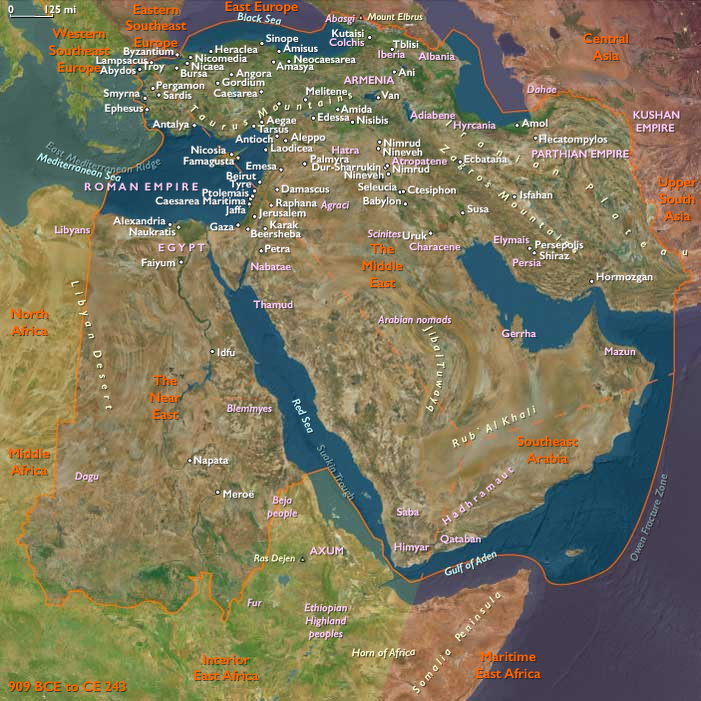
Subregions
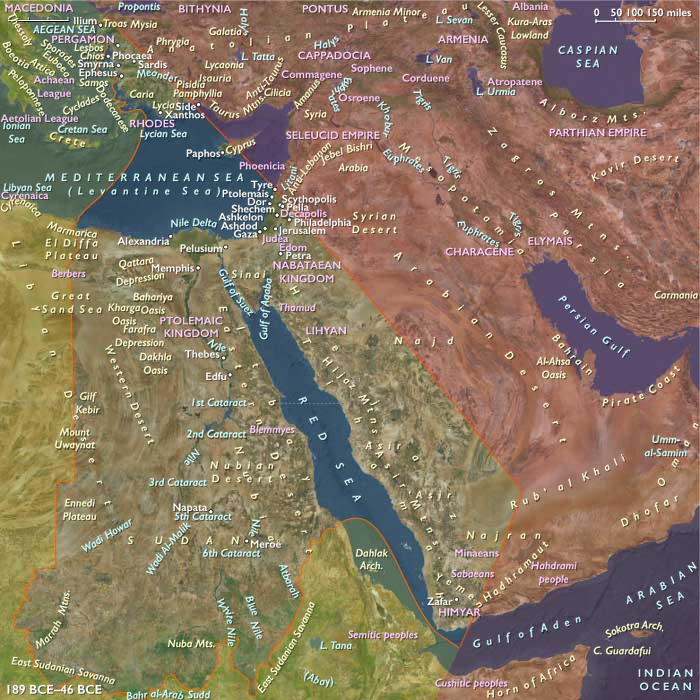
Related Events
Showing 2 events out of 2 total
Years: 177BCE - 166BCE
People
- Antiochus IV Epiphanes
- Cleopatra II
- Gaius Popillius Laenas
- Ptolemy VI Philometor
- Ptolemy VIII Physcon
Groups
Topics
Subjects
Regions
Subregions