
Near East (381–370 BCE): Carian Autonomy and …
Years: 381BCE - 370BCE
Near East (381–370 BCE): Carian Autonomy and the Samaritan Temple
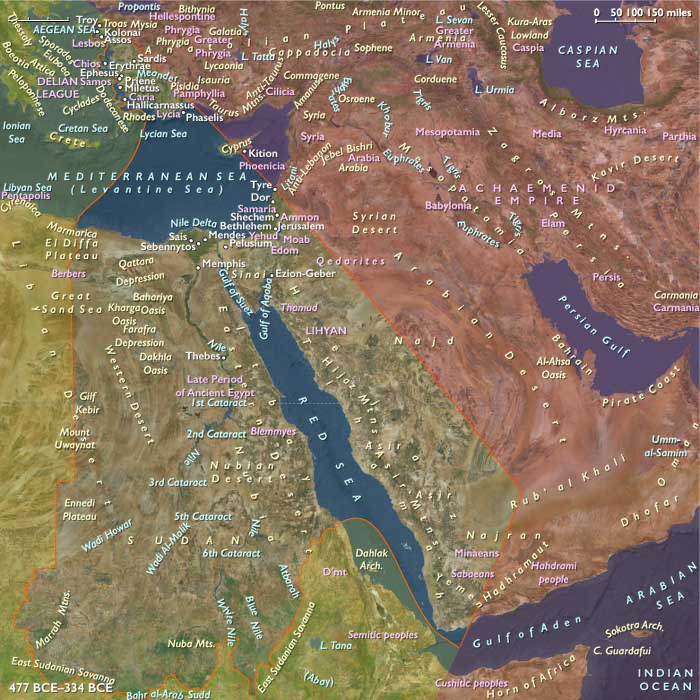
Between 381 and 370 BCE, important regional developments highlight ongoing shifts in power and identity within the Near East. Hecatomnus, appointed satrap of the newly formed Persian satrapy of Caria, asserts a relatively independent authority under Persian oversight until his death in 377 BCE. His rule marks a notable period of regional autonomy, reflected by inscriptions dedicated in Greek script at various local sanctuaries.
His successor, Mausolus, notably transfers the Carian capital from inland Mylasa to the coastal city of Halicarnassus, resulting in significant urban and cultural transformation. Halicarnassus is dramatically expanded and beautified through monumental architecture, a robust defensive wall, and a secret dockyard connected by canal. The city's population swells with the integration of local Carians, reflecting Mausolus's efforts to consolidate Carian power and identity amid Persian hegemony.
Simultaneously, in the province of Samaria, regional autonomy is reinforced as the local Samaritans, their overtures rejected by the returned Judahites, establish their own distinct religious identity. They construct a temple at Shechem, near the base of Mount Gerizim, asserting their religious independence from Jerusalem and shaping the lasting cultural and religious landscape of the region.
People
Groups
- Carians
- Cyprus, Classical
- Sparta, Kingdom of
- Samaritans
- Egypt (Ancient), Late Period of
- Achaemenid, or First Persian, Empire
Topics
Subjects
Regions
Subregions
Years: 381BCE - 370BCE
People
Groups
- Carians
- Cyprus, Classical
- Sparta, Kingdom of
- Samaritans
- Egypt (Ancient), Late Period of
- Achaemenid, or First Persian, Empire
Topics
Subjects
Regions
Subregions