
Northwestern North America (49,293 – 28,578 BCE) …
Years: 49293BCE - 28578BCE
Northwestern North America (49,293 – 28,578 BCE) Upper Paleolithic I — Beringian Grasslands, Ice-Edge Shores, and First Entrants
Geographic and Environmental Context
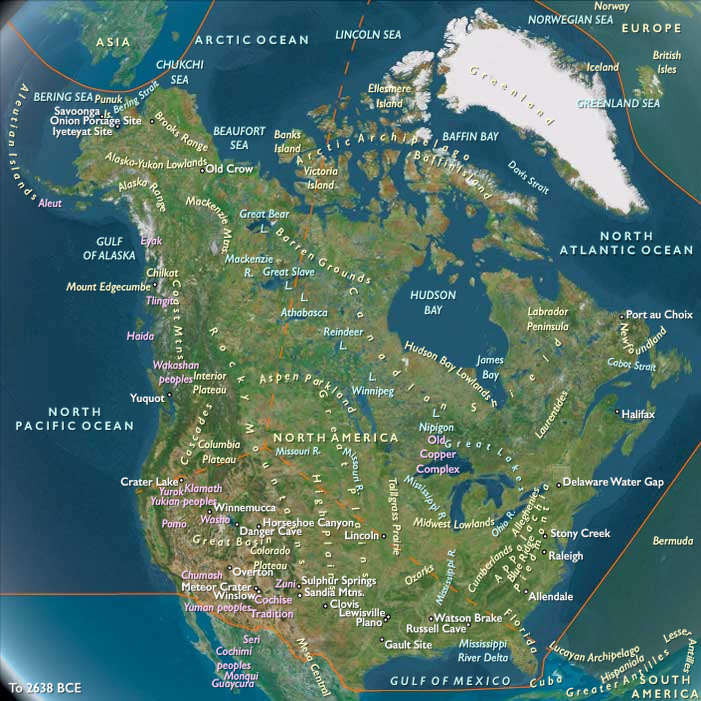
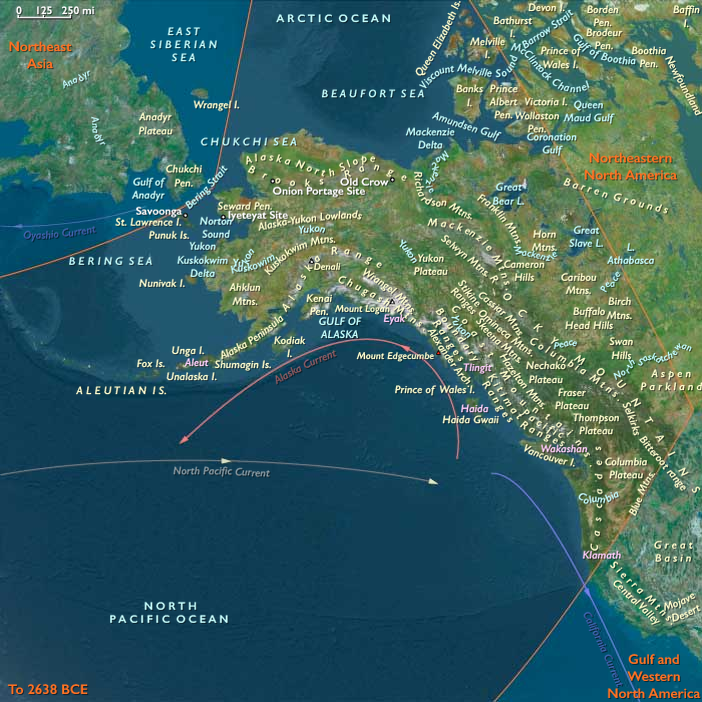
Northwestern North America includes Alaska, western Canada (Alberta, British Columbia, Yukon and Northwest territory and Nunavut west of 110°W) Alaska, Washington State, northern Idaho, and the northwestern portions of Montana, Oregon, and California.
Anchors: the Bering Strait & Seward Peninsula, Brooks Range & North Slope, Yukon–Kuskokwim and Copper–Cook Inlet basins, the Gulf of Alaska & Aleutians, the Inside Passage/Haida Gwaii and outer coast of British Columbia, the Stikine–Skeena–Fraser–Columbia plateaus and canyons, Puget Sound, and the Klamath–Redwood coast of NW California.
-
Exposed Beringia knitted Siberia to Alaska under low sea levels; broad coastal shelves flanked the Gulf of Alaska.
-
Inland, open steppe–tundra spread south of continental ice; river corridors (early Yukon, Kuskokwim) laced the landscape.
Climate & Environmental Shifts
-
Peak Last Glacial conditions: cold, dry, windy; sea ice season long on the northern shelf; polynyas sustained rich marine life along the Bering and Chukchi margins.
Subsistence & Settlement
-
Big-game foraging focused on mammoth, bison, horse, and caribou on river terraces and upland saddles.
-
Ice-edge foraging used landfast ice for seal and sea-bird harvests where accessible.
-
Small, mobile camps recur at bluff edges and confluences; hearths, knapping floors, and butchery areas typical.
Technology & Material Culture
-
Blade–microblade traditions from high-quality chert and obsidian; inset composite points, scrapers, burins.
-
Bone/antler points and awls; sewn skin garments (needles) for deep cold.
Movement & Interaction Corridors
-
Seward Peninsula ⇄ Interior Yukon ridgeways; Kuskokwim–Copper cross-drainages; coastal “kelp highway” reconnaissance along the Gulf of Alaska during ice-free months.
Cultural & Symbolic Expressions
-
Ochre-stained features; portable ornaments (drilled teeth, shell) reflect Upper Paleolithic symbolic commonalities across the north.
Environmental Adaptation & Resilience
-
High mobility and broad prey portfolios buffered risk; cold-weather tailoring and snow shelters extended wintering range.
Transition
On the eve of deglaciation, foragers had mapped river and shelf ecologies that would guide later migrations as ice sheets retreated.
Topics
Commodoties
Subjects
Regions
Subregions
Related Events
Showing 10 events out of 69706 total
Years: 49293BCE - 28578BCE
Topics
Commodoties
Subjects
Regions
Subregions