
Peter I (the Great) (r. 1682-1725), in …
Years: 1684 - 1827
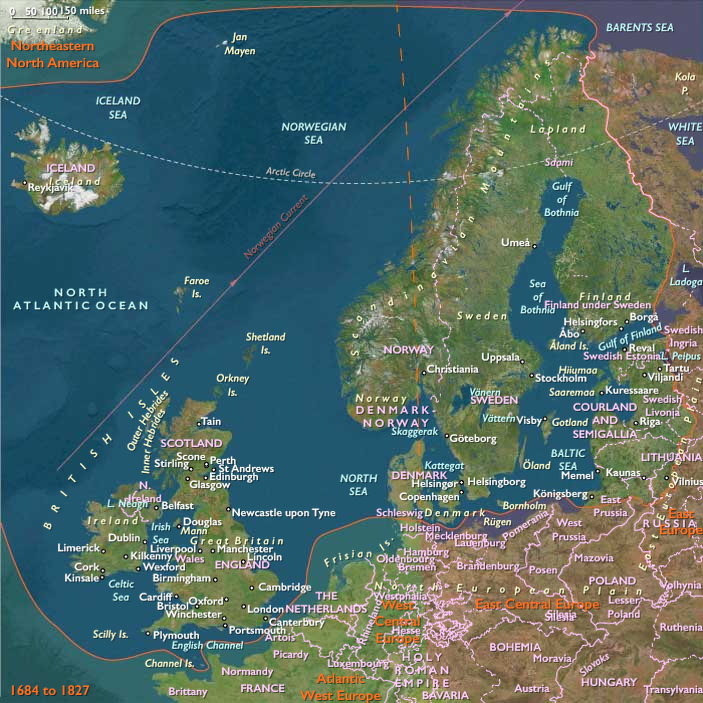
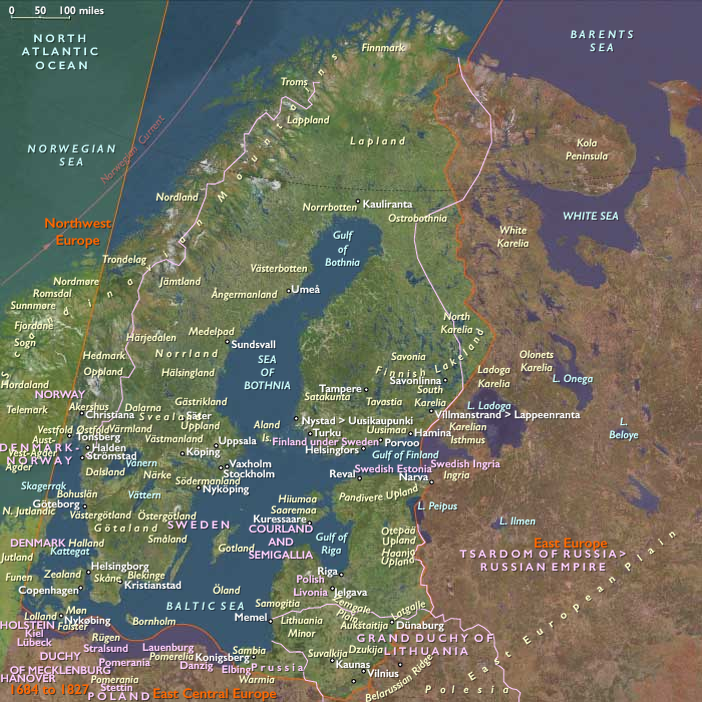
Peter I (the Great) (r. 1682-1725), in his first attempt to conquer Estland and Livland, during the Great Northern War (1700-09), meets with defeat at Narva at the hands of Sweden's Charles XII (r. 1697-1718).
A second campaign in 1708 sees Peter introduce a scorched-earth policy across many parts of the area.
The outcome is victory for Russia in 1710 and acquisition of a "window to the West."
In taking control of Estland and Livland for what will be the next two hundred years, tsarist Russia recognizes the rights and privileges of the local German nobility, whose members amount to only a small fraction of the population.
Although the extent of the nobles' autonomy in the two areas is always contested, especially under Catherine II (the Great) (r. 1762-96), the Baltic Germans do develop a strong loyalty to the Russian tsars as guarantors of their landed privileges.
German control over the Estonian peasantry reaches its high point during the eighteenth century.
Labor overtook taxes-in-kind as the predominant means of controlling the serfs.
The first real reforms of serfdom, which give peasants some rights, takes place in 1804.
In 1816 and 1819, the serfs are formally emancipated in Estland and Livland, respectively.
Locations
People
Groups
- Latvians, or Letts (Eastern Balts)
- Estonians
- Germans
- Livs
- Swedes (Scandinavians)
- Estonian Swedes
- Russia, Tsardom of
- Estonia, Duchy of (Swedish Estonia)
- Livonia, Duchy of (Polish Estonia and Latvia)
Topics
Subjects
Regions
Subregions
Years: 1684 - 1827
Locations
People
Groups
- Latvians, or Letts (Eastern Balts)
- Estonians
- Germans
- Livs
- Swedes (Scandinavians)
- Estonian Swedes
- Russia, Tsardom of
- Estonia, Duchy of (Swedish Estonia)
- Livonia, Duchy of (Polish Estonia and Latvia)
Topics
Subjects
Regions
Subregions