
Upper South Asia (676–819 CE): Rise of …
Years: 676 - 819
Upper South Asia (676–819 CE): Rise of Regional States and Cultural Flourishing
Political Landscape and Regional Dynasties
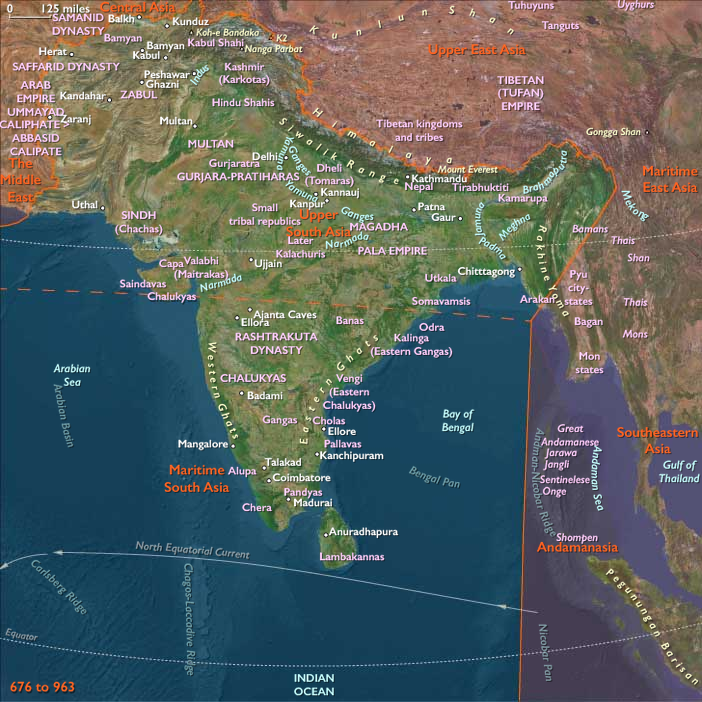
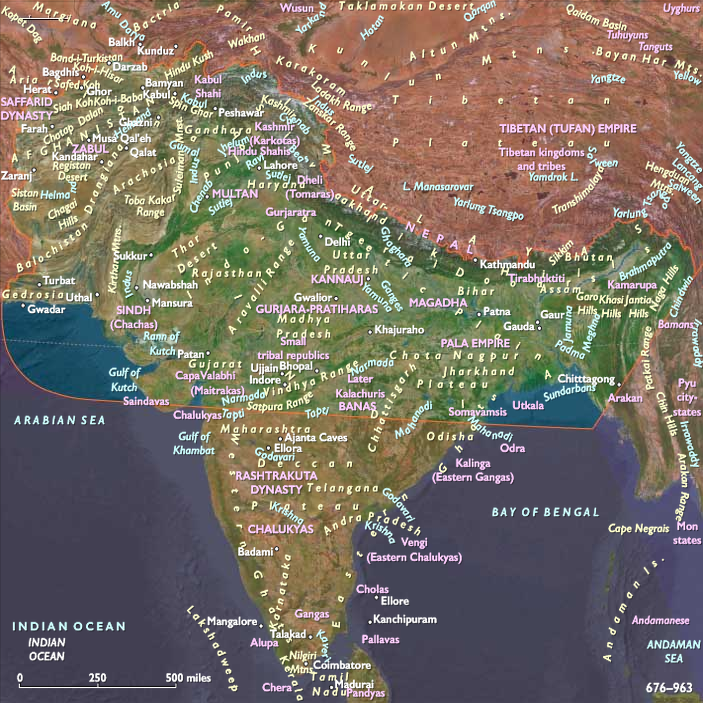
From 676 to 819 CE, Upper South Asia witnessed the further consolidation and expansion of regional dynasties following the fragmentation of Harsha's empire. Prominent among these emerging powers were the Gurjara-Pratiharas in western and northwestern India, centered around Rajasthan and extending influence into Gujarat, Punjab, and parts of central India. Concurrently, the Palas rose to prominence in eastern regions, especially in Bihar, West Bengal, and adjacent territories, providing stability after a prolonged period of fragmentation.
Pala Dynasty and Buddhist Revival
The Pala dynasty (founded c. 750 CE by Gopala) became a major political and cultural force in eastern Northern South Asia. The Palas were patrons of Buddhism and revitalized major Buddhist educational centers such as Nalanda University and established the renowned Vikramashila University in Bihar. These institutions attracted scholars from across Asia, reinforcing the region's international reputation as a hub of learning.
Gurjara-Pratihara Dominance
In the western and northwestern territories, the Gurjara-Pratiharas, under rulers like Nagabhata I (730–760 CE), asserted dominance, particularly against Arab incursions from Sindh. Their political authority bolstered trade and agricultural productivity, supporting urban centers like Kannauj and Ujjain, which flourished economically and culturally.
Kashmir: Cultural and Intellectual Hub
During this era, Kashmir emerged prominently as a cultural and intellectual hub under the Karkota dynasty (625–885 CE). The kingdom of Kashmir reached new heights under rulers such as Lalitaditya Muktapida (724–760 CE), who significantly expanded its territories into parts of present-day Punjab, Himachal Pradesh, and even northwestern regions toward Afghanistan and Central Asia. Kashmir became renowned for its vibrant scholarly environment, fostering advancements in literature, philosophy, and architecture.
Tibetan Influence and Himalayan Kingdoms
The period saw significant interactions between the Himalayan territories and the expanding Tibetan Empire. Tibetan incursions into the Himalayan states such as Nepal, Sikkim, Bhutan, and Ladakh led to complex cultural exchanges and occasional political conflicts, influencing local art, religion, and governance structures. Nevertheless, these Himalayan regions maintained their distinct cultural identities, preserving a unique blend of indigenous and external traditions.
Economic Growth and Trade Networks
Trade routes linking Northern South Asia with Central Asia, China, and Southeast Asia continued to thrive. Cities like Kannauj, Mathura, and Pataliputra remained economically prosperous, benefiting from robust internal trade and international commerce. The consistent flow of goods, ideas, and technology significantly enriched regional cultures.
Cultural and Religious Developments
Hinduism continued its vigorous development alongside Buddhism, evidenced by the extensive construction of temples and pilgrimage sites across the region, notably in Rajasthan, Madhya Pradesh, and Uttar Pradesh. The rise of devotional traditions (Bhakti) became prominent, emphasizing personal devotion over ritualistic practices.
Influence of Islam and Arab Expansion
This age marked the initial phases of Arab expansion into Sindh with the conquest led by Muhammad bin Qasim (711–715 CE). Although limited initially to the western periphery, the introduction of Islam laid the groundwork for significant religious and cultural exchanges in later centuries.
Literary and Scholarly Contributions
Sanskrit literature flourished, with notable advancements in poetry, philosophy, and scientific studies. Kashmir emerged as a center for scholarship and literary production, particularly under the Karkota dynasty, producing significant works on philosophy, astronomy, and grammar.
Legacy of the Age
The era from 676 to 819 CE solidified the foundation for enduring regional identities and cultural developments in Upper South Asia. It was characterized by political resilience, economic prosperity, vibrant religious traditions, and scholarly achievements that significantly shaped the subsequent historical trajectory of the region.
People
Groups
- Tajik people
- Kirat people
- Iranian peoples
- Hinduism
- Arab people
- Bengalis
- Pashtun people (Pushtuns, Pakhtuns, or Pathans)
- Jainism
- Buddhism
- Buddhism, Tibetan
- Khas peoples
- Indian people
- Buddhism, Mahayana
- Tokharistan (Kushan Bactria)
- Gandhāra
- Gupta Empire
- Bon
- Nepal, Licchavi Kingdom of
- Islam
- Tibetan Empire
- Karkota dynasty
- Gurjara-Pratihara
- Umayyad Caliphate (Damascus)
- Palas of Bengal, Empire of the
- Rashtrakuta Dynasty
Topics
Commodoties
Subjects
- Commerce
- Writing
- Architecture
- Sculpture
- Conflict
- Faith
- Government
- Custom and Law
- Medicine
- Mathematics
- Astronomy
- Philosophy and logic
Regions
Subregions
Related Events
Showing 6 events out of 6 total
Years: 676 - 819
People
Groups
- Tajik people
- Kirat people
- Iranian peoples
- Hinduism
- Arab people
- Bengalis
- Pashtun people (Pushtuns, Pakhtuns, or Pathans)
- Jainism
- Buddhism
- Buddhism, Tibetan
- Khas peoples
- Indian people
- Buddhism, Mahayana
- Tokharistan (Kushan Bactria)
- Gandhāra
- Gupta Empire
- Bon
- Nepal, Licchavi Kingdom of
- Islam
- Tibetan Empire
- Karkota dynasty
- Gurjara-Pratihara
- Umayyad Caliphate (Damascus)
- Palas of Bengal, Empire of the
- Rashtrakuta Dynasty
Topics
Commodoties
Subjects
- Commerce
- Writing
- Architecture
- Sculpture
- Conflict
- Faith
- Government
- Custom and Law
- Medicine
- Mathematics
- Astronomy
- Philosophy and logic
Regions
Subregions