
The earliest evidence for human presence in …
Years: 28577BCE - 7822BCE
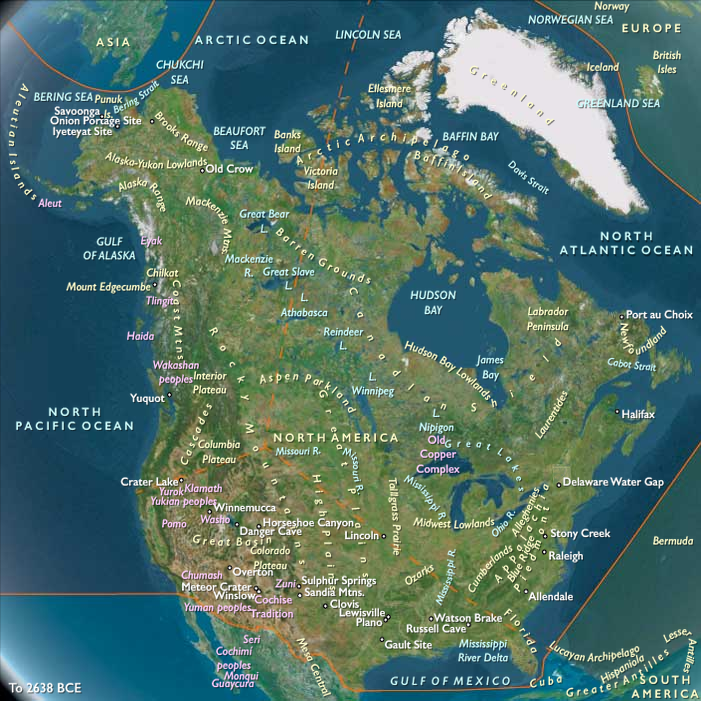
The earliest evidence for human presence in North America emerges during this period, though the timing and routes of initial migration remain subjects of intense scientific debate. Human footprints preserved in ancient lake sediments at White Sands, New Mexico, provide the strongest evidence for human activity around 21,000-23,000 years ago, placing people in North America during the height of the Last Glacial Maximum.
These early inhabitants likely arrived via two possible routes: coastal migration along the Pacific Northwest using watercraft to navigate ice-free shorelines, or overland passage through Beringia—the vast land bridge connecting Siberia to Alaska when sea levels dropped due to massive continental ice sheets. Archaeological evidence of coastal occupation from this period would now lie submerged beneath 100 meters of post-glacial sea level rise.
During the Last Glacial Maximum (26,500-19,000 years ago), much of northern North America remained locked under ice sheets, but Beringia provided a viable refuge where humans could have lived alongside now-extinct megafauna including woolly mammoths, horses, and giant ground sloths. Some controversial sites suggest even earlier human presence—potentially 26,000-30,000 years ago—though these claims await broader scientific acceptance.
As the climate gradually warmed after 19,000 years ago, retreating ice sheets began opening new migration corridors and habitable territories. Small, highly mobile bands of hunter-gatherers adapted to diverse environments from tundra grasslands to emerging forests, setting the stage for the more widespread continental occupation that would follow.
Topics
Commodoties
Subjects
Regions
Subregions

Years: 28577BCE - 7822BCE
Topics
Commodoties
Subjects
Regions
Subregions