
The Akahoya eruption, one of the largest …
Years: 4509BCE - 4366BCE
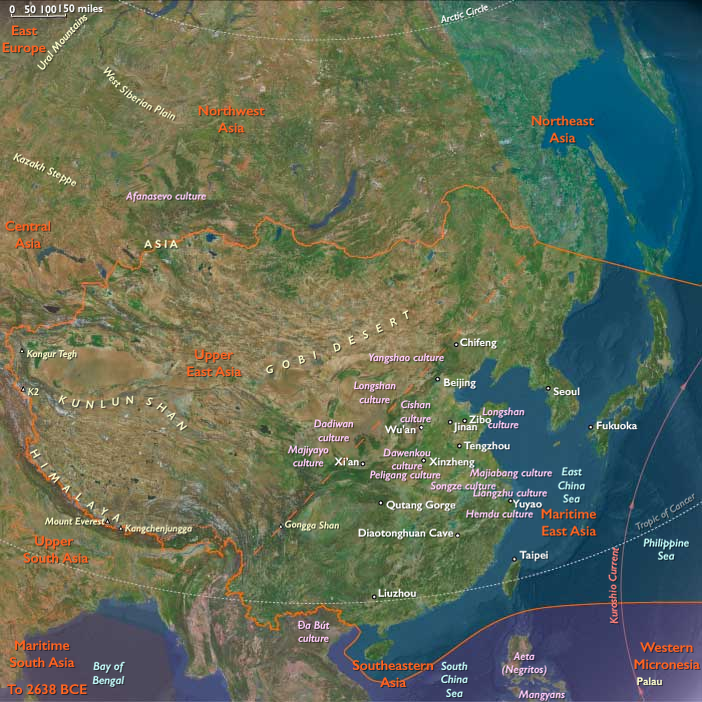
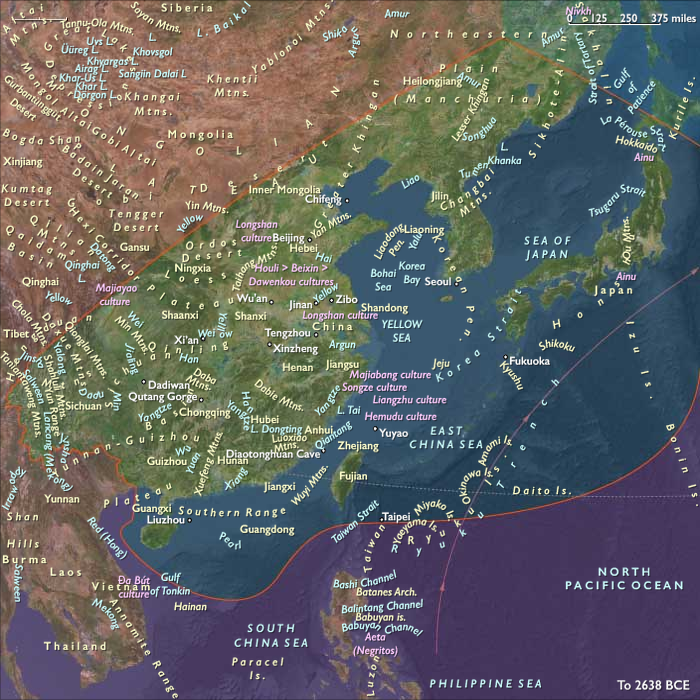
The Akahoya eruption, one of the largest eruptions during the Holocene, ocurring around 4350 BCE, ejects about one hundred and fifty cubic kilometers (thirty-six cubic miles) of tephra, giving it a 7 on the Volcanic Explosivity Index.
One of only six known eruptions reaching that magnitude during the Holocene, or the last twelve thousand years, it forms the massive, mostly submerged Kikai Caldera, up to nineteen kilometers (twelve miles) in diameter in the Osumi Islands of Kagoshima prefecture, Japan.
Pyroclastic flows from that eruption reach the coast of southern Kyushu up to one hundred kilometers (sixty-two miles) away, and ash falls as far as Hokkaido.
It dramatically changes vegetation in Southern Kyūshū.
Archaeologically it has been dated around 7,300 cal. BP during the Earliest Jōmon period, but it has also been radiocarbon dated to 6,500 BP.
Locations
Topics
- Japan, Initial Jomon period
- Aurolithic Epoch, or “Gold” Ages
- Older Peron Transgression during the Neolithic Subpluvial
Subjects
Regions
Subregions
Years: 4509BCE - 4366BCE
Locations
Topics
- Japan, Initial Jomon period
- Aurolithic Epoch, or “Gold” Ages
- Older Peron Transgression during the Neolithic Subpluvial
Subjects
Regions
Subregions