Ostorius, after putting down the Iceni rebellion, …
Years: 48 - 48
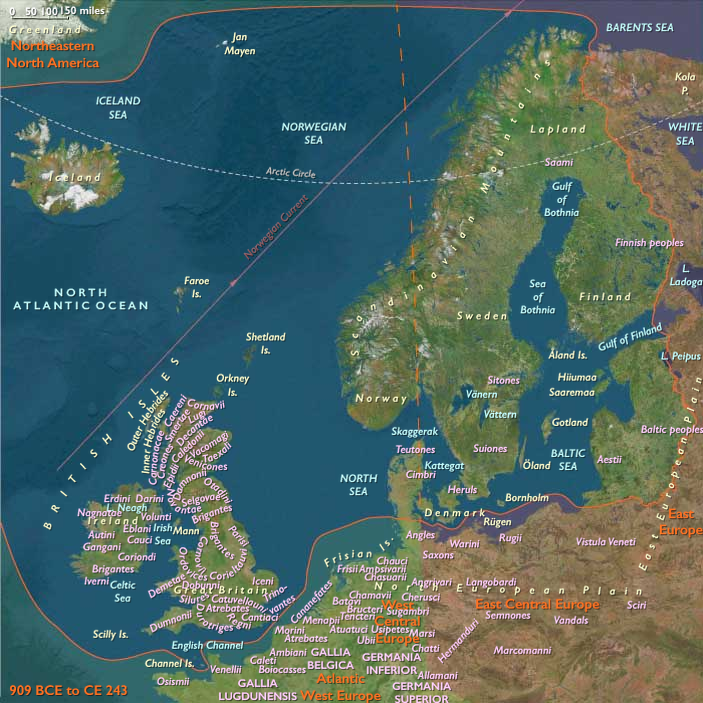
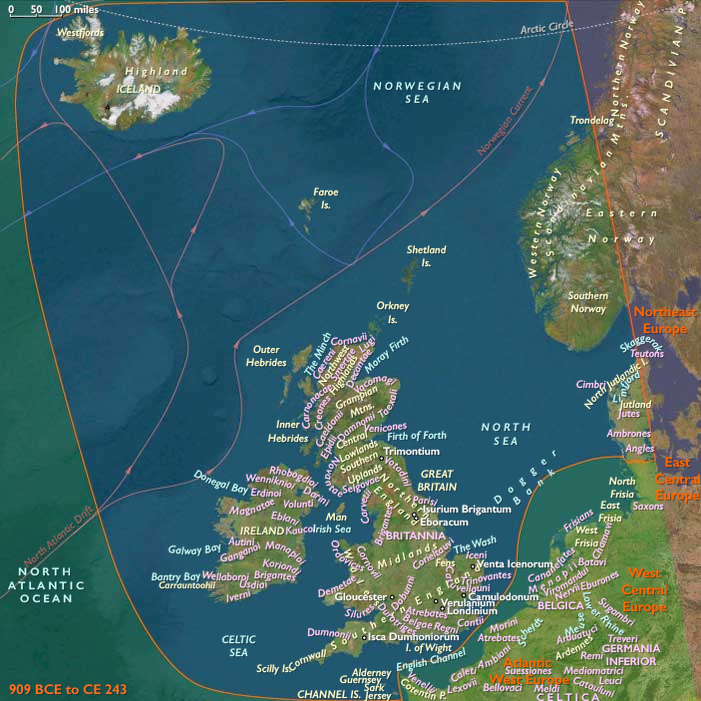
Ostorius, after putting down the Iceni rebellion, launches expeditions beyond the frontier, beginning in 48 with a productive campaign against the Deceangli tribe in north Wales and the Cheshire Gap.
This is an astute move as it divides the tribes of North Britain from those in Wales.
Locations
People
Groups
Topics
- Classical antiquity
- Pre-Roman Iron Age of Northern Europe
- Roman Age Optimum
- Pax Romana
- Roman Conquest of Britain
Commodoties
Subjects
Regions
Subregions
Related Events
Filter results
Showing 4 events out of 4 total
Eastern Southeast Europe (1684–1827 CE): Danubian Grains, Ottoman Reforms, and the Long Road to Revolt
Geography & Environmental Context
Eastern Southeast Europe comprises Turkey-in-Europe (including Istanbul/Constantinople and Thrace), Thrace-in-Greece, all of Bulgaria (except the southwest), northeastern Serbia, northeastern Croatia, extreme northeastern Bosnia and Herzegovina, and the entirety of modern-day Moldova and Romania. Anchors include the Danube (from the Iron Gates to the Delta), the Sava and Drava confluences, the Wallachian and Bărăgan plains, the Dobrudja steppe and lagoons, the Balkan Mountains (Stara Planina) and Rhodope foothills, and the Black Sea ports (Varna, Constanța/Kustendje, Galați, Brăila), with Istanbul and the Bosporus as the prime maritime choke point.
Climate & Environmental Shifts
In the tail of the Little Ice Age, hard winters and erratic summers (notably 1708–1709 and 1816–1817) brought frost, flood, and dearth. The Danube’s seasonal floods rebuilt levees yet periodically drowned fields; the Delta’s wetlands teemed with fish but harbored malaria. Maize (American) diffused widely, buffering grain shortfalls; vineyards in Bulgaria and hills of Moldavia/Wallachia recovered after cold snaps, while steppe droughts in Dobrudja pressed herders southward.
Subsistence & Settlement
-
Plains & Lowlands (Wallachia, Bărăgan, Lower Danube, Banat margins): Export-oriented wheat, maize, and livestock; transhumant flocks moved between Danube grasslands and Balkan uplands.
-
Bulgarian basins & Thrace: Mixed grain, vineyards, orchards; craft towns (Plovdiv/Filibe, Sofia, Ruse) tied guilds (esnaf) to regional trade.
-
Moldavia & Bessarabia (after 1812): Grains, cattle, and timber funneled to Galați and Brăila; boyar estates expanded sown acreage.
-
Istanbul & the Straits: An immense provisioning market drew cereals and meat from the Danube corridor; fishing and small gardens ringed the metropolis.
-
Frontier belts (NE Serbia, Sava-Drava): Villages mixed stock-raising, beekeeping, and river fisheries under shifting military/fiscal regimes.
Technology & Material Culture
Ottoman timar landholding receded as çiftlik estate farming spread in fertile zones; water- and horse-mills multiplied along Danube tributaries. River barges (șăici/şayka) and keelboats moved bulk grain; Black Sea brigs and Greek-Ottoman shipping lifted exports to Istanbul and beyond. Orthodox presses in Bucharest (1688 Bible) and Iași seeded a Romanian literary sphere; Bulgarian manuscript culture persisted in monasteries, then quickened with late-18th-century printing. Urban crafts—leather, textiles, wood—clustered in guild halls; caravanserais and hans framed market life.
Movement & Interaction Corridors
The region’s arteries were riparian and maritime:
-
Danube mainline: From Belgrade–Orșova (Iron Gates) through Vidin, Ruse, Giurgiu to Brăila/Galați and the Delta, carrying grain, timber, salt, and troops.
-
Black Sea arc: Varna and Constanța shipped cereals and hides to Istanbul; Bosporus tolls and provisioning linked Rumelia to the imperial capital.
-
Overland passes: Shipka and other Balkan gates moved salt, wool, and migrants between Thrace and the Danubian plain.
-
Diplomatic & military corridors: Habsburg and Russian lines pressed south along the Sava–Danube and from the Dniester.
Cultural & Symbolic Expressions
The Ecumenical Patriarchate in Constantinople shaped Orthodox life; Phanariot governance in Wallachia and Moldavia (18th c.) fused Greek administrative culture with local boyar elites. The Bulgarian National Revival stirred with Paisius of Hilendar (1762, Istoriya Slavyanobolgarskaya), parish schools, and monastic scriptoria. Romanian Enlightenment salons in Iași and Bucharest debated law and language; urban guilds staged feast-day rites; Jewish, Armenian, and Muslim communities sustained rich mercantile and artisanal traditions. In Istanbul, mosques, markets, and millet courts organized a multi-confessional metropolis around the Hagia Sophia, Süleymaniye, and the harbors of Galata.
Climate & State Shocks (Wars in bold)
-
Great Turkish War (1683–1699) → Treaty of Karlowitz (1699): Habsburg advance to the Sava–Tisza; Ottoman retrenchment in the Danube basin.
-
Austro-Turkish War (1716–1718) → Treaty of Passarowitz (1718): Commercial openings and customs reforms ripple along the Danube.
-
Russo-Turkish War (1768–1774) → Treaty of Küçük Kaynarca (1774): Russian Black Sea access; protection claims over Orthodox subjects reshape Danubian politics.
-
Russo-Turkish War (1787–1792) → Treaty of Jassy (Iași): Russian frontier reaches the Dniester.
-
First Serbian Uprising (1804–1813) and Second Serbian Uprising (1815): Autonomy consolidates upriver (affecting the NE Serbian fringe of this subregion).
-
Russo-Turkish War (1806–1812) → Russian annexation of Bessarabia (1812).
-
Wallachian revolt of Tudor Vladimirescu (1821) intersects with Filiki Eteria actions; Greek War of Independence (from 1821) sparks repression and reprisals across Thrace and the Straits zone.
-
Famine years 1816–1817 (“Year Without a Summer”) depress yields; plague cycles (e.g., 1813–1814 in the central Balkans) slash populations.
Environmental Adaptation & Resilience
Households blended maize–wheat rotations, vines, and orchards; transhumance spread risk across altitude and season. River levees and drainage widened arable land; marsh hay and fish from Danube backwaters cushioned dearth. Urban provisioning contracts (avarız commutations, grain monopolies) tied estates to Istanbul markets; parish and monastery granaries, vakıf endowments, and guild charity buffered crises. After 1816–1817, seed-grain loans and earlier maize adoption hastened recovery.
Transition
Between 1684 and 1827, Eastern Southeast Europe shifted from an Ottoman heartland of Rumelia provisioning to a fractured frontier of Habsburg and Russian pressure, Danubian Principalities under Phanariot rule, and rising local national revivals. Treaties of Karlowitz, Passarowitz, Küçük Kaynarca, and Jassy re-drew rivers and ports; Istanbul remained the magnet for cereals, yet the Black Sea corridor opened to rival flags. By the 1820s, Serbian autonomy, uprisings in Wallachia, and revolutionary tremors in Thrace announced a new era—when grain barges, monastery schools, and millet courts would share the stage with consulates, insurgent bands, and modernizing reforms.
Southeast Europe (1684–1827 CE)
Danubian Granaries, Adriatic Gateways, and the Long Unraveling of Empire
Geography & Environmental Context
Southeast Europe—here combining Eastern (Istanbul/Thrace, Bulgaria, Wallachia, Moldavia/Bessarabia, Dobrudja, NE Serbia and fringes of Croatia/Bosnia) and Western zones (Greece, Albania, Montenegro, North Macedonia, Kosovo, most of Bosnia and Herzegovina, SW Serbia, most of Croatia, Slovenia)—formed a linked system of Danubian plains and river-lake wetlands, Balkan and Dinaric uplands, and Adriatic–Aegean coasts. Anchors ranged from the Iron Gates to the Danube Delta, the Wallachian–Bărăgan steppes and Dobrudja lagoons, the Stara Planina–Rhodope corridors, and the port chains of Varna–Constanța–Galați/Brăila and Dubrovnik–Split–Kotor–Thessaloniki–Athens, with Istanbul/Bosporus as the prime choke point binding Black Sea, Aegean, and imperial provisioning.
Climate & Environmental Shifts
In the waning Little Ice Age, hard winters and erratic summers (notably 1708–1709; 1816–1817) brought frost, flood, and dearth. Danube floods rebuilt levees but drowned fields; delta marshes teemed with fish yet harbored malaria. Maize (American) diffused widely, buffering wheat shortfalls; vineyards in Bulgaria and the Moldavia/Wallachiahills recovered after cold snaps. Steppe droughts in Dobrudja pressed herders southward; upland transhumancespread risk across altitude and season.
Subsistence & Settlement
-
Danubian lowlands & plains (Wallachia, Bărăgan, Lower Danube, Banat margins): Export-oriented wheat, maize, livestock; great estates and transhumant flocks fed Istanbul and Black Sea shipping.
-
Bulgarian basins & Thrace: Mixed grains, vines, orchards; craft towns (Plovdiv/Filibe, Sofia, Ruse) tied esnafguilds to regional markets.
-
Moldavia & Bessarabia (after 1812): Grains, cattle, timber funneled to Galați and Brăila; boyar estates expanded sown acreage.
-
Istanbul & the Straits: An immense provisioning magnet drawing cereals and meat up the Danube; fisheries and gardens ringed the metropolis.
-
Western Balkans & Greek lands: Olives, vines, figs, tobacco (Macedonia), cereals in valleys; Dalmatiancoasts balanced vines/olives with fishing; islands mixed citrus and smallholder vines.
Technology & Material Culture
The timar system receded as çiftlik estate farming spread on fertile plains. Water- and horse-mills multiplied along tributaries; river barges (șăici/şayka) and keelboats moved bulk grain; Greek–Ottoman brigs lifted exports along the Black Sea and Aegean arcs. Orthodox presses in Bucharest (1688 Bible) and Iași seeded a Romanian literary sphere; Bulgarian manuscript culture persisted in monasteries, quickening with late-18th-c. printing. Urban crafts—leather, textiles, woodwork—clustered in guild halls; caravanserais/hans framed market life. On the Adriatic, stone harbors, galleys, and small sailing craft linked town to terrace.
Movement & Interaction Corridors
-
Danube mainline: Belgrade–Orșova–Vidin–Ruse–Giurgiu–Brăila/Galați–Delta carried grain, timber, salt, fish, and troops.
-
Black Sea arc: Varna and Constanța/Kustendje shipped cereals and hides to Istanbul; Bosporus tolls and provisioning integrated Rumelia with the imperial capital.
-
Balkan passes: Shipka and sister gates moved salt, wool, metals, and migrants between Thrace and the Danubian plain.
-
Adriatic & Aegean littorals: Dubrovnik (Ragusa) mediated trade/diplomacy to 1808; Venetian Dalmatia and later French Illyrian Provinces (1809–1814) rechanneled coastal traffic; Thessaloniki–Athens–Peloponneseports tied Mediterranean commerce to inland markets.
-
Frontier lines: Habsburg and Russian corridors pressed south along Sava–Danube and from the Dniester, reconfiguring customs, garrisons, and treaty borders.
Cultural & Symbolic Expressions
The Ecumenical Patriarchate in Constantinople shaped Orthodox life; Phanariot governance in Wallachia and Moldavia fused Greek administrative culture with local boyars. The Bulgarian National Revival stirred with Paisius of Hilendar (1762) and parish schools; Romanian Enlightenment salons in Iași and Bucharest debated law and language. In Istanbul, mosques, bazaars, and millet courts organized a multi-confessional metropolis around Hagia Sophia and Süleymaniye; Jewish and Armenian quarters sustained mercantile/artisanal traditions. Westward, Orthodox monasteries, Catholic parishes, and Ottoman mosques coexisted from Sarajevo to Skopje and Athens; folk epics, dances, and feast-day rites preserved communal memory of resistance and kin.
Climate & State Shocks (Wars in bold)
-
Great Turkish War (1683–1699) → Treaty of Karlowitz (1699): Habsburg advance to Sava–Tisza; Ottoman retrenchment in the Danube basin.
-
Austro–Turkish War (1716–1718) → Passarowitz (1718): Commercial openings and customs reforms ripple along the Danube.
-
Russo–Turkish War (1768–1774) → Küçük Kaynarca (1774): Russian Black Sea access; protection claims over Orthodox subjects reshape Danubian politics.
-
Russo–Turkish War (1787–1792) → Treaty of Jassy (Iași): Russian frontier reaches the Dniester.
-
Russo–Turkish War (1806–1812) → Russian annexation of Bessarabia (1812).
-
First Serbian Uprising (1804–1813); Second Serbian Uprising (1815): Autonomy consolidates upriver, affecting the NE Serbian fringe.
-
Wallachian revolt of Tudor Vladimirescu (1821) intersects with Filiki Eteria; Greek War of Independence (from 1821) drives repression and reprisals across Thrace and the Straits.
-
“Year Without a Summer” (1816–1817) depresses yields; plague cycles (1813–1814) devastate central Balkans.
Environmental Adaptation & Resilience
Households blended maize–wheat rotations, vines, orchards; transhumance stabilized meat/dairy. Levees and drainage widened arable land; marsh hay and backwater fisheries cushioned dearth. Avarız commutations and provisioning contracts tied estates to Istanbul markets; parish/monastery granaries, vakıf endowments, and guild charity buffered crises. After 1816–1817, seed-grain loans and prior maize adoption hastened recovery.
Political & Military Shocks
Ottoman timar erosion and çiftlik consolidation altered rural power; Habsburg and Russian pressure militarized frontiers; Phanariot principalities balanced Porte demands with great-power diplomacy. In the west, Venice receded (1699→1797), Ragusa fell (1808), and Napoleonic interludes retooled the Adriatic. Popular uprisings—Serbian revolts, Vladimirescu’s movement, and the Greek Revolution—announced a new politics of national mobilization. Navarino (1827) crystallized foreign intervention and Ottoman naval eclipse.
Transition
Between 1684 and 1827, Southeast Europe moved from an Ottoman Rumelian heartland—feeding Istanbul with Danubian grain—to a fractured frontier where treaties (Karlowitz, Passarowitz, Küçük Kaynarca, Jassy) redrew rivers and ports, and where national revivals met great-power consulates along the Danube and the coasts. By the 1820s, Serbian autonomy, Wallachian unrest, and Greek revolution signaled the end of unquestioned imperial dominance. Grain barges, monastery schools, and millet courts still ordered daily life—but now shared the stage with insurgent bands, customs houses, and reforming viziers, foreshadowing the nation-state transformations of the nineteenth century.

Eastern Southeast Europe (1684–1695 CE): The Holy League and Ottoman Retrenchment
Settlement and Migration Patterns
Serbian Migration and the Great Exodus
From 1684 to 1695 CE, Christian offensives against Ottoman territories triggered significant demographic shifts. Serbian populations, fearing Ottoman reprisals after failed rebellions, experienced substantial migrations. In 1690, Serbian Patriarch Arsenije III Čarnojević led an exodus of approximately thirty-six thousand Serbian families into Austrian-held southern Hungary, notably into what would become known as Vojvodina. The Austrian emperor offered religious freedom, autonomous governance, and military oversight to these refugees, laying the foundation for Serbian cultural and political identity in the region.
Political Dynamics and Regional Conflicts
The Holy League's Offensive
This era marked a significant military effort by Christian European powers—Austria, Poland, Venice, and Russia—to drive the Ottoman Empire out of Southeast Europe following the decisive relief of Vienna in 1683 by Polish forces under King Jan Sobieski. From 1687 to 1690, the Holy League successfully expelled Ottoman forces from significant portions of southern Hungary, including Transylvania, temporarily capturing Belgrade and large parts of Serbia.
Ottoman Retrenchment and Reprisals
Despite initial successes by the Holy League, Ottoman forces regrouped and recaptured territories, notably retaking Belgrade. The failure of the Serbian rebellions in Ottoman-controlled territories led to severe reprisals and a reinforced Ottoman presence south of the Sava River. Simultaneously, the Albanian Catholic revolt against Ottoman rule ended tragically, resulting in forced conversions to Islam and intensified Ottoman control.
Austro-Habsburg Dominance in Transylvania
In 1688, the Transylvanian Diet formally renounced Ottoman suzerainty and accepted Habsburg protection. By 1699, the Porte officially recognized Austrian control over Transylvania. Although local privileges of the nobility and the rights of "recognized" religions (Roman Catholicism, Lutheranism, Calvinism, and Unitarianism) were confirmed, direct Austrian administrative control significantly altered the region's political landscape.
Economic and Social Developments
Intensified Serfdom and Religious Oppression
Under Austrian authority, Transylvania’s Romanian majority faced extreme hardship. Romanians were systematically excluded from political participation, tightly bound by serfdom restrictions, and economically exploited. Orthodox Romanians suffered additional religious oppression, compelled to pay tithes to either Roman Catholic or Protestant institutions, causing widespread impoverishment among Orthodox clergy.
Cultural and Religious Dynamics
Serbian Cultural Resilience
The Serbian migration to Vojvodina led to the establishment of new monasteries, which rapidly became significant centers for Serbian cultural and religious preservation. These institutions not only reinforced Serbian Orthodox identity but also became centers for education and literature, profoundly influencing Serbian national consciousness.
Albanian and Bulgarian Resistance
The period saw desperate revolts by Albanian Catholics and Bulgarian Christians against Ottoman oppression. Despite their failure and the harsh repercussions, these revolts underscored enduring resistance and dissatisfaction with Ottoman rule, setting the stage for future nationalist sentiments.
Key Historical Events and Developments
-
1687-1690: Holy League's counteroffensive against the Ottoman Empire.
-
1690: Serbian Patriarch Arsenije III Čarnojević leads mass migration to Austrian-held territories.
-
1688: Transylvanian Diet accepts Austrian protection, formally breaking from Ottoman suzerainty.
-
1689: Temporary Austrian capture and subsequent Ottoman recapture of Belgrade, inciting reprisals.
-
1695: Russian assault on the Ottoman-held fortress city of Azov, signaling a broader regional struggle for control of strategic Black Sea access.
Long-Term Consequences and Historical Significance
The era from 1684 to 1695 CE dramatically reshaped Eastern Southeast Europe's political, cultural, and demographic landscapes. The Holy League's initial successes and subsequent setbacks highlighted the complex power dynamics between Ottoman resilience and European ambitions. Serbian migration, Austrian control of Transylvania, and regional revolts laid essential foundations for future nationalist movements and cultural resilience against external dominance.
Christian forces attempt to push the Turks from the Balkans from 1684 to 1689, inciting the Serbs to rebel against their Turkish overlords.
The offensive and the rebellion ultimately fails, exposing the Serbs south of the Sava River to the revenge of the Turks.
Fearing Turkish reprisals, the Serbian patriarch Arsenije III Carnojevic emigrates in 1690 to Austrian-ruled southern Hungary with as many as thirty-six thousand families.
The Austrian emperor promises these people religious freedom and the right to elect their own vojvoda, or military governor, and incorporates much of the region where they settle, later known as Vojvodina, into the military border.
The refugees found new monasteries that become cultural centers.
Years: 48 - 48
Locations
People
Groups
Topics
- Classical antiquity
- Pre-Roman Iron Age of Northern Europe
- Roman Age Optimum
- Pax Romana
- Roman Conquest of Britain