
Otto I's defeat of the Hungarians at …
Years: 1000 - 1000
Otto I's defeat of the Hungarians at Lechfeld in 955 had ended the centuries-long Hungarian invasions of Europe.
The Hungarian Grand Price Fajsz had been deposed following the defeat and succeeded by Taksony, who had adopted a policy of isolation from the West.
He had been succeeded by his son Géza in 972, who sent envoys to Otto I in 973.
The same year, Géza had been baptized in 972, and Christianity had subsequently spread among the Hungarians during his reign.
Géza had expanded his rule over the territories west of the Danube and the Garam, but significant parts of the Carpathian Basin still remained under the rule of local tribal leaders.
In 997, Géza died and was succeeded by Stephen, originally called Vajk, who had been baptized by Bishop Adalbert of Prague and married Gisela, daughter of the future Holy Roman Emperor Henry II and distant niece of Otto III.
Stephen had had to face the rebellion of his relative, Koppány, who claimed Géza's inheritance based on the Hungarian tradition of agnatic seniority, and had been able to defeat his rival with assistance from the Empire.
Stephen administers his realm through counts (ispáns) placed in charge of counties (comitatus, megye).
He also suppresses the Eastern Rite Christianity heretofore popular among the Magyar tribes and Slavs living among them, and welcomes Roman churchmen to Hungary.
When Otto III travels to Poland in 1000, he brings with him a crown from Pope Sylvester II.
With Otto III's approval, Stephen is crowned on Christmas Day, 1000, as the first Christian king of Hungary.
Locations
People
Groups
- Polytheism (“paganism”)
- Germans
- Hungarian people
- Slavs, West
- Christianity, Chalcedonian
- Papal States (Republic of St. Peter)
- Roman Empire, Eastern: Macedonian dynasty
- Hungary, Principality of
- Poland, Principality of
- Hungary, Kingdom of
Subjects
Regions
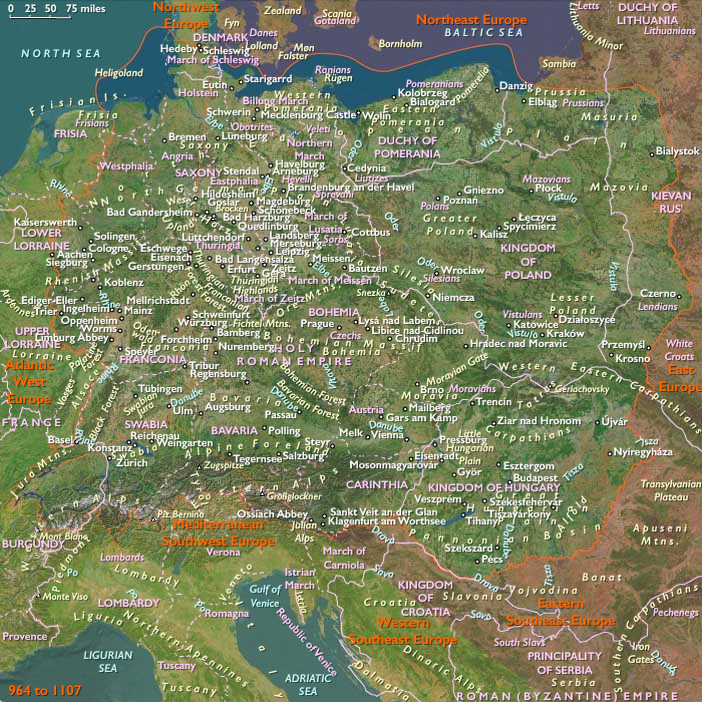
Subregions
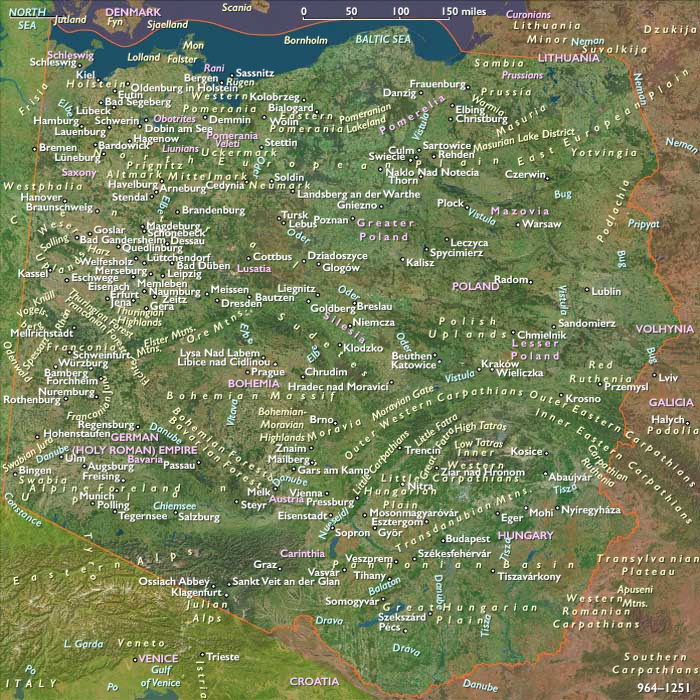
Related Events
Showing 10 events out of 52074 total
Years: 1000 - 1000
Locations
People
Groups
- Polytheism (“paganism”)
- Germans
- Hungarian people
- Slavs, West
- Christianity, Chalcedonian
- Papal States (Republic of St. Peter)
- Roman Empire, Eastern: Macedonian dynasty
- Hungary, Principality of
- Poland, Principality of
- Hungary, Kingdom of
Subjects
Regions
Subregions