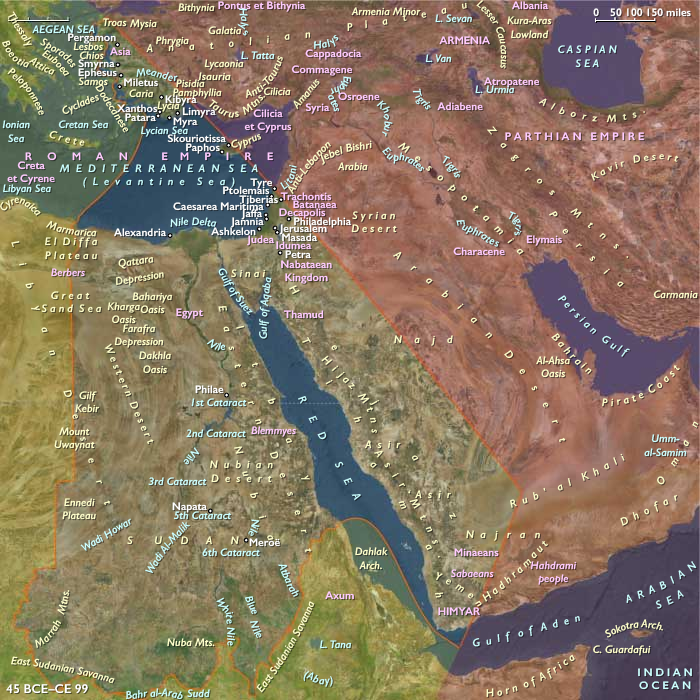
Patara, captured also, is spared the massacres …
Years: 43BCE - 43BCE
Patara, captured also, is spared the massacres inflicted on nearby Xanthos.
Both cities, together with Pinara, Tlos, Olympos, and Phaselis, are members of the Lycian League, of which …
Locations
People
Groups
Topics
Commodoties
Subjects
Regions
Subregions
Related Events
Filter results
Showing 9 events out of 9 total
Northeastern North America
(1864 to 1875 CE): Conclusion of the Civil War, Reconstruction, Canadian Confederation, and Continued Industrial Expansion
From 1864 to 1875, Northeastern North America experienced the conclusion of the American Civil War, complex Reconstruction efforts, the formation of the Canadian Confederation, significant industrial and economic growth, and ongoing cultural development. This period was characterized by intense political restructuring, expanding infrastructure, evolving relationships with indigenous peoples, and the continued flourishing of regional industries.
American Civil War and Reconstruction
Conclusion and Aftermath
The American Civil War concluded in 1865, marking a profound turning point for Northeastern North America. The Northeast played a crucial role, contributing industrial resources, manpower, and economic support that proved vital for Union victory. Indigenous participation was significant; about twenty thousand Native Americans fought on both sides, including prominent contributions by the Cherokee, Choctaw, Chickasaw, Creek, Seminole, and Iroquois peoples. Notably, about forty-five Iowa tribesmen served in the Union Army, including Chief James White Cloud, grandson of Chief Mahaska. Irish and other immigrant communities also fought prominently, exemplifying the complex demographic dynamics of the war. The post-war Reconstruction era saw efforts to integrate formerly enslaved populations into society and rebuild a nation divided by war, facing resistance, social upheaval, and political struggle.
Formation of the Canadian Confederation
Constitutional Conferences and Confederation
Following several constitutional conferences, the Constitution Act officially proclaimed the Canadian Confederationon July 1, 1867, initially uniting four provinces: Ontario, Quebec, Nova Scotia, and New Brunswick. This marked a significant political realignment aimed at ensuring stability, economic prosperity, and defense against potential American expansionism.
Expansion and Indigenous Relations
In 1870, Canada assumed control of Rupert's Land and the North-Western Territory, forming the Northwest Territories. Tensions surrounding land rights and governance ignited the Red River Rebellion, led by the Métis under Louis Riel, resulting in the creation of the province of Manitoba in July 1870. Further territorial expansion occurred as British Columbia, including Vancouver Island (united in 1866), joined the Confederation in 1871, and Prince Edward Island followed in 1873.
Industrial and Economic Growth
Bluestone and Infrastructure Development
The bluestone industry continued to thrive, playing a critical role in urban development. Cities like New York and Kingston relied on shipments from hubs like Rondout and Malden, utilizing barges and tugboats operated by entrepreneurs such as Thomas Cornell. Bluestone became a staple material for sidewalks, curbstones, and building foundations, defining the architectural character of urban environments.
Notable examples included Kingston’s sidewalks and curbstones and the Old Dutch Church in Kingston, designed by Minard Lefever, constructed of native-dressed bluestone blocks between 1850 and 1852. Similarly, in 1858, entrepreneur Henry Samson built an Italian villa using ashlar and rusticated bluestone blocks on West Chestnut Street in Kingston.
Ice Harvesting and Brick Manufacturing
Ice harvesting along the Hudson River remained essential for refrigeration and food preservation, supported by large warehouses and extensive straw insulation methods. Brick manufacturing near major waterways and transportation hubs further reinforced the economic vitality and industrial capability of the region.
Artistic and Cultural Continuity
Hudson River School Influence
The Hudson River School, though past its zenith, continued influencing American art and culture. Paintings from artists such as Frederick Edwin Church and Sanford Robinson Gifford persisted in capturing landscapes that symbolized America's natural beauty and national identity, reflecting ongoing themes of exploration, settlement, and harmony with nature.
Legacy of the Era (1864–1875 CE)
Between 1864 and 1875, Northeastern North America navigated the challenging aftermath of the Civil War, fostered the political and territorial growth of Canada, and sustained industrial and cultural advancement. The transformations of this era, from Reconstruction to Confederation and industrial prosperity, continued to shape the region’s historical trajectory, significantly influencing the subsequent decades.

British Columbia and Vancouver Island (which had been united in 1866) join the confederation in 1871, while Prince Edward Island joins in 1873.
The British colonies of New Brunswick, Nova Scotia, and Prince Edward Island had discussed the possibility of a fusion to counter the threat of American annexation and to reduce the costs of governance.
The Province of Canada had entered these negotiations at the behest of the British government; this had led to the ambivalence of Prince Edward Island, which will delay joining the new Dominion of Canada for seven years, even though the constitutional conference had been held here, in Charlottetown.
The British North America Act, 1867, establishes the Dominion of Canada by fusing the North American British colonies of the Province of Canada, the Province of New Brunswick, and Nova Scotia.
The two subdivisions of the Province of Canada, Canada West and Canada East, are renamed Ontario and Quebec, respectively, and are given equal footing with New Brunswick and Nova Scotia in the Parliament of Canada, as representation by population is accepted for the Canadian House of Commons, as is a notion of regional equality in the Canadian Senate, with the Ontario, Quebec and Maritime "regions" receiving an equal number of senators.
This creation, or Confederation, is done so Canada could be strong enough to be an independent country without total reliance on Britain.
The British no longer want to pay for Canada's defense, and furthermore, London acts primarily in Britain's interest, and does not put Canadian interests first.
The British North American Act of 1867 entails the original creation of a federal dominion and sets the framework for much of the operation of the Government of Canada, including its Federal structure, the House of Commons, the Senate, the justice system, and the taxation system.
With the birth of the Dominion, Canada East and Canada West become separate provinces, known as Quebec and Ontario.
The Dominion of Canada thus created also includes the provinces of Nova Scotia and New Brunswick.
Lord Monck appoints John A. Macdonald as the new nation's first Prime Minister.
Macdonald is knighted on this first observance of what will come to be known as Canada Day, 1 July 1867.
John A. Macdonald and his government face immediate problems upon formation of the new country.
Much work remains to do in creating a federal government.
Nova Scotia is already threatening to withdraw from the union; the Intercolonial Railway, which will both conciliate the Maritimes and bind them closer to the rest of Canada, is not yet built.
Anglo-American relations are in a poor state, and Canadian foreign relations are matters handled from London.
The withdrawal of the Americans in 1866 from the Reciprocity Treaty had increased tariffs on Canadian goods in U.S. markets.
Much of present-day Canada remains outside confederation—in addition to the separate colonies of Prince Edward Island, Newfoundland, and British Columbia, which remain governed by the British, vast areas in the north and west belong to the British and to the Hudson's Bay Company.
American and British opinion is that the experiment of Confederation will quickly unravel, and the nascent nation absorbed by the United States.
The new nation's first general election is held in August 1867; Macdonald's party win easily, with strong support in both large provinces, and a majority from New Brunswick.
Northeastern North America
(1864 to 1875 CE): Conclusion of the Civil War, Reconstruction, Canadian Confederation, and Continued Industrial Expansion
From 1864 to 1875, Northeastern North America experienced the conclusion of the American Civil War, complex Reconstruction efforts, the formation of the Canadian Confederation, significant industrial and economic growth, and ongoing cultural development. This period was characterized by intense political restructuring, expanding infrastructure, evolving relationships with indigenous peoples, and the continued flourishing of regional industries.
American Civil War and Reconstruction
Conclusion and Aftermath
The American Civil War concluded in 1865, marking a profound turning point for Northeastern North America. The Northeast played a crucial role, contributing industrial resources, manpower, and economic support that proved vital for Union victory. Indigenous participation was significant; about twenty thousand Native Americans fought on both sides, including prominent contributions by the Cherokee, Choctaw, Chickasaw, Creek, Seminole, and Iroquois peoples. Notably, about forty-five Iowa tribesmen served in the Union Army, including Chief James White Cloud, grandson of Chief Mahaska. Irish and other immigrant communities also fought prominently, exemplifying the complex demographic dynamics of the war. The post-war Reconstruction era saw efforts to integrate formerly enslaved populations into society and rebuild a nation divided by war, facing resistance, social upheaval, and political struggle.
Formation of the Canadian Confederation
Constitutional Conferences and Confederation
Following several constitutional conferences, the Constitution Act officially proclaimed the Canadian Confederationon July 1, 1867, initially uniting four provinces: Ontario, Quebec, Nova Scotia, and New Brunswick. This marked a significant political realignment aimed at ensuring stability, economic prosperity, and defense against potential American expansionism.
Expansion and Indigenous Relations
In 1870, Canada assumed control of Rupert's Land and the North-Western Territory, forming the Northwest Territories. Tensions surrounding land rights and governance ignited the Red River Rebellion, led by the Métis under Louis Riel, resulting in the creation of the province of Manitoba in July 1870. Further territorial expansion occurred as British Columbia, including Vancouver Island (united in 1866), joined the Confederation in 1871, and Prince Edward Island followed in 1873.
Industrial and Economic Growth
Bluestone and Infrastructure Development
The bluestone industry continued to thrive, playing a critical role in urban development. Cities like New York and Kingston relied on shipments from hubs like Rondout and Malden, utilizing barges and tugboats operated by entrepreneurs such as Thomas Cornell. Bluestone became a staple material for sidewalks, curbstones, and building foundations, defining the architectural character of urban environments.
Notable examples included Kingston’s sidewalks and curbstones and the Old Dutch Church in Kingston, designed by Minard Lefever, constructed of native-dressed bluestone blocks between 1850 and 1852. Similarly, in 1858, entrepreneur Henry Samson built an Italian villa using ashlar and rusticated bluestone blocks on West Chestnut Street in Kingston.
Ice Harvesting and Brick Manufacturing
Ice harvesting along the Hudson River remained essential for refrigeration and food preservation, supported by large warehouses and extensive straw insulation methods. Brick manufacturing near major waterways and transportation hubs further reinforced the economic vitality and industrial capability of the region.
Artistic and Cultural Continuity
Hudson River School Influence
The Hudson River School, though past its zenith, continued influencing American art and culture. Paintings from artists such as Frederick Edwin Church and Sanford Robinson Gifford persisted in capturing landscapes that symbolized America's natural beauty and national identity, reflecting ongoing themes of exploration, settlement, and harmony with nature.
Legacy of the Era (1864–1875 CE)
Between 1864 and 1875, Northeastern North America navigated the challenging aftermath of the Civil War, fostered the political and territorial growth of Canada, and sustained industrial and cultural advancement. The transformations of this era, from Reconstruction to Confederation and industrial prosperity, continued to shape the region’s historical trajectory, significantly influencing the subsequent decades.
The Great Blizzard of 1888 begins along the eastern seaboard of the United States on March 11, shutting down commerce and killing more than four hundred.
The weather had been unseasonably mild just before the blizzard, with heavy rains that turned to snow as temperatures dropped rapidly.
The storm begins in earnest shortly after midnight on March 12 and continues unabated for a full day and a half.
In a 2007 article, the National Weather Service will estimaet that this Nor'easter dumped as much as 50 inches (130 cm) of snow in parts of Connecticut and Massachusetts, while parts of New Jersey and New York had up to 40 inches (100 cm).
Most of northern Vermont receives from 20 inches (51 cm) to 30 inches (76 cm).
Drifts averaged 30–40 feet (9.1–12.2 m), over the tops of houses from New York to New England, with reports of drifts covering three-story houses. The highest drift was recorded in Gravesend, Brooklyn at 52 feet or 16 metres. 58 inches (150 cm) of snow fell in Saratoga Springs, New York; 48 inches (120 cm) in Albany, New York; 45 inches (110 cm) in New Haven, Connecticut; and 22 inches (56 cm) in New York City.[6] The storm also produced severe winds; 80 miles per hour (129 km/h) wind gusts were reported, although the highest official report in New York City was 40 miles per hour (64 km/h), with a 54 miles per hour (87 km/h) gust reported at Block Island.[6] New York's Central Park Observatory reported a minimum temperature of 6 °F (−14 °C), and a daytime average of 9 °F (−13 °C) on March 13, the coldest ever for March.[6]
Impacts
In New York, neither rail nor road transport is possible anywhere for days, and drifts across the New York–New Haven rail line at Westport, Connecticut, take eight days to clear.
Transportation gridlock as a result of the storm is partially responsible for the creation of the first underground subway system in the United States, which will open nine years later in Boston.
The New York Stock Exchange is closed for two days.
Similarly, telegraph infrastructure is disabled, isolating Montreal and most of the large northeastern U.S. cities from Washington, D.C. to Boston for days.
Following the storm, New York begins placing its telegraph and telephone infrastructure underground to prevent their destruction.
Fire stations are immobilized, and property loss from fire alone is estimated at $25 million (equivalent to $710 million in 2020)
The blizzard results in the founding of the Christman Bird and Wildlife Sanctuary located near Delanson, New York.
From Chesapeake Bay through the New England area, more than two hundred ships are either grounded or wrecked, resulting in the deaths of at least one hundred seamen
More than four hundred people die from the storm and the ensuing cold, including two hundred in New York City alone.
Efforts are made to push the snow into the Atlantic Ocean.
Severe flooding occurs after the storm due to melting snow, especially in the Brooklyn area, which is susceptible to flooding because of its topography.
Not all areas are notably affected by the Blizzard of 1888; an article in the Cambridge Press published five days after the storm noted that the "fall of snow in this vicinity was comparatively small, and had it not been accompanied by a strong wind it would have been regarded as rather trifling in amount, the total depth, on a level, not exceeding ten inches".
New Yorker Roscoe Conkling, an influential Republican politician, dies as a result of the storm.
The longest covered bridge in the world, the 1,282 foot (390 meter) covered bridge crossing the Saint John River at Hartland, New Brunswick, Canada, opens on July 4, 1901.