
Paul's conversion can be dated to 31-36 …
Years: 39 - 39
Paul's conversion can be dated to 31-36 by his reference to it in one of his letters.
His conversion (or metanoia) according to the Acts of the Apostles took place on the road to Damascus, where he claimed to have experienced a vision of the resurrected Jesus, after which he was temporarily blinded. [Acts 9:1-31] [22:1-22] [26:9-24]
Luke, the author of Acts of the Apostles, likely learned of his conversion from Paul, from the church in Jerusalem, or from the church in Antioch.
In the opening verses of Romans 1, Paul provides a litany of his own apostolic claim and his post-conversion convictions about the risen Christ.
Paul's writings give some insight into his thinking regarding his relationship with Judaism.
He is strongly critical both theologically and empirically of claims of moral or lineal superiority [2:16-26] of Jews while conversely strongly sustaining the notion of a special place for the Children of Israel.
There are ongoing debates among biblical scholars as to whether Paul understood himself as commissioned to take the gospel to the Gentiles at the moment of his conversion.
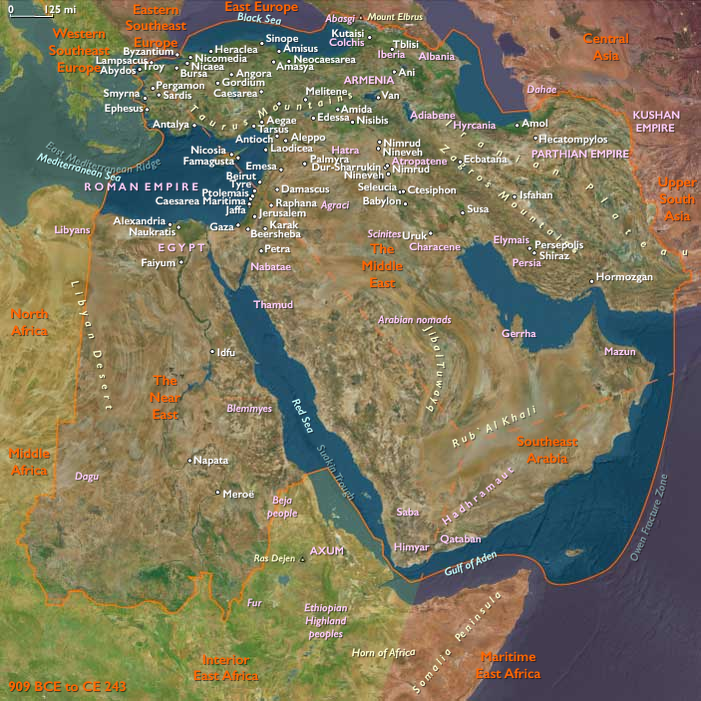
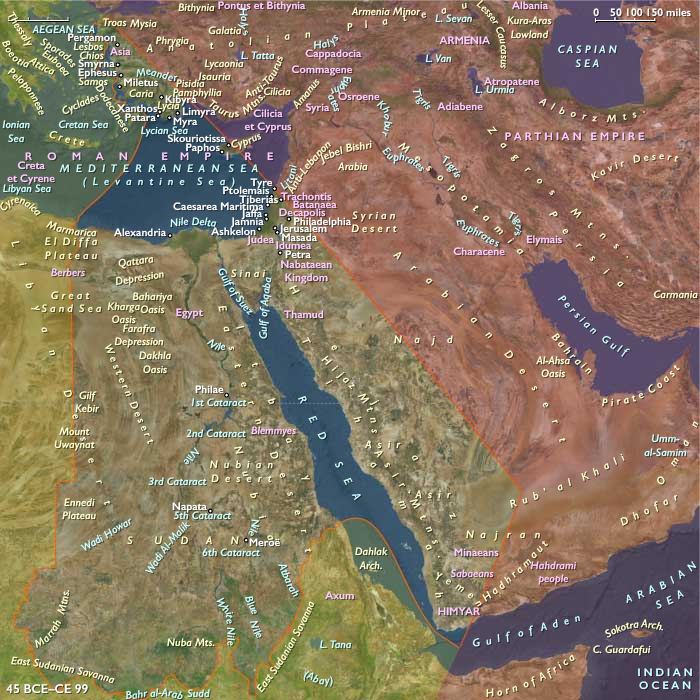
After his conversion, Paul goes to Damascus, where Acts states he was healed of his blindness and baptized by Ananias of Damascus.
Paul says that it was in Damascus that he barely escaped death [2Cor. 11:32].
Paul also says that he then went first to Arabia, and then came back to Damascus. [Gal. 1:17] Paul's trip to Arabia is not mentioned anywhere else in the Bible, and some suppose he actually traveled to Mount Sinai for meditations in the desert.
He describes in Galatians how three years after his conversion he went to Jerusalem.
There he met James and stayed with Simon Peter for fifteen days. [Gal. 1:13-24].
Paul asserts that he received the Gospel not from any person, but by the revelation of Jesus Christ. [Gal. 1:11-12]
Paul claims almost total independence from the Jerusalem community and yet appears eager to bring material support to Jerusalem from the various budding Gentile churches that he has planted.
In his writings, Paul persistently uses the persecutions he claims to have endured, in terms of physical beatings and verbal assaults, to claim proximity and union with Jesus and as a validation of his teaching.
Locations
People
Groups
Topics
Commodoties
Subjects
Regions
Subregions
Years: 39 - 39
Locations
People
Groups
Topics
Commodoties
Subjects
Regions
Subregions