
The Ottoman Empire during the eighteenth century …
Years: 1768 - 1779
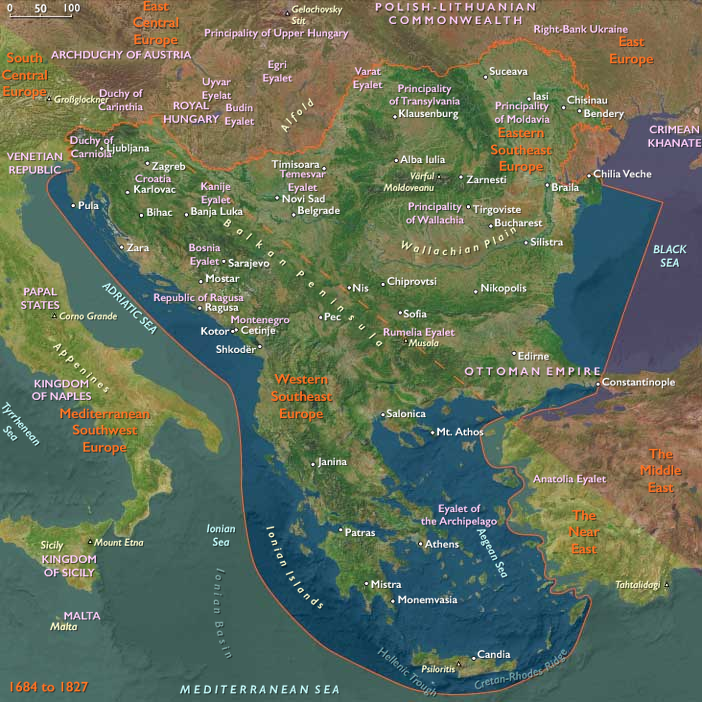
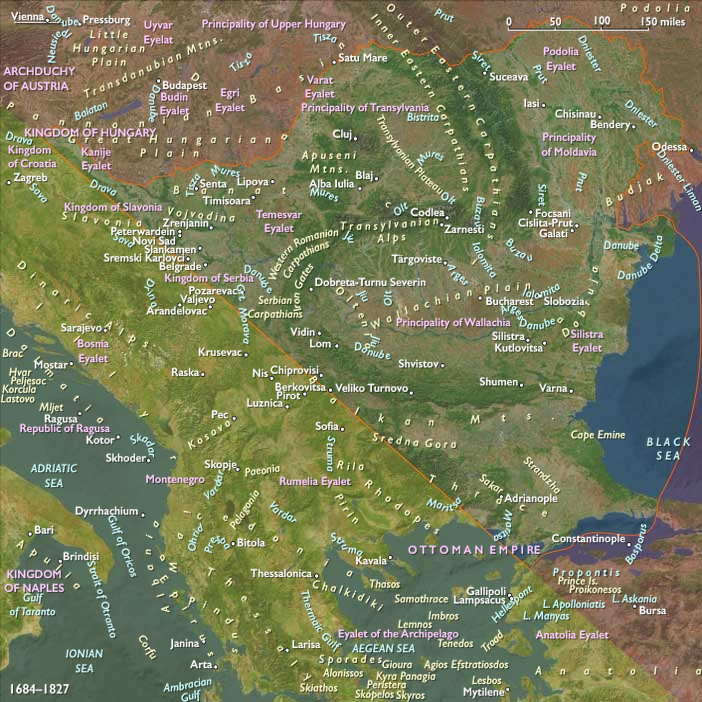
The Ottoman Empire during the eighteenth century is almost continuously at war with one or more of its enemies—Persia, Poland, Austria, and Russia.
Under the humiliating terms of the Treaty of Kuchuk-Kaynarja that ends the Russo-Ottoman War of 1768-74, the Porte abandons the Tartar khanate in the Crimea, grants autonomy to the Trans-Danubian provinces, allows Russian ships free access to Ottoman waters, and agrees to pay a large war indemnity.
The implications of the decline of Ottoman power, the vulnerability and attractiveness of the empire's vast holdings, the stirrings of nationalism among its subject peoples, and the periodic crises resulting from these and other factors became collectively known to European diplomats in the nineteenth century as "the Eastern Question."
Tsar Nicholas I of Russia will describe the Ottoman Empire as "the sick man of Europe."
The problem from the viewpoint of European diplomacy is how to dispose of the empire in such a manner that no one power will gain an advantage at the expense of the others and upset the political balance of Europe
Under the humiliating terms of the Treaty of Kuchuk-Kaynarja that ends the Russo-Ottoman War of 1768-74, the Porte abandons the Tartar khanate in the Crimea, grants autonomy to the Trans-Danubian provinces, allows Russian ships free access to Ottoman waters, and agrees to pay a large war indemnity.
The implications of the decline of Ottoman power, the vulnerability and attractiveness of the empire's vast holdings, the stirrings of nationalism among its subject peoples, and the periodic crises resulting from these and other factors became collectively known to European diplomats in the nineteenth century as "the Eastern Question."
Tsar Nicholas I of Russia will describe the Ottoman Empire as "the sick man of Europe."
The problem from the viewpoint of European diplomacy is how to dispose of the empire in such a manner that no one power will gain an advantage at the expense of the others and upset the political balance of Europe
Locations
People
Groups
- Ottoman Empire
- Poland of the Jagiellonians, Kingdom of
- Crimean Khanate
- Persia, Safavid Kingdom of
- Russia, Tsardom of
- Moldavia (Ottoman vassal), Principality of
- Transylvania (Ottoman vassal), Principality of
- Wallachia (Ottoman vassal), Principality of
- Persia, Hotaki Ghilzaid Kingdom of
- Persia, Afsharid Kingdom of
- Persia, Zandid Kingdom of
- Persia, Qajarid Kingdom of
- Austrian Empire
Topics
Subjects
Regions
Subregions
Related Events
Showing 10 events out of 26116 total
Years: 1768 - 1779
Locations
People
Groups
- Ottoman Empire
- Poland of the Jagiellonians, Kingdom of
- Crimean Khanate
- Persia, Safavid Kingdom of
- Russia, Tsardom of
- Moldavia (Ottoman vassal), Principality of
- Transylvania (Ottoman vassal), Principality of
- Wallachia (Ottoman vassal), Principality of
- Persia, Hotaki Ghilzaid Kingdom of
- Persia, Afsharid Kingdom of
- Persia, Zandid Kingdom of
- Persia, Qajarid Kingdom of
- Austrian Empire
Topics
Subjects
Regions
Subregions