Near East (693–682 BCE): Consolidation, Vassalage, and Judah’s Survival
Assyrian Consolidation of Coastal Palestine
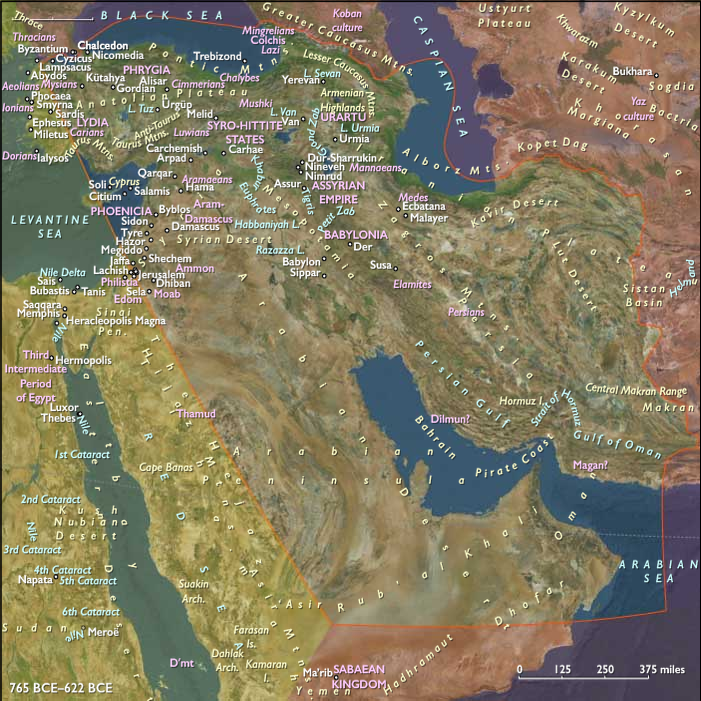
By the early seventh century BCE, the Assyrian Empire firmly consolidates control over the coastal cities of Palestine. Gaza, Ashkelon, Ekron, Ashdod, and likely Gath become established as Assyrian vassal states, compelled into tributary alliances through military pressure and political diplomacy. These cities, formerly influential Philistine centers, now function primarily within the larger economic and strategic frameworks imposed by Assyria, ensuring the empire’s dominance across the critical Mediterranean coastal trade routes.
Jerusalem’s Fragile Independence
In Judah, King Hezekiah has barely managed to preserve Jerusalem amidst Assyrian aggression. Though Jerusalem withstands siege—reportedly due to a plague among the Assyrian forces described in biblical texts as divine intervention—virtually all other major Judahite centers have suffered severe destruction. Hezekiah’s resistance, although costly, secures a precarious autonomy for the southern kingdom, highlighting Jerusalem’s emerging significance as the spiritual and political center of Judah.
Succession and New Realities in Judah
In 687 BCE, King Hezekiah dies and is succeeded by his son, Manasseh. Marking a notable shift, Manasseh’s reign departs significantly from his father’s religious and political policies. Where Hezekiah sought to align Judah closely with exclusive Yahwistic worship and resisted Assyrian overlordship, Manasseh reverses these policies, aligning more closely with Assyrian interests and restoring religious pluralism, a move often criticized by later biblical tradition. This alignment ensures Judah's temporary stability under continued Assyrian dominance but begins a complex legacy of internal religious contention.
Legacy of the Era
The era 693–682 BCE encapsulates the tension between imperial subjugation and local sovereignty. Judah’s survival, narrowly maintained by Hezekiah, transitions into a period of pragmatic alignment under Manasseh, reflecting broader regional patterns of vassalage and accommodation. The consolidation of Assyrian rule over Philistine cities, coupled with Judah’s adaptive strategies under successive rulers, establishes political frameworks that will influence Near Eastern geopolitics profoundly in subsequent generations.