
The Battle off the Berlangas (May 8, …
Years: 1744 - 1744
April
The Battle off the Berlangas (May 8, 1744) and the War of the Austrian Succession
By the early 1740s, Britain and France were locked in an escalating struggle for maritime supremacy as part of the War of the Austrian Succession (1740–1748). The conflict had begun as a dispute over the Habsburg succession following the death of Holy Roman Emperor Charles VI, but it quickly evolved into a broader European war, with Britain, Austria, and the Dutch Republic opposing France, Spain, and Prussia. The war extended beyond continental battlefields, fueling a fierce naval rivalry between Britain and the Bourbon allies, France and Spain.
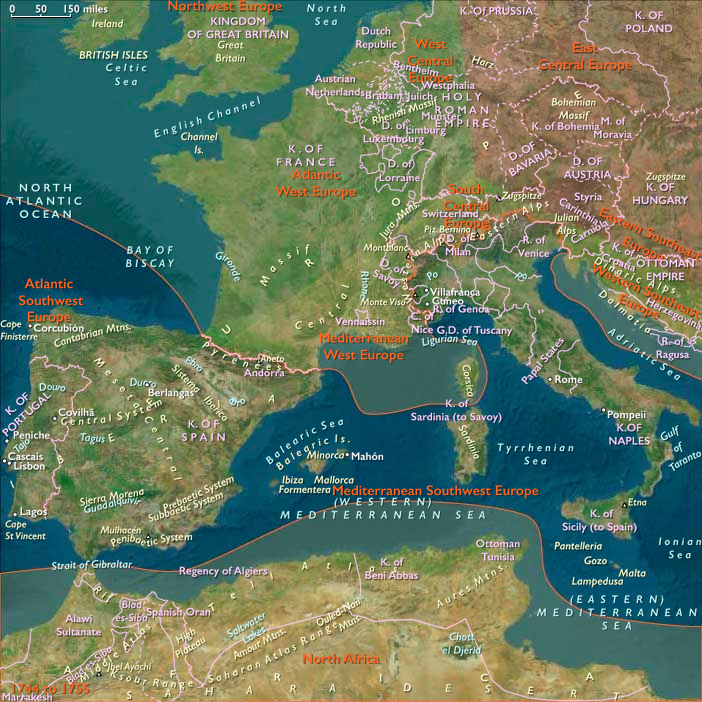
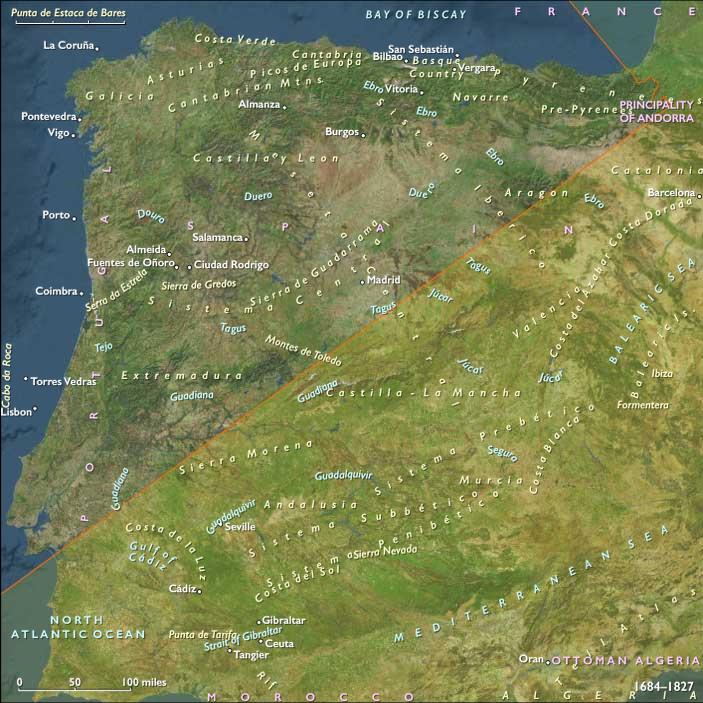
In this volatile environment, British naval squadrons patrolled European waters to counter French and Spanish movements. One such squadron, commanded by Sir Charles Hardy, was operating off the Berlangas, a small Portuguese archipelago west of Peniche, when it encountered an enemy sail on May 8, 1744. The Northumberland, a seventy-gun British ship of the line, was dispatched to investigate.
As it closed the distance, the Northumberland identified the vessel as the Mars, a sixty-four-gun French warship, accompanied by two other ships: the sixty-gun Content and a sixth-rate frigate. Despite the numerical disadvantage, Captain Thomas Watson—a man of unquestioned bravery but questionable tactical judgment—chose not to signal their presence to Vice-Admiral Hardy. Instead, he pressed forward under full sail, isolating himself from British support.
The French ships were widely dispersed, and by 5 PM, the Northumberland reached the Mars, engaging in a running battle. As the two exchanged volleys, Watson attempted to close the distance on the Content as well, intensifying the engagement into a multi-ship action. The Northumberland fought fiercely for nine hours, but under sustained French fire, she became unmanageable, her wheel shattered and her rigging severely damaged.
Amidst the chaos, Captain Watson was mortally wounded, and command fell into disorder. With the ship adrift and incapable of maneuvering, the Northumberland’s master—later court-martialed for surrendering without sufficient cause—struck the British colors, handing victory to the French.
Implications and Aftermath
The loss of the Northumberland was a serious blow to British naval prestige, demonstrating the risks of overzealous command decisions in isolated engagements. The event also underscored the increasing strategic importance of Portugal, a traditional British ally, whose coastline had become a contested zone in the Anglo-French naval struggle.
More broadly, this action reflected the larger challenges Britain faced in the early years of the War of the Austrian Succession. French naval forces were becoming bolder, and Britain’s reliance on isolated squadrons left them vulnerable to well-coordinated counterattacks. The defeat further motivated British naval strategists to strengthen squadron coordination and intelligence-sharing to avoid similar disasters.
By 1747, Britain had recovered from early setbacks, delivering decisive blows to the French navy at the First and Second Battles of Cape Finisterre, reinforcing British control of Atlantic trade routes. However, the events off the Berlangas in 1744 served as an important reminder of the perils of independent action and the enduring challenge of maritime warfare in the 18th century.
Locations
People
- Charles Edward Stuart
- Charles O'Brien
- George II of Great Britain
- Henry Pelham
- James Francis Edward Stuart
- John Cope
- John Murray
- Louis XV of France
- Maurice de Saxe
- Prince William, Duke of Cumberland
Groups
- Austria, Archduchy of
- France, (Bourbon) Kingdom of
- Brunswick-Lüneburg, Electorate of (Electorate of Hanover)
- Britain, Kingdom of Great
- Scotland
Topics
Commodoties
Subjects
Regions
Subregions
Years: 1744 - 1744
April
Locations
People
- Charles Edward Stuart
- Charles O'Brien
- George II of Great Britain
- Henry Pelham
- James Francis Edward Stuart
- John Cope
- John Murray
- Louis XV of France
- Maurice de Saxe
- Prince William, Duke of Cumberland
Groups
- Austria, Archduchy of
- France, (Bourbon) Kingdom of
- Brunswick-Lüneburg, Electorate of (Electorate of Hanover)
- Britain, Kingdom of Great
- Scotland
Topics
Commodoties
Subjects
Regions
Subregions