
South Central Europe (2,637 – 910 …
Years: 2637BCE - 910BCE
South Central Europe (2,637 – 910 BCE) Bronze and Early Iron — Tumulus, Urnfield, and Alpine Hallstatt Seeds
Geographic and Environmental Context
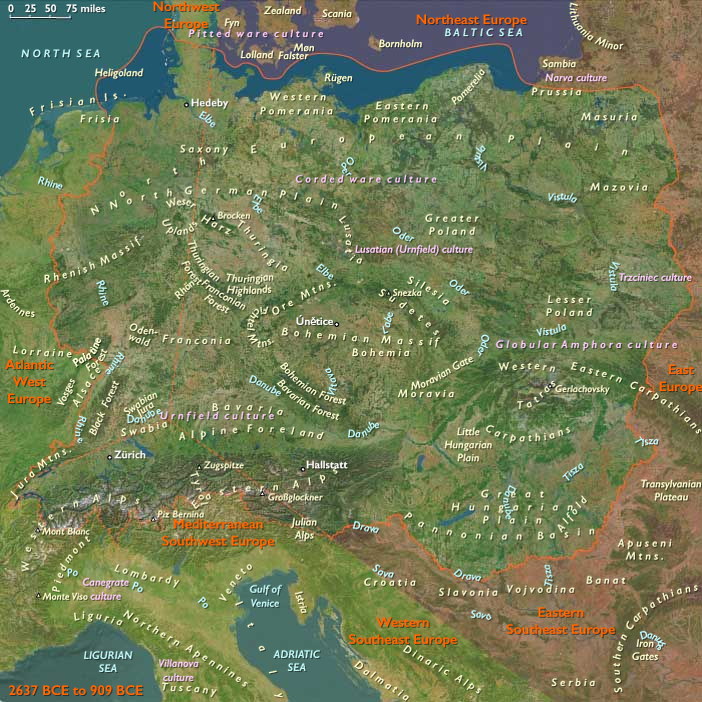
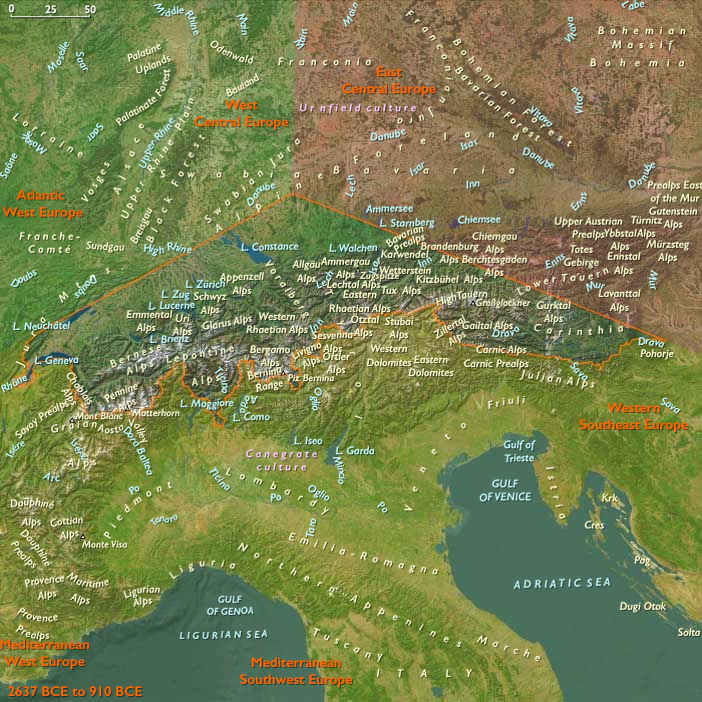
Western Southeast Europe includes southern and western Austria (including Carinthia; excluding Salzburg), Liechtenstein, Switzerland (excluding Basel and the eastern Jura), southeastern Swabia (southeastern Baden-Württemberg), and southwestern Bavaria.-
Anchors: Inn–Tyrol Tumulus horizons, Swiss Plateau Urnfield zones, Hallstatt A–B nuclei in Salzkammergut fringe (just beyond but influential), Carinthia hillforts, Valais–Rhône passes.
Climate & Environmental Shifts
-
Variable rainfall; good pasture windows alternated with cool phases.
Subsistence & Settlement
-
Hillforts and fortified villages guarded passes; mixed cereal–pasture economies; salt and copper extraction expanded.
Technology & Material Culture
-
Bronze swords, sickles, razors; Urnfield cremation cemeteries; early iron at period’s end.
-
Wagon parts and tack attest to alpine haulage.
Movement & Interaction Corridors
-
North–south trade (metals, salt, amber, wine) surged along Brenner/Reschen, Gotthard, Great St. Bernard.
Cultural & Symbolic Expressions
-
Tumulus aristocracies; cremation urnfields; alpine cults at springs and passes.
Environmental Adaptation & Resilience
-
Transhumance + storage buffered climate variability; pass control monetized alpine geography.
Groups
Topics
- Neolithic Europe
- Subboreal Period
- Abrolhos Transgression
- 4.2 kiloyear BP aridification event
- Subatlantic Period
- Rottnest Transgression
- Younger Subboreal Period
- Iron Age Europe
- Subatlantic Period
Commodoties
Subjects
Regions
Subregions
Years: 2637BCE - 910BCE
Groups
Topics
- Neolithic Europe
- Subboreal Period
- Abrolhos Transgression
- 4.2 kiloyear BP aridification event
- Subatlantic Period
- Rottnest Transgression
- Younger Subboreal Period
- Iron Age Europe
- Subatlantic Period
Commodoties
Subjects
Regions
Subregions