
Haiti's policies toward occupied Santo Domingo are …
Years: 1828 - 1839
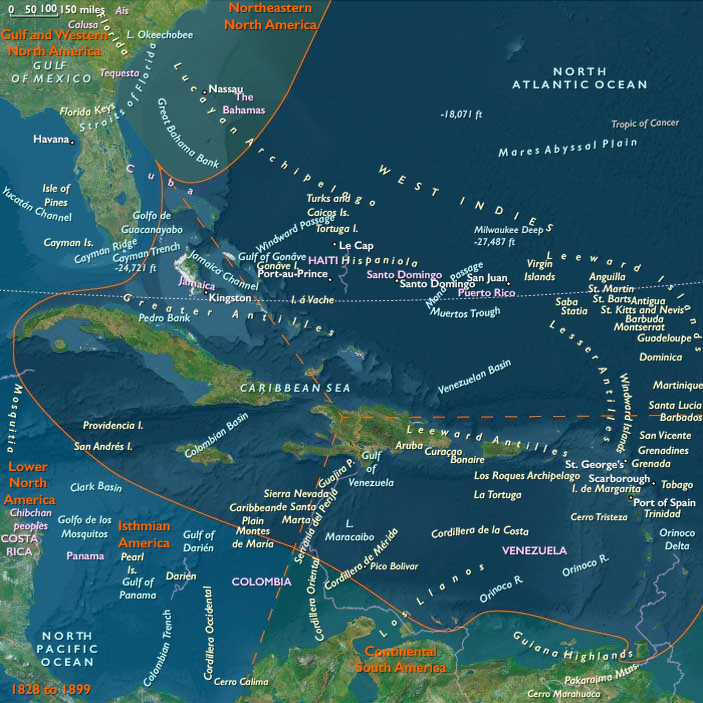
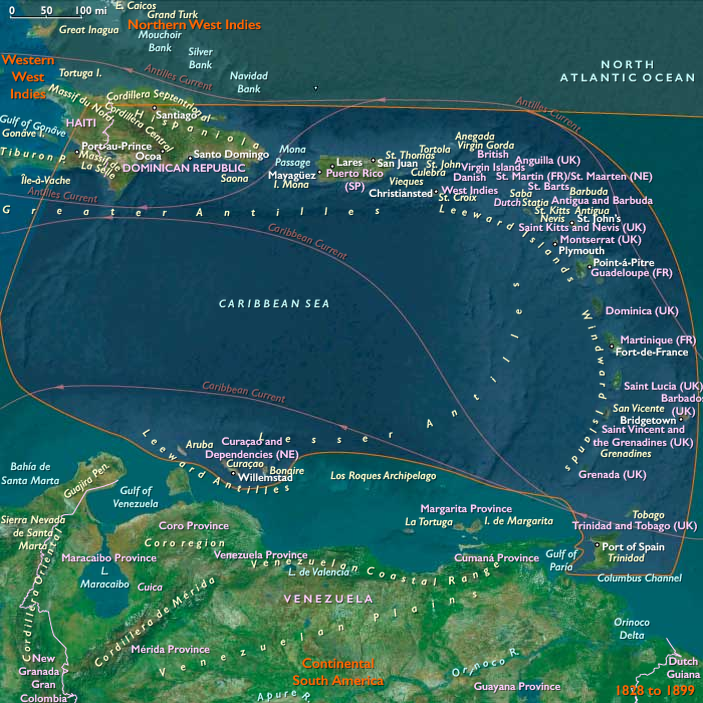
Haiti's policies toward occupied Santo Domingo are induced in part by international financial pressures because Haiti had promised in an 1825 treaty to indemnify former French settlers in return for French recognition of Haitian independence.
Ultimately, it is a period of economic decline and of growing resentment of Haiti among Dominicans
The main activity is subsistence agriculture, and exports consist of small amounts of tobacco, cattle hides, caoba wood (Dominican mahogany), molasses, and rum; the population, in turn, had declined precipitously by 1809 to some seventy-five thousand people.
Haitian president jean-Pierre Boyer attempts to enforce in the new territory the Rural Code (Code Rural) he had decreed in an effort to improve productivity among the Haitian yeomanry; however, the Dominicans prove no more willing to adhere to its provisions than are the Haitians.
Increasing numbers of Dominican landowners choose to flee the island rather than live under Haitian rule; in many cases, Haitian administrators encourages such emigration.
Locations
People
Groups
- Britain, Kingdom of Great
- Haiti, Republic of
- France, (first) Empire of
- Spain, Bourbon Kingdom (first restoration) of
- Dominican Republic
- Santo Domingo (Haitian-occupied)
Topics
Commodoties
Subjects
Regions
Subregions
Years: 1828 - 1839
Locations
People
Groups
- Britain, Kingdom of Great
- Haiti, Republic of
- France, (first) Empire of
- Spain, Bourbon Kingdom (first restoration) of
- Dominican Republic
- Santo Domingo (Haitian-occupied)
Topics
Commodoties
Subjects
Regions
Subregions