
Amman was called Rabbath Ammon or Rabat …
Years: 1053BCE - 910BCE
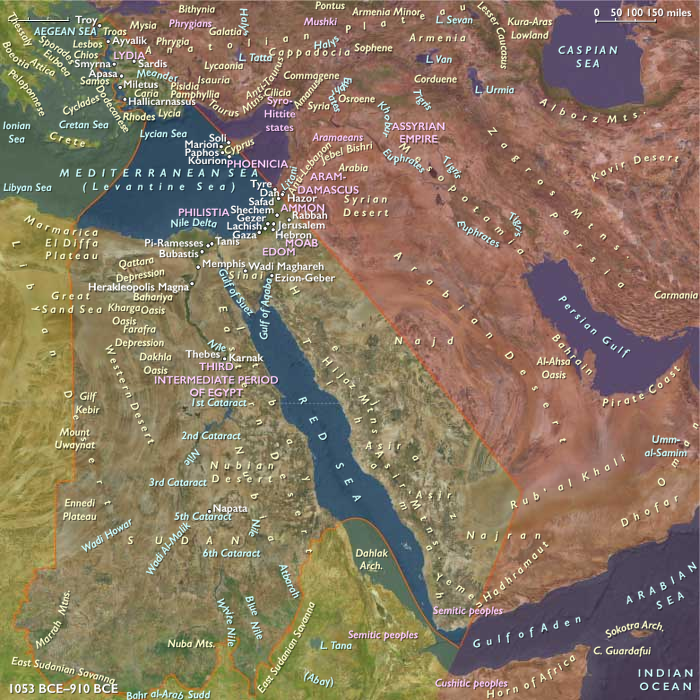
Amman was called Rabbath Ammon or Rabat Amon by Ammonites of the thirteenth century BCE; it is referred to in the Hebrew Bible as Rabbat Ammom.
The Bible names the “sons of Ammon” as being in perennial, though sporadic, conflict with the Israelites.
The “royal city” taken by David's general Joab (II Samuel 12:26) probably refers to the acropolis atop the plateau of Rabbath Ammon.
According to the biblical account, Genesis 19:37-38, Ammon and Moab were born to Lot and Lot's younger and elder daughters, respectively, in the aftermath of the destruction of Sodom and Gomorrah.
The Bible refers to both the Ammonites and Moabites as the "children of Lot.” Throughout the Bible, the Ammonites and Israelites are portrayed as mutual antagonists.
The Ammonites during the Exodus prohibited the Israelites from passing through their lands.
In the Book of Judges, the Ammonites work with Eglon, king of the Moabites against Israel.
Attacks by the Ammonites on Israelite communities east of the Jordan were the impetus behind the unification of the tribes under Saul.
Naamah, who was an Ammonite according to both 1 Kings 14:21-31 and 2 Chronicles 12:13, is the only wife of King Solomon to be mentioned by name in the Tanakh as having borne a child.
She is the mother of Solomon's successor, Rehoboam.
Locations
Groups
Topics
Subjects
Regions
Subregions
Related Events
Showing 2 events out of 2 total
Years: 1053BCE - 910BCE
Locations
Groups
Topics
Subjects
Regions
Subregions