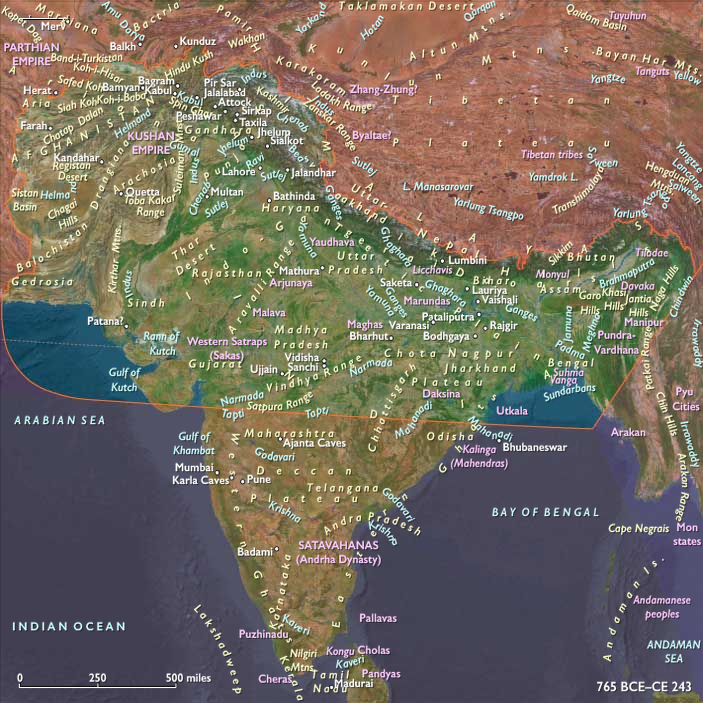
The rudimentary administrative system headed by tribal …
Years: 621BCE - 478BCE
The rudimentary administrative system headed by tribal chieftains is transformed by a number of regional republics or hereditary monarchies that devise ways to appropriate revenue and to conscript labor for expanding the areas of settlement and agriculture farther east and south, beyond the Narmada River.
These emergent states collect revenue through officials, maintain armies, and build new cities and highways.
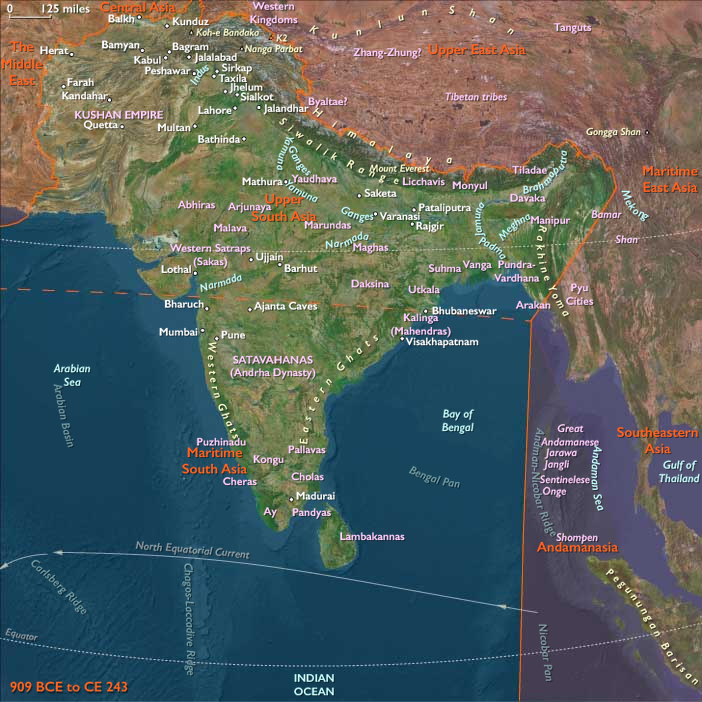
By 600 BCE, sixteen such territorial powers—including the Magadha, Kosala, Kuru, and Gandhara—stretch across the North India plains from modern-day Afghanistan to Bangladesh.
The right of a king to his throne, no matter how it is gained, is usually legitimized through elaborate sacrifice rituals and genealogies concocted by priests who ascribe to the king divine or superhuman origins.
Years: 621BCE - 478BCE
Groups
- Harrapan civilization, Mature (Indus Valley Civilization)
- Hinduism
- Gandhāra
- India, Iron Age
- Kuru Kingdom
- Gandhara, Kingdom of
- Magadha Empire, Haryanka dynasty
- Kosala, Kingdom
Subjects
Regions
Subregions