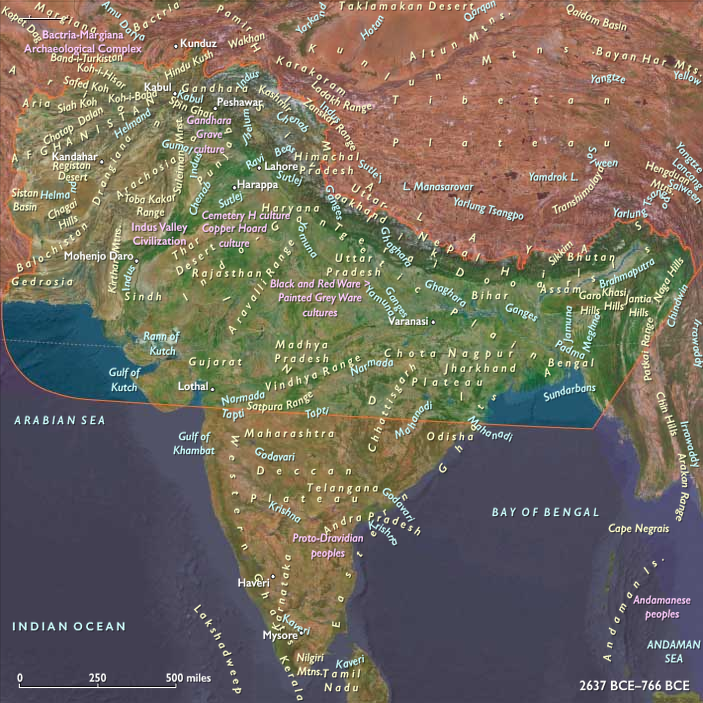
Permanent Aryan settlements and agriculture lead to …
Years: 2637BCE - 910BCE
Permanent Aryan settlements and agriculture lead to trade and other occupational differentiation.
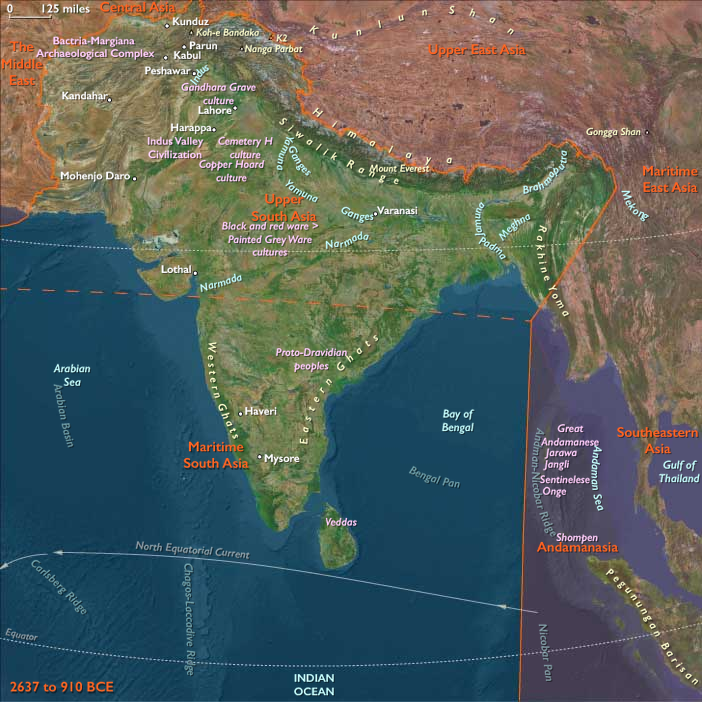
As lands along the Ganga (or Ganges) are cleared, the river becomes a trade route, the numerous settlements on its banks acting as markets.
Trade is restricted initially to local areas, and barter is an essential component of trade, cattle being the unit of value in large-scale transactions, which further limit the geographical reach of the trader.
Custom is law, and kings and chief priests are the arbiters, perhaps advised by certain elders of the community.
An Aryan raja, or king, is primarily a military leader, who takes a share from the booty after successful cattle raids or battles.
Although the rajas have managed to assert their authority, they scrupulously avoid conflicts with priests as a group, whose knowledge and austere religious life surpasses others in the community, and the rajas compromise their own interests with those of the priests.
Years: 2637BCE - 910BCE
Groups
Topics
Subjects
Regions
Subregions