
Filters:
The Synod of Metz (October 844) and …
Years: 844 - 844
October
The Synod of Metz (October 844) and the Carolingian Attempt to Reassert Authority
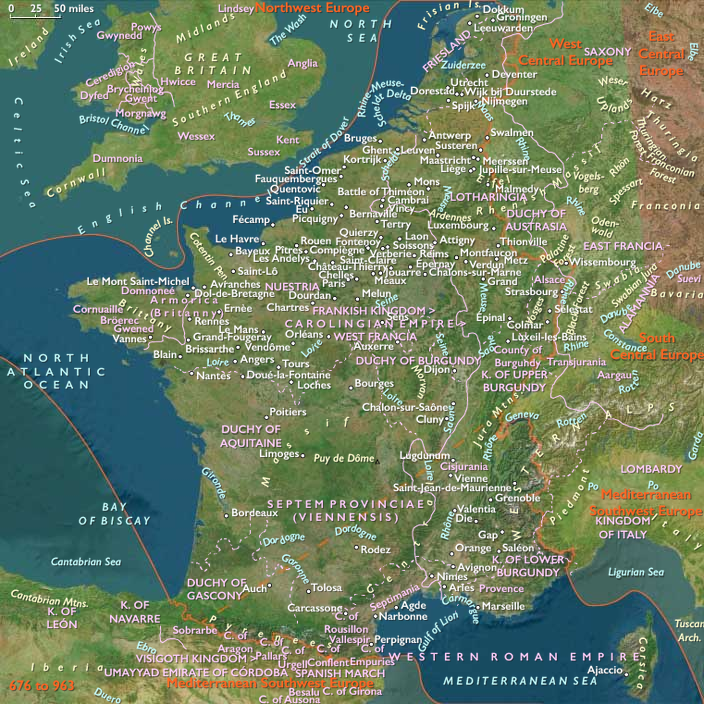
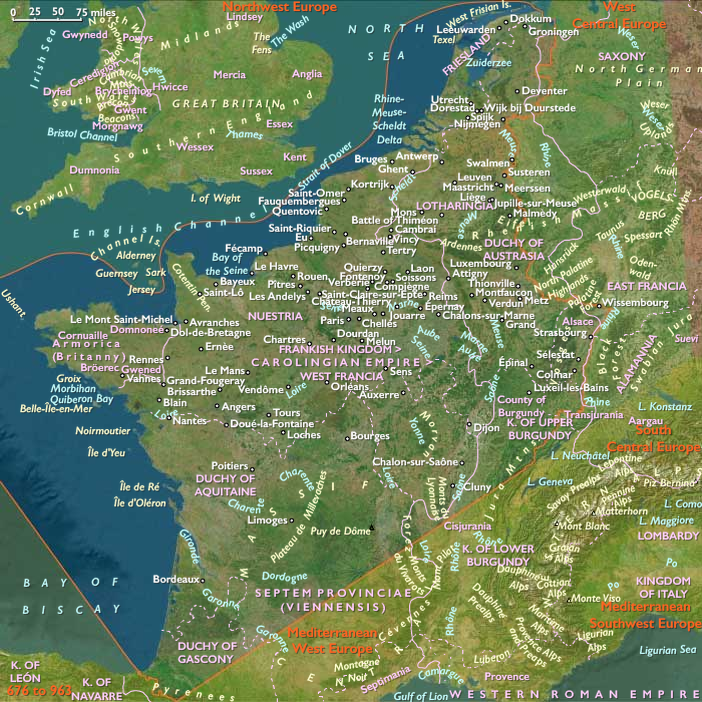
By October 844, Charles the Bald seeks to restore his authority over rebellious vassals who are challenging his rule in Brittany, Neustria, and Aquitaine. The bishops at the Synod of Metz, presided over by Charles' uncle, Drogo of Metz, issue a formal decree aimed at compelling:
- Nominoe, ruler of Brittany,
- Lambert II of Nantes, and
- Pepin II of Aquitaine
to renew their fealty to Charles or face military consequences.
The Church’s Role in Securing Royal Authority
- The bishops act as political agents of the Carolingian monarchy, reinforcing the idea that revolt against the king is not only treasonous but also a violation of Christian duty.
- Drogo of Metz, a close ally of Charles, uses the Church’s moral authority to pressure the rebels into submission.
- The synod’s orders serve as both a warning and a justification for an upcoming military campaign should the rebels refuse to comply.
Nominoe, Lambert, and Pepin’s Response
- Nominoe continues his raids into Frankish lands, showing no sign of submission.
- Lambert II of Nantes remains aligned with Breton forces, fighting against Charles' supporters in Neustria.
- Pepin II of Aquitaine, the disinherited grandson of Louis the Pious, refuses to relinquish his claim and continues his war for control over Aquitaine.
Consequences and Escalation of Conflict
- The failure of the Synod of Metz to secure peace leads directly to Charles’ military campaigns against Brittany and Neustria in the following years.
- The rebellion of Nominoe and Lambert culminates in Charles' disastrous defeat at the Battle of Ballon (845), where Breton independence is effectively cemented.
- Pepin II’s resistance in Aquitaine continues, ensuring that Charles must fight on multiple fronts while also contending with Viking incursions into West Francia.
Despite the Church’s involvement in the conflict, the Synod of Metz fails to subdue the rebellious lords, setting the stage for prolonged wars that will further fragment the Carolingian realm.
Locations
People
Groups
Topics
Commodoties
Subjects
Regions
Subregions
Years: 844 - 844
October
Locations
People
Groups
Topics
Commodoties
Subjects
Regions
Subregions