
The Seljuks, while they engage in state …
Years: 964 - 1107
The Seljuks, while they engage in state building, also emerge as the champions of Sunni Islam against the religion's Shia sect.
Tugrul's successor, Mehmet ibn Daud (r. 1063-72)—better known as Alp Arslan, the "Lion Hero"—prepares for a campaign against the Shia Fatimid caliphate in Egypt but is forced to divert his attention to Anatolia by the ghazis, on whose endurance and mobility the Seljuks depend.
The Seljuk elite cannot persuade these ghazis to live within the framework of a bureaucratic Persian state, content with collecting taxes and patrolling trade routes.
Each year the ghazis cut deeper into imperial territory, raiding and taking booty according to their tradition.
Some serve as mercenaries in the private wars of Roman nobles and occasionally settle on land they have taken.
The Seljuks follow the ghazis into Anatolia in order to retain control over them.
Alp Arslan routs the imperial army at Manzikert near Lake Van in 1071, opening all of Anatolia to conquest by the Turks.
People
Groups
- Oghuz Turks
- Muslims, Sunni
- Muslims, Shi'a
- Turkmen, Iraqi
- Abbasid Caliphate (Baghdad)
- Fatimid Caliphate
- Seljuq Empire (Neyshabur)
- Seljuq Empire (Rayy)
- Seljuq Empire (Isfahan)
Topics
- Islamic Golden Age
- Byzantine-Seljuq Turk War of 1048-49
- Byzantine-Seljuq Turk Wars of 1064-81
- Manzikert, Battle of
Subjects
Regions
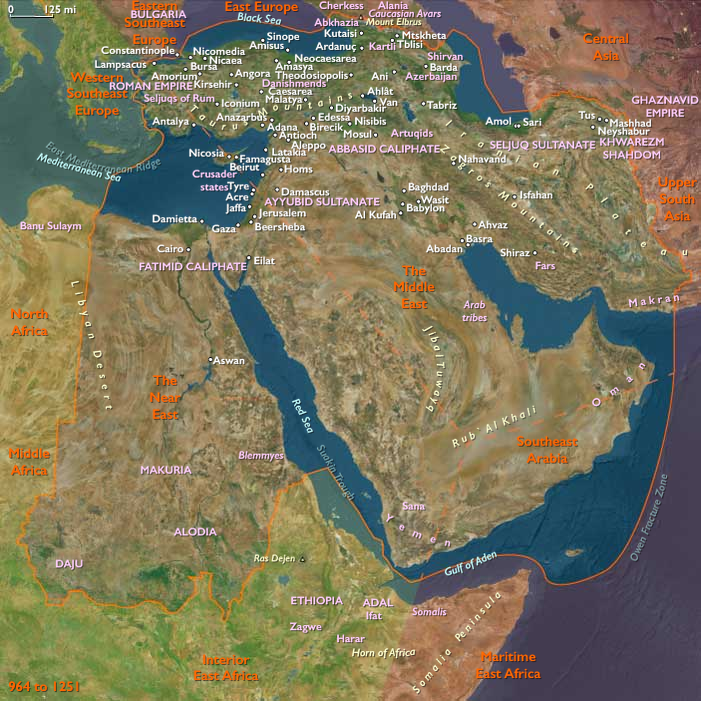
Subregions
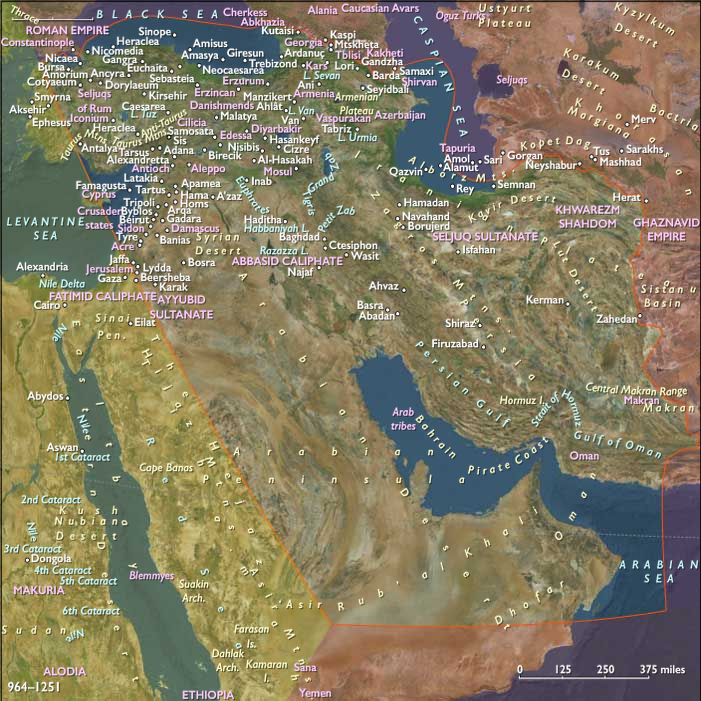
Related Events
Showing 9 events out of 9 total
Years: 964 - 1107
People
Groups
- Oghuz Turks
- Muslims, Sunni
- Muslims, Shi'a
- Turkmen, Iraqi
- Abbasid Caliphate (Baghdad)
- Fatimid Caliphate
- Seljuq Empire (Neyshabur)
- Seljuq Empire (Rayy)
- Seljuq Empire (Isfahan)
Topics
- Islamic Golden Age
- Byzantine-Seljuq Turk War of 1048-49
- Byzantine-Seljuq Turk Wars of 1064-81
- Manzikert, Battle of
Subjects
Regions
Subregions