
The Reconstruction of …
Years: 1180 - 1180
The Reconstruction of Gravensteen: A Crusader-Inspired Fortress in Ghent (1180 CE)
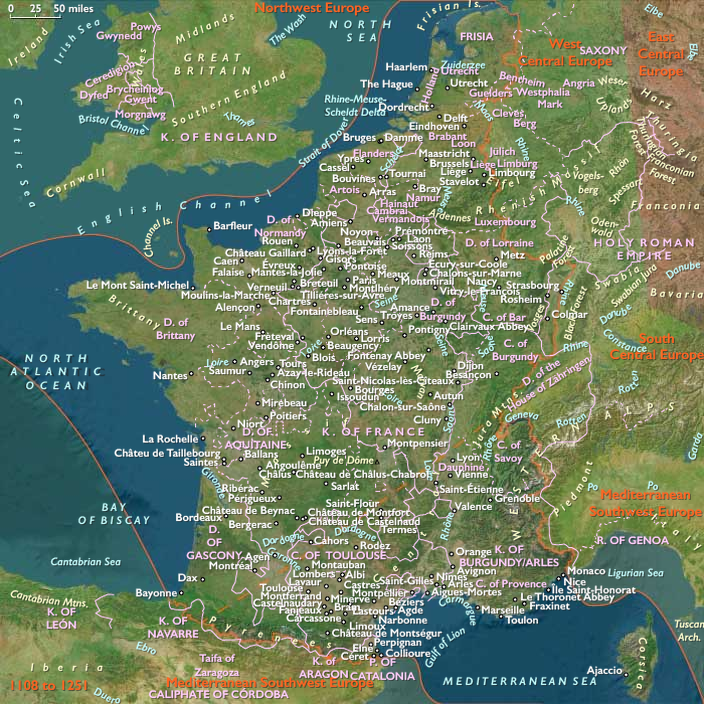
In 1180, Philip of Alsace, Count of Flanders, rebuilt the castle of the Counts of Flanders in Ghent, known as Gravensteen ("Castle of the Counts"). The new structure was modeled after the crusader castles that Philip had encountered during his military campaigns in the Holy Land, reflecting the influence of Crusader military architecture on European fortifications.
Philip of Alsace’s Crusader Influence
- Philip of Alsace had participated in the wars in the Holy Land, fighting alongside other European nobles in the Kingdom of Jerusalem.
- His experiences with massive stone castles in the Levant, such as Krak des Chevaliers and Kerak, shaped his vision for Gravensteen.
- The reconstructed castle was designed to serve as both a military stronghold and a symbol of comital authority, reinforcing Flemish power in Ghent.
Architectural Features of the 1180 Reconstruction
- Massive stone walls – Modeled after the thick curtain walls of Crusader castles, providing strong defensive capabilities.
- High central keep – The dominant feature of the castle, offering commanding views of the surrounding city and countryside.
- Murder holes and arrow slits – Designed to improve defensive combat tactics, influenced by crusader fortifications.
- Enclosed courtyard and residential quarters – Reflecting the castle’s dual function as a fortress and a noble residence.
Significance of Gravensteen’s Reconstruction
- Military and Strategic Importance – The rebuilt castle strengthened comital control over Ghent, reinforcing Flemish authority in a key economic center.
- Crusader Influence on European Castles – Gravensteen was one of several European castles influenced by Crusader designs, demonstrating the exchange of military knowledge between East and West.
- Survival and Legacy – Unlike many medieval fortifications, Gravensteen has survived largely intact, remaining a prominent historical landmark in Ghent today.
Philip of Alsace’s 1180 reconstruction of Gravensteen represents one of the earliest and most direct examples of crusader military architecture being applied in Western Europe, shaping the evolution of castle design in the Low Countries.
Locations
People
Groups
Topics
Commodoties
Subjects
Regions
Subregions
Related Events
Filter results
Showing 10 events out of 48192 total
Chinese and Japanese astronomers observe in 1181 what will eventually come to be understood as a supernova.
One of only eight supernovae in the Milky Way observed in recorded history, it appears in the constellation Cassiopeia and is visible in the night sky for about one hundred and eighty-five days.
The radio source 3C58 is thought to be the remnant from this event.
The Genpei War in Japan, part of the Minamoto–Taira clan disputes of the late Heian period, end in a Minamoto clan victory and the establishment of the Kamakura shogunate.
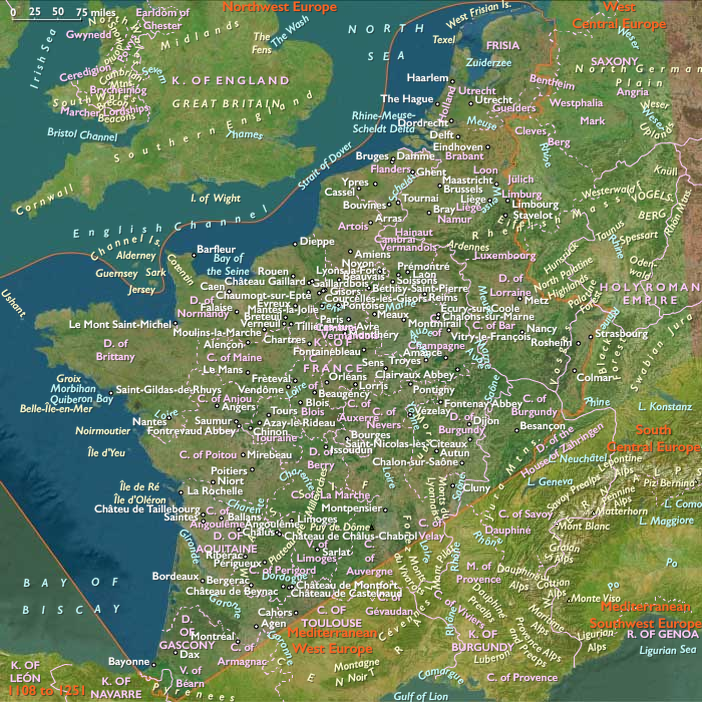
The Increasing Ornateness of Ecclesiastical Architecture: The Rebuilding of Pontigny Abbey (1186 CE)
By the late 12th century, ecclesiastical architecture was becoming more elaborate, both inside and out, as many churches were rebuilt and redecorated in the emerging Gothic style. Even orders that had originally embraced austere simplicity, such as the Cistercians, began to adopt grander architectural designs.
A prime example of this shift is the rebuilding of the Cistercian abbey church of Pontigny in 1186, where a magnificent Gothic east end (chevet) with radiating chapels was constructed—a clear departure from the architectural restraint championed by Bernard of Clairvaux.
Pontigny Abbey: From Cistercian Simplicity to Gothic Grandeur
- Pontigny Abbey, founded in 1114, was the second Cistercian monastery ever established and had initially followed the order’s strict architectural austerity.
- However, by 1186, the abbey underwent significant reconstruction, reflecting the evolving tastes and growing wealth of the order.
- The new east end (chevet) featured:
- Radiating chapels, a major Gothic innovation, replacing the simpler Cistercian flat-ended or square apses.
- Greater verticality and light, achieved through taller, pointed arches and expanded clerestory windows.
- More decorative stonework, signaling a loosening of early Cistercian architectural restrictions.
The Evolution of Cistercian Architecture
- Saint Bernard of Clairvaux had once strictly opposed excessive ornamentation, favoring bare stone walls, plain capitals, and simple forms.
- However, by the late 12th century, many Cistercian abbeys grew wealthier and began incorporating elements of Gothic architecture.
- Pontigny’s transformation mirrored broader changes across Cistercian Europe, where pragmatism and artistic influence overcame early monastic austerity.
Impact and Significance
- Pontigny’s rebuilt chevet set a precedent for later Cistercian Gothic architecture, balancing elegance with spiritual contemplation.
- It illustrated the declining influence of early Cistercian strictness as the order became more integrated into broader Church and political life.
- The move toward ornate architecture was part of a wider transition from Romanesque restraint to High Gothic splendor, marking a shift in medieval monastic aesthetics.
Though rooted in Cistercian tradition, Pontigny Abbey’s 1186 reconstruction was a clear sign that the once-reformed order was embracing a more elaborate architectural vision, reflecting the growing grandeur of 12th-century ecclesiastical buildings.
Northeast Europe (1180–1191 CE): Expansion, Crusader Fortresses, and Baltic Defiance
Introduction
From 1180 to 1191 CE, Northeast Europe experienced heightened crusading activity, the strengthening of royal power, and persistent Baltic resistance. This era witnessed strategic territorial expansions by Denmark and Sweden, increased fortifications by crusaders, and growing determination among Baltic peoples to preserve their independence and cultural identity.
Strengthening Royal Authority
In Denmark, under King Valdemar I the Great (r. 1157–1182) and subsequently his successor King Canute VI (r. 1182–1202), royal authority was firmly consolidated. Canute VI built upon his father's successes, reinforcing centralized governance, fortifying Denmark's influence in the southern Baltic, and securing control over previously pagan territories, especially on the island of Rügen and along the Pomeranian coast.
In Sweden, dynastic rivalries persisted, yet central authority strengthened gradually, allowing continued colonization efforts in southern Finland and greater engagement in crusading missions. Swedish kings increasingly projected power across the Baltic Sea, setting foundations for long-term Swedish presence in the eastern Baltic region.
Expansion and Consolidation of the Northern Crusades
This era marked intensified crusading efforts by German, Danish, and Swedish forces. Denmark expanded aggressively southward and eastward, fortifying strategic points and establishing Christian rule over local populations. Notably, Danish authorities continued consolidating control around recently conquered regions, particularly on the Baltic coast near Pomerania.
In Finland, Swedish settlement and missionary activity advanced significantly. Colonization accelerated, leading to deeper integration of southern Finland into the Swedish sphere of influence. This process intensified the cultural and political estrangement between Finnic communities north of the Gulf of Finland and their Baltic kin, especially the Estonians to the south.
Emergence of Crusader Fortresses
To secure territorial gains and protect expanding Christian domains, crusaders constructed numerous fortified strongholds throughout newly conquered territories. Key locations, such as the fortress towns emerging in Estonia and the recently secured regions of Rügen and southern Finland, served as bases for continued missionary and military operations, significantly bolstering Christian control.
Urban and Economic Growth
Economic vitality increased markedly during this period. Major trading hubs, particularly Visby on Gotland, solidified their central role in regional commerce, connecting Scandinavian merchants with Baltic and European markets. Danish towns such as Roskilde and Lund continued to flourish under royal patronage, driven by expanding trade and increased urbanization facilitated by merchant guilds.
Baltic Resistance and Defensive Alliances
Pagan populations of the Baltic region—particularly ancestors of the modern Estonians, Latvians, and Lithuanians—continued vigorous resistance against crusading incursions. Tribes intensified their defensive measures, strengthened alliances, and launched frequent counterattacks against encroaching crusader forces, demonstrating resilience and determination to maintain autonomy.
Ecclesiastical Influence and Cultural Foundations
Ecclesiastical institutions significantly expanded their influence during this era. Monastic establishments, particularly those of the Cistercian Order, grew more numerous and influential, promoting literacy, education, and the spread of ecclesiastical law. Bishops and clergy played pivotal roles in governance and cultural transformation, strengthening Christian influence throughout Northeast Europe.
Legacy of the Era
The years 1180 to 1191 CE significantly shaped the future trajectory of Northeast Europe. The strengthening of Danish and Swedish royal authority, establishment of strategic crusader fortresses, heightened cultural divisions among Baltic peoples, and sustained resistance to Christian incursions laid enduring foundations. This period's developments influenced subsequent centuries, profoundly affecting political alliances, territorial control, and cultural dynamics across the region.
East Central Europe (1180–1191 CE): Heightened Hungarian Influence under Béla III, Přemyslid Succession in Bohemia, Intensified Polish Regionalism, and Leopold V’s Austrian Expansion
Between 1180 and 1191 CE, East Central Europe—encompassing modern-day Poland, Czechia, Slovakia, Hungary, and the eastern regions of Germany and Austria east of 10°E and north of the defined southeastern boundary—experienced significant political and territorial developments. Hungary flourished under Béla III’s effective administration, becoming a dominant regional power; Bohemia navigated complex succession challenges after Vladislaus II; Polish territories remained fragmented and increasingly regionalized; and Austria expanded politically and territorially under Duke Leopold V of the Babenberg dynasty. Collectively, these developments shaped regional stability, economic growth, and cultural vitality.
Political and Military Developments
Hungarian Ascendancy under Béla III
-
King Béla III (r. 1172–1196) secured Hungary’s position as one of Central Europe’s leading kingdoms, fostering internal stability, robust administration, and extensive diplomatic relations. His reign marked significant territorial expansion, notably in Dalmatia and the Balkans.
-
Béla III’s active diplomacy with Byzantium, the Holy Roman Empire, and neighboring Slavic territories established Hungary as a major political player, significantly influencing regional affairs.
Přemyslid Succession and Political Realignment in Bohemia
-
After Vladislaus II’s abdication in 1172, Bohemia experienced complex dynastic succession struggles among his heirs, leading to political instability under rulers like Bedřich (Frederick) and later Conrad II Otto. These internal conflicts weakened centralized royal authority, challenging Přemyslid dominance and temporarily reducing Bohemia’s regional influence.
Polish Fragmentation and Increasing Regionalism
-
Poland remained politically fragmented into autonomous Piast duchies, with principalities such as Silesia, Lesser Poland, Masovia, and Greater Poland increasingly pursuing independent political and economic interests.
-
Regional rivalries intensified, limiting unified royal authority and reinforcing a fragmented political landscape dominated by local princes and nobility.
Austrian Territorial and Political Expansion under Leopold V
-
Duke Leopold V of Austria (r. 1177–1194) expanded Babenberg authority, strengthening Austrian territory and political influence within the Holy Roman Empire. His rule marked Austria’s enhanced autonomy, strategic territorial acquisitions, and solidified its political presence in regional affairs.
Continued Imperial Influence under Frederick Barbarossa
-
Emperor Frederick Barbarossa (r. 1152–1190) maintained significant political influence throughout East Central Europe, particularly in Bohemian succession affairs, Austrian ducal politics, and diplomatic relationships with Hungary. His death in 1190 on the Third Crusade marked a notable turning point, leading to altered imperial relations with the region.
Economic and Technological Developments
Regional Economic Prosperity and Urban Growth
-
Economic growth continued, driven by flourishing trade networks connecting East Central Europe with broader European markets, including the Baltic, Byzantium, and Western Europe. Major urban centers expanded significantly, reflecting increased trade, commerce, and regional stability.
Agricultural Productivity and Technological Innovation
-
Agricultural advancements persisted, including improved farming techniques, iron plows, and expanded crop rotation. These innovations supported growing urban populations, regional prosperity, and economic stability.
Cultural and Artistic Developments
Hungarian Cultural Renaissance under Béla III
-
Béla III significantly patronized cultural and ecclesiastical activities, commissioning architectural works, manuscript illumination, and scholarly pursuits. Byzantine and Western European influences profoundly shaped Hungary’s artistic and cultural identity during this period.
Přemyslid Cultural Continuity amid Political Challenges
-
Despite internal dynastic struggles, Bohemia’s ecclesiastical and monastic institutions continued cultural activities, preserving scholarly traditions and artistic production, notably in Prague and surrounding regions.
Polish Cultural Resilience in a Fragmented Landscape
-
Poland’s ecclesiastical institutions, monasteries, and regional cultural centers continued scholarly, religious, and artistic traditions, maintaining cultural continuity despite political fragmentation and regional divisions.
Settlement and Urban Development
Hungarian Urban Expansion and Infrastructure under Béla III
-
Béla III’s reign saw significant urban growth, especially in Esztergom, Buda, and Székesfehérvár, supported by enhanced administrative infrastructure, fortified settlements, and flourishing commerce, reflecting stable governance and regional influence.
Austrian Urban and Territorial Growth under Leopold V
-
Under Leopold V, Austrian urban centers, especially Vienna, expanded territorially, improving infrastructure, fortifications, and trade connections. Vienna notably grew in prominence as a regional administrative and commercial hub.
Stability and Growth in Polish and Bohemian Urban Centers
-
Despite internal instability, cities such as Kraków, Wrocław, and Prague sustained urban growth and economic stability, benefiting from vibrant regional trade networks and administrative continuity.
Social and Religious Developments
Strengthened Ecclesiastical Structures and Religious Influence
-
Christianity deepened its integration into governance, culture, and education across East Central Europe, supported by royal and ducal patronage in Hungary, Austria, and Bohemia. Religious institutions played central roles in cultural preservation and social organization.
Dynastic Stability and Aristocratic Authority
-
Aristocratic governance structures and dynastic influence continued to shape regional politics significantly. Hungarian royal stability under Béla III, Austrian strength under Leopold V, and Poland’s local aristocratic power underscored the continuing importance of nobility and dynastic structures.
Long-Term Consequences and Historical Significance
The era 1180–1191 CE represented a period of significant transformation and consolidation in East Central Europe. Hungary’s ascendancy under Béla III, Austria’s political expansion under Leopold V, Bohemia’s dynastic challenges, and Poland’s persistent regional fragmentation collectively defined regional political identities and territorial boundaries. These developments had lasting implications, shaping regional governance, cultural traditions, economic structures, and political dynamics that profoundly influenced East Central Europe’s medieval trajectory.
Nicholas of Verdun and the Mosan Influence on Romanesque Ornamentation (1181 CE)
The Mosan goldsmith Nicholas of Verdun was one of the most influential artists of the Romanesque period, known for his masterful metalwork and enameling. His works played a pivotal role in reviving classical artistic traditions within Romanesque religious art, particularly through his engraved and enameled altar frontal plaques for Klosterneuburg, completed in 1181.
The Klosterneuburg Altar (1181)
- Commissioned for Klosterneuburg Abbey, near Vienna, Austria, Nicholas of Verdun’s altar frontal plaques are a masterpiece of Mosan goldsmithing.
- The plaques feature engraved and enameled depictions of biblical scenes, executed with a refined classical style reminiscent of ancient Roman and Byzantine traditions.
- The work showcases champlevé enamel, a technique perfected by Mosan artists, in which cells carved into metal are filled with enamel, creating vivid and intricate imagery.
Revival of the Classical Spirit
- Nicholas’ work splendidly revives the classical aesthetic seen in earlier Mosan reliefs, particularly those by Renier de Huy, another master goldsmith from Liège.
- Like Renier’s baptismal fonts and religious metalwork, Nicholas’ art is characterized by:
- Graceful, naturalistic figures that echo late antique sculpture.
- Dynamic compositions with depth and movement, distinguishing it from the more rigid Romanesque traditions.
- A harmonious balance between ornament and narrative, bringing biblical scenes to life with remarkable detail.
Nicholas of Verdun’s Lasting Influence
- His combination of classical refinement and Romanesque craftsmanship helped bridge the transition to early Gothic aesthetics.
- The Mosan goldsmithing tradition, exemplified by Nicholas and Renier de Huy, continued to influence liturgical art across Europe, particularly in Germany and France.
- His work at Klosterneuburg remains one of the greatest masterpieces of medieval enamel and metalwork, securing his place as a leading figure in Romanesque art.
Through his mastery of enamel and metal engraving, Nicholas of Verdun revived classical artistic traditions, ensuring that Mosan goldsmithing remained at the forefront of medieval European craftsmanship.
Eastern Southeast Europe (1180–1191 CE): Turmoil, Succession Crisis, and Frontier Pressures
Settlement and Migration Patterns
Frontier Security and Szekler Communities
The Szeklers continued playing a pivotal role in frontier security within Transylvania, defending against incursions and maintaining the Hungarian Kingdom’s eastern borders amidst regional instabilities following the death of Byzantine Emperor Manuel I Komnenos in 1180.
Expansion of Transylvanian Saxon Settlements
The Transylvanian Saxons, settlers predominantly from the Low Countries and Germanic regions, further consolidated their communities during this era. Invited earlier by Hungarian rulers to strengthen frontier defenses, they developed fortified towns that significantly boosted regional agricultural productivity, trade, and border security.
Economic and Technological Developments
Continued Venetian Trade Dominance
The economic landscape remained dominated by Venetian commercial interests, whose control over major trade routes and markets persisted despite Byzantine attempts to counterbalance their influence. This economic reality underscored the complexity of maintaining regional trade autonomy following Emperor Manuel's death.
Military and Defensive Reinforcements
Technological advancements continued to emphasize defense, particularly through the fortification of strategic urban centers such as Constantinople. Enhanced defensive systems and logistical capabilities remained essential, especially amidst increased internal and external pressures.
Cultural and Artistic Developments
Transition and Byzantine Cultural Continuity
Despite political upheaval following Emperor Manuel's death, Byzantine culture and art continued flourishing. The integration of Western elements remained notable, with the Byzantine court in Constantinople still showcasing significant artistic exchanges despite growing internal discontent.
Scholarly and Educational Stability
Scholarly and educational institutions preserved classical and theological traditions, actively adapting to the turbulent political environment. Intellectual continuity provided cultural resilience amid administrative transitions and external threats.
Social and Religious Developments
Succession Crisis and Diplomatic Complexity
The death of Manuel I Komnenos in 1180 led to a significant succession crisis, intensifying political instability and complicating diplomatic relations within the region. Internal power struggles and factionalism weakened Byzantine political coherence, affecting relationships with neighboring states, including Hungary and the expanding Latin kingdoms.
Increasing Latin Influence and Internal Tensions
The presence of Latin (Western European) influences, fostered extensively during Manuel’s reign, increasingly became a source of internal friction. The earlier diplomatic policies now exacerbated tensions between Greek and Latin communities, significantly influencing social and political stability.
Strengthened Christian Institutional Presence
Christianity remained deeply influential, with religious institutions continuing to expand their roles amid internal turmoil. Ecclesiastical structures provided social cohesion and spiritual support during this period of heightened political and diplomatic uncertainty.
Integration of Roma Populations
During this period, ancestral populations of modern European Roma, known as the Doma, entered the Balkans, arriving around the early 12th century. Originally from northwestern India and having left around CE 500, these groups began spreading across Europe, gradually integrating yet maintaining distinct cultural identities within local societies.
Long-Term Consequences and Historical Significance
The era from 1180 to 1191 CE was marked by intense political turmoil following Emperor Manuel's death, complex diplomatic shifts, sustained frontier pressures, and continued economic rivalry with Venice. The arrival and integration of the Roma, alongside internal succession struggles and increased Latin influence, significantly impacted Eastern Southeast Europe's historical and cultural trajectory, laying the groundwork for future conflicts and demographic changes.
The Third Norman Invasion of Byzantium (1185–1186): The Last Great Conflict Between Sicily and Constantinople
The third and final Norman invasion of Byzantium (1185–1186) marked the last major conflict between the Kingdom of Sicily and the Byzantine Empire. While previous Norman campaigns had failed to seize Constantinople, this invasion came closer than ever before being repelled.
The incompetent rule of Emperor Andronikos I Komnenos (r. 1183–1185) left the empire vulnerable, allowing the Normans to march unchecked toward the imperial capital. Their brutal sack of Thessalonica in 1185 was a grim foreshadowing of Constantinople’s fall to the Fourth Crusade in 1204.
The Norman Invasion and the Sack of Thessalonica (1185)
- The Norman Kingdom of Sicily, under King William II, launched an invasion of the Byzantine Empire in 1185, targeting Thessalonica, the empire’s second-largest city.
- The Norman army and fleet advanced rapidly, facing little resistance due to the weak rule of Andronikos Komnenos.
- In August 1185, the Normans sacked Thessalonica with unparalleled brutality, massacring civilians and looting the city in what was one of the worst devastations in its history.
- The event shocked the Byzantine world, and panic spread to Constantinople, where Andronikos Komnenos lost control of the situation.
Isaac II Angelos Seizes the Throne and Defeats the Normans (1185–1186)
- The chaos following the sack of Thessalonica allowed Isaac II Angelos, a noble from the Angelos family, to seize power in September 1185 after a popular uprising in Constantinople.
- Andronikos Komnenos was deposed and brutally executed, marking the end of Komnenian rule.
- Now emperor, Isaac II Angelos swiftly reorganized the Byzantine army and launched a counteroffensive against the Normans.
- In 1186, the Byzantines decisively defeated the Normans, pushing them back to Sicily and effectively ending the invasion.
Aftermath and Consequences
- The Byzantines recaptured most of the territories seized by the Normans, except for the County Palatine of Cephalonia and Zakynthos, which remained under Norman control.
- The sack of Thessalonica, however, had crippled Byzantine prestige and exposed the empire’s vulnerability to external invasions.
- The Norman invasion was a grim precursor to the Fourth Crusade’s sack of Constantinople in 1204, as it demonstrated that Byzantium was no longer invincible.
- Although Isaac II Angelos temporarily restored stability, his rule would later prove weak, and Byzantium would continue to decline in the following decades.
The third Norman invasion of Byzantium (1185–1186) was the final great conflict between Sicily and Constantinople, and though the Normans were ultimately repelled, the empire’s waning strength and increasing instability set the stage for its further decline in the 13th century.
The Zengid dynasty, controlling a unified Syria after the failure of the Second Crusade, had engaged in a conflict with the Fatimid rulers of Egypt, which had ultimately resulted in the unification of Egyptian and Syrian forces under the command of Saladin, who had employed them to reduce the Christian states and to recapture Jerusalem in 1187.
The Sunni Muslim Ayyubid dynasty displaces Shi'ite Fatimid rule in Syria and Egypt.
Years: 1180 - 1180
Locations
People
Groups
Topics
Commodoties
Subjects
Regions
Subregions