
The competition between Swiss (Reisläufer) …
Years: 1492 - 1503
The competition between Swiss (Reisläufer) and Swabian mercenaries (Landsknechte), who both fight in armies throughout Europe, sometimes opposing each other on the battlefield, sometimes competing for contracts, intensifies.
Contemporary chronicles agree in their reports that the Swiss, who are considered the best soldiers in Europe at the time after their victories in the Burgundian Wars, are subject to many taunts and abuses by the Landsknechte; they are called "Kuhschweizer" and ridiculed in other ways.
Kuhschweizer roughly means literally "Swiss cow herders"; although intended as a derogatory term, there is no connection to "coward".
One explanation for the violent response of the Swiss to that and related "cow"-based insults is that these alluded to sodomy and thus heresy.
Incidentally, the Swabians also use the term Schwyzer to denote all the Swiss, who call themselves Eidgenossen at this time, as an insult.
The Swiss, however, assimilated that term and begin to wear it proudly.
Such insults are neither given nor taken lightly, and frequently lead to bloodshed.
Indeed, such incidents will contribute to prolong the Swabian War itself by triggering skirmishes and looting expeditions that the military commands of neither side had ever wanted or planned.
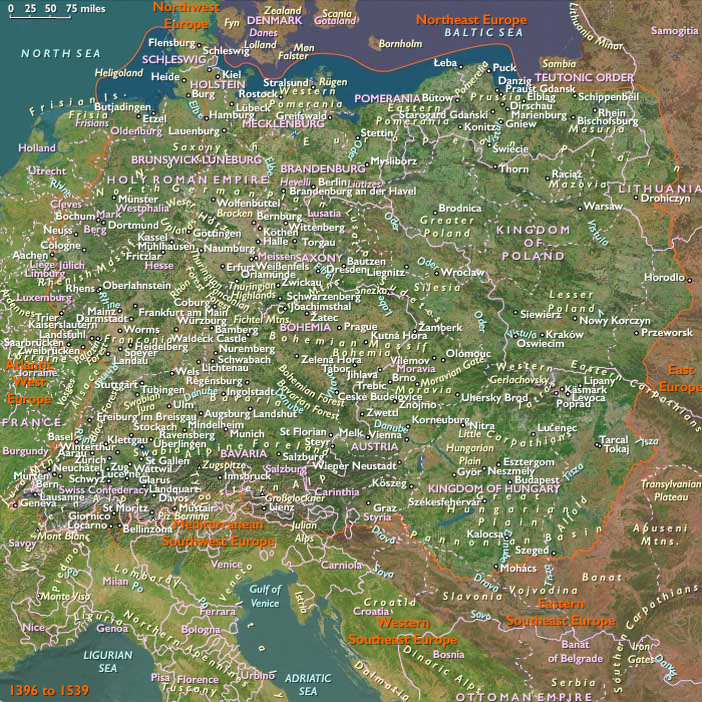
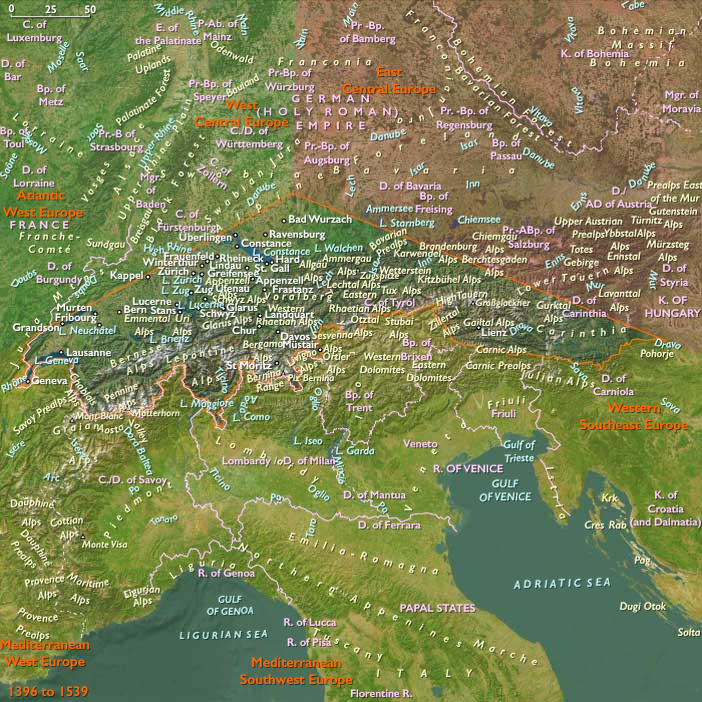
The Swabian War of 1499 (Schwabenkrieg, also called Schweizerkrieg ["Swiss War"] in Germany and Engadiner Krieg ["War of the Engadin"] in Austria) is the last major armed conflict between the Old Swiss Confederacy and the House of Habsburg.
What had begun as a local conflict over the control of the Val Müstair and the Umbrail Pass in the Grisons soon gets out of hand when both parties call upon their allies for help; the Habsburgs demanding the support of the Swabian League and the Federation of the Three Leagues of the Grisons turning to the Swiss Eidgenossenschaft.
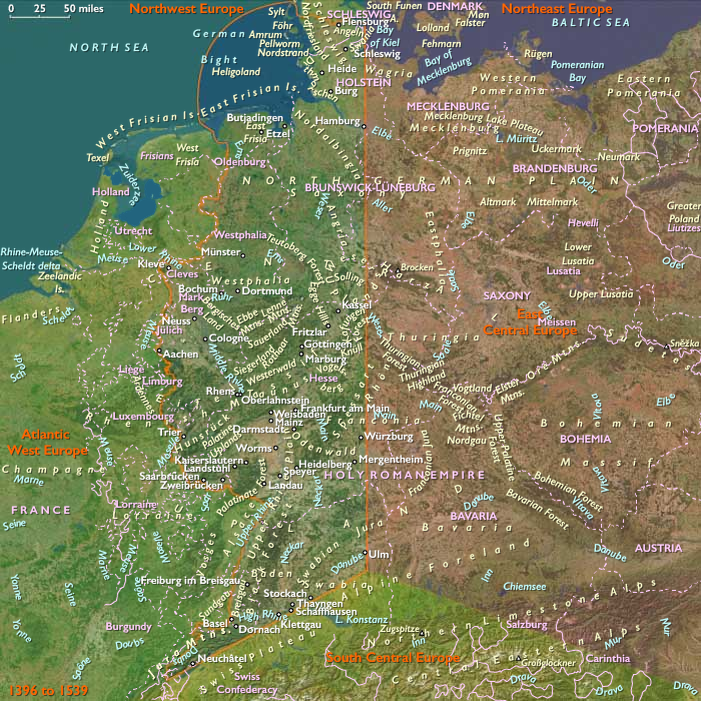
Hostilities quickly spread from the Grisons through the Rhine valley to Lake Constance and even to the Sundgau in southern Alsace, the westernmost part of Habsburg Further Austria.
Many battles are fought from January to July 1499, and in all but a few minor skirmishes, the experienced Swiss soldiers defeat the Swabian and Habsburg armies.
After their victories in the Burgundian Wars, the Swiss have battle-tested troops and commanders.
On the Swabian side, distrust between the knights and their foot soldiers, disagreements among the military leadership, and a general reluctance to fight a war that even the Swabian counts consider to be more in the interests of the powerful Habsburgs than in the interest of the Holy Roman Empire, prove fatal handicaps.
When his military high commander falls in the battle of Dornach, where the Swiss win a final decisive victory Maximilian I has no choice but to agree to a peace treaty signed on September 22, 1499 in Basel.
The treaty grants the Confederacy far-reaching independence from the empire.
Although the Eidgenossenschaft is to officially remain a part of the empire until the Treaty of Westphalia in 1648, the peace of Basel exempts it from the imperial jurisdiction and imperial taxes and thus de facto acknowledges it as a separate political entity.
People
Groups
- Austria, Archduchy of
- Swiss Confederacy, Old (Swiss Confederation)
- Swiss mercenaries
- Holy Roman Empire
- Landsknechts
- Swabian League
Topics
Subjects
Regions
Subregions
Years: 1492 - 1503
People
Groups
- Austria, Archduchy of
- Swiss Confederacy, Old (Swiss Confederation)
- Swiss mercenaries
- Holy Roman Empire
- Landsknechts
- Swabian League
Topics
Subjects
Regions
Subregions