
Filters:
The Ottoman pasha's government introduces new commercial …
Years: 1852 - 1863
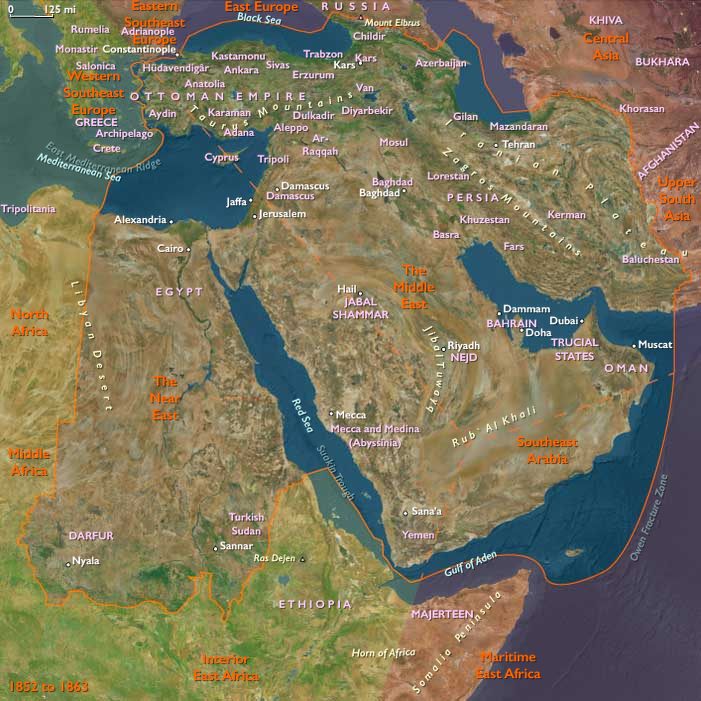
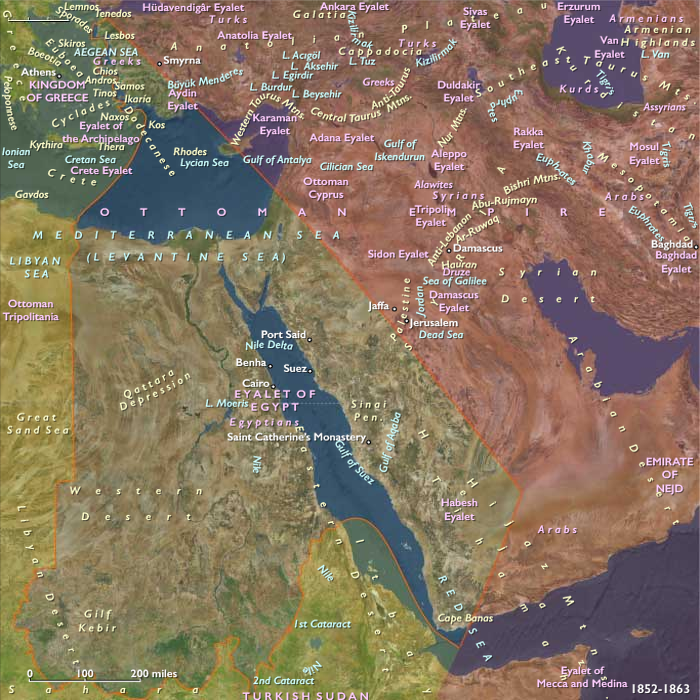
The Ottoman pasha's government introduces new commercial and criminal codes in Egypt and Sudan in the 1850s, which are administered in secular courts.
The change reduced the prestige of the qadis, Islamic judges whose sharia courts are confined to dealing with matters of personal status.
The Turkiyyah also encourages a religious orthodoxy favored in the Ottoman Empire.
The government builds mosques and staffs religious schools and courts with teachers and judges trained at Cairo's Al-Azhar University.
The government favors the Khatrniyyah, a traditional religious order, because its leaders cooperate with the regime, but Sudanese Muslims condemn the official orthodoxy as decadent because it has rejected popular beliefs and practices.
The change reduced the prestige of the qadis, Islamic judges whose sharia courts are confined to dealing with matters of personal status.
The Turkiyyah also encourages a religious orthodoxy favored in the Ottoman Empire.
The government builds mosques and staffs religious schools and courts with teachers and judges trained at Cairo's Al-Azhar University.
The government favors the Khatrniyyah, a traditional religious order, because its leaders cooperate with the regime, but Sudanese Muslims condemn the official orthodoxy as decadent because it has rejected popular beliefs and practices.
Locations
Groups
- Nubians
- Arab people
- Ja'alin tribe
- Christians, Monophysite
- Christianity, Chalcedonian
- Coptic Orthodox Church of Alexandria
- Islam
- Muslims, Sunni
- Fur people (Nilo-Saharan tribe)
- Funj people
- Ottoman Empire
- Sennar, Funj Sultanate of
- Shaigiya
- Egypt, (Ottoman) Viceroyalty of
- Sudan, Turco-Egyptian
Subjects
Regions
Subregions
Years: 1852 - 1863
Locations
Groups
- Nubians
- Arab people
- Ja'alin tribe
- Christians, Monophysite
- Christianity, Chalcedonian
- Coptic Orthodox Church of Alexandria
- Islam
- Muslims, Sunni
- Fur people (Nilo-Saharan tribe)
- Funj people
- Ottoman Empire
- Sennar, Funj Sultanate of
- Shaigiya
- Egypt, (Ottoman) Viceroyalty of
- Sudan, Turco-Egyptian
Subjects
Regions
Subregions