
The Egyptian language begins to be written …
Years: 3213BCE - 3070BCE
The Egyptian language begins to be written in words instead of pictures, when a Egyptian scribes invent or adopt a writing system, based on hieroglyphics, around 3100 BCE.
Hieroglyphic script develops from the preliterate artistic traditions of Egypt, possibly influenced by trading contacts with Sumer, although the syllabic signs do not indicate differences in vowel sounds, as does the Sumerian script.
A hieroglyph can represent either a sound, an idea, or an identifying mark attached to another sign.
The earliest recognizable Egyptian hieroglyphics occur sparsely, as personal and place names, in narrative reliefs dating from this period.
The earliest known hieroglyphic inscription was for many years the Narmer Palette, found during excavations at Hierakonpolis (modern Kawm al-Ahmar) in the 1890s, which has been dated to about 3200 BCE.
A German archaeological team under Günter Dreyer excavating at Abydos (modern Umm el-Qa'ab) in 1998 will uncover tomb U-j of a Predynastic ruler, and recover three hundred clay labels inscribed with proto-hieroglyphs, dating to the early Naqada IIIA period.
Egyptian scribes, when using brush and ink, have adopted a cursive writing system known as hieratic.
First used during the Protodynastic Period, developing alongside the more formal hieroglyphic script, hieratic will continue to develop until it bears little resemblance to the hieroglyphic script.
Hieratic is not a derivative of hieroglyphic writing; true monumental hieroglyphs carved in stone do not appear until the First Dynasty, well after hieratic had been established as a scribal practice.
The two writing systems, therefore, are related, parallel developments, rather than a single linear one.
Various small city-states have arisen along the Nile.
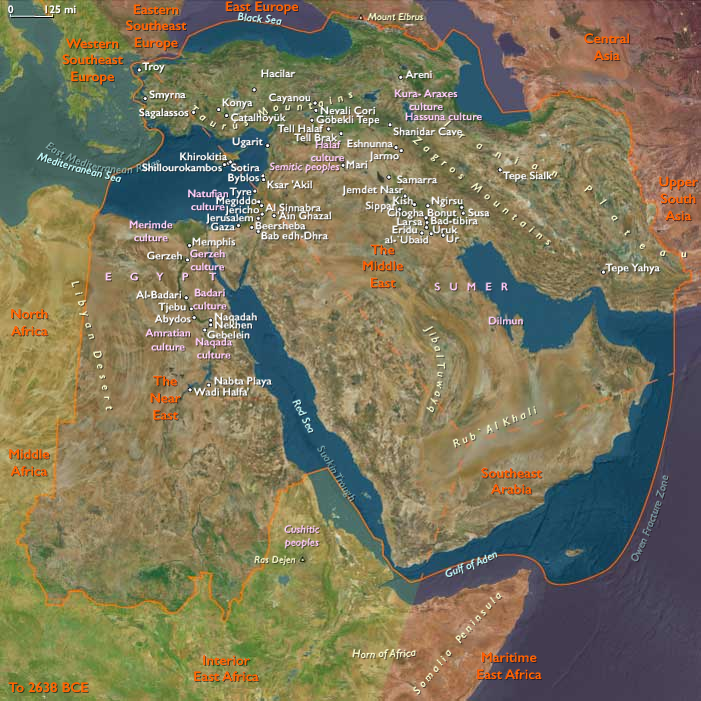
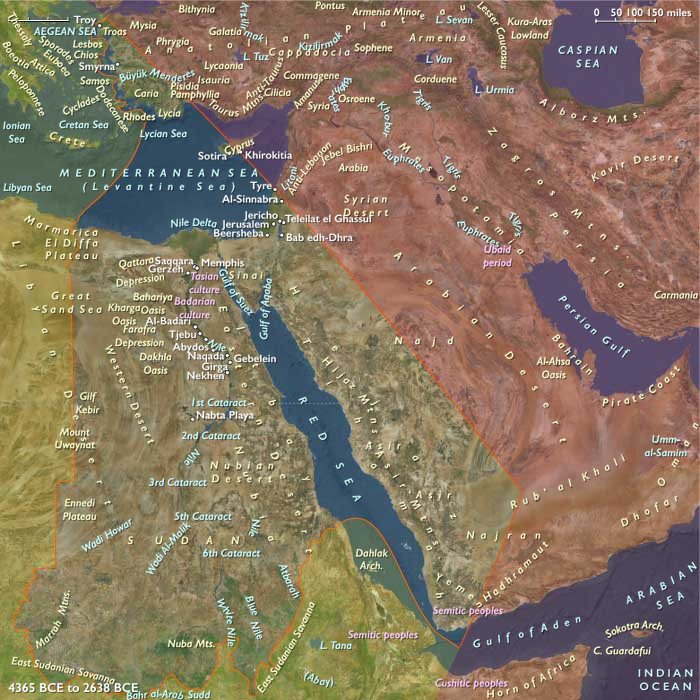
Centuries of conquest have reduced Upper Egypt to three major states: Thinis, Naqada, and Nekhen.
Not much is known of Lower Egypt's political makeup but they may have shared in Naqada's Set cult while Thinis and Nekhen are part of the Horus cult.
Being sandwiched by Thinis and Nekhen, Naqada is the first to fall.
Thinis then conquers Lower Egypt.
Nekhen's relationship with Thinis is uncertain but these two states may have merged peacefully with the Thinite royal family ruling all of Egypt.
Thinis is attributed in Manetho's chronological list to being the home of the First and Second Dynastic kings, though no proof of this has been found.
The location of the ancient city of Thinis is unknown, but there is the possibility it was located near or under the modern town of Girga.
The Thinite kings are buried at Abydos in the Umm el-Qa'ab cemetery.
King Serket, translated as King Scorpion or sometimes The Scorpion King, refers to one or two kings of Upper Egypt during the Protodynastic Period.
His name may refer to the goddess Serket.
Believed to have lived just before or during the rule of Narmer at Thinis, the only pictorial evidence of his existence is a macehead found in the main deposit in a temple at Nekhen.
He may have been a local king of Nekhen who had nothing to do with the ruling house of Thinis or a rival from within that family; another theory makes him identical to Narmer as an alternate name.
Locations
People
Groups
- Egypt (Ancient), Predynastic
- Gerzeh culture (Naqada II)
- Egypt, Upper
- Egypt (Ancient), Protodynastic or Semainian (Naqada III)
Topics
- Subboreal Period during the Neolithic Subpluvial
- Early Bronze Age I (Near and Middle East)
- Piora Oscillation ending the Neolithic Subpluvial
- Subboreal Period
Commodoties
Subjects
Regions
Subregions
Years: 3213BCE - 3070BCE
Locations
People
Groups
- Egypt (Ancient), Predynastic
- Gerzeh culture (Naqada II)
- Egypt, Upper
- Egypt (Ancient), Protodynastic or Semainian (Naqada III)
Topics
- Subboreal Period during the Neolithic Subpluvial
- Early Bronze Age I (Near and Middle East)
- Piora Oscillation ending the Neolithic Subpluvial
- Subboreal Period
Commodoties
Subjects
Regions
Subregions