
Atlantic West Europe, 820–831: Dynastic Consolidation and …
Years: 820 - 831
Atlantic West Europe, 820–831: Dynastic Consolidation and Carolingian Stability
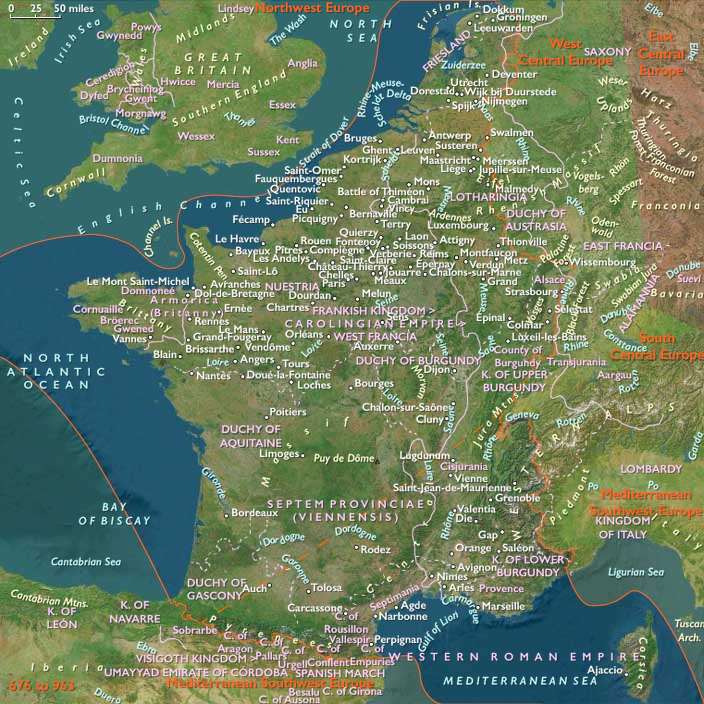
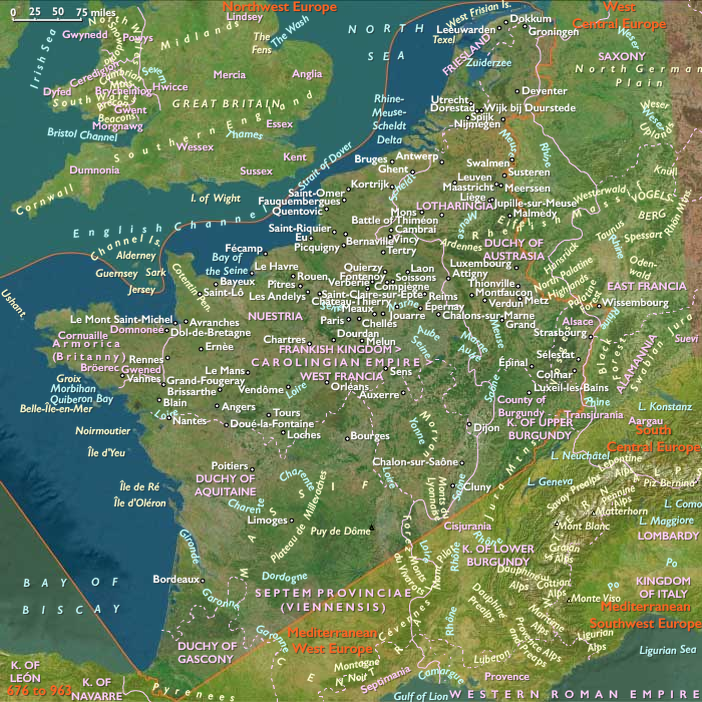
Between 820 and 831, Atlantic West Europe—which included Brittany, Aquitaine, Normandy, Burgundy, central France, Alsace, Franche-Comté, and the Low Countries—experienced a period of relative stability under Carolingian rule, although internal tensions foreshadowed future divisions.
Political and Military Developments
-
Carolingian Empire: Rule of Louis the Pious
- Louis the Pious (r. 814–840) continued to govern the vast Carolingian Empire from Aachen, maintaining imperial unity but increasingly challenged by succession disputes among his sons.
- Attempts to provide inheritance for his sons (Lothair, Pepin I of Aquitaine, Louis the German, and Charles the Bald) initiated complex internal dynamics, undermining central authority.
-
Aquitaine: Semi-Autonomous Rule
- Pepin I, as King of Aquitaine (817–838), enjoyed substantial regional autonomy, laying the foundations for Aquitaine’s distinct political identity within the empire.
-
Brittany: Independent Struggles
- Brittany, under Nominoë, asserted independence from Frankish overlordship, beginning a protracted struggle for autonomy that characterized much of the ninth century.
Economic and Social Developments
- Carolingian Economic Stability
- The Carolingian economic renaissance continued from Charlemagne’s era, with sustained agricultural productivity, trade, and monetization, supporting urban growth, particularly around key centers such as Tours, Orléans, and Nantes.
Religious and Cultural Developments
-
Monastic and Intellectual Continuity
- Monasteries, notably Saint Martin of Tours, preserved and expanded their cultural and intellectual role, copying manuscripts and promoting Carolingian learning and literacy.
-
Continued Carolingian Renaissance
- The Carolingian Renaissance's cultural flowering continued, fostering artistic and literary works, scriptoria productivity, and scholarly efforts, particularly in monastic centers.
Legacy
This era provided stability but also revealed underlying dynastic fragility that would soon lead to fragmentation, notably in the coming disputes among Louis the Pious's heirs. Atlantic West Europe enjoyed a continuation of Carolingian cultural and economic flourishing, even as seeds of political division were sown.
People
Groups
- Christianity, Chalcedonian
- Francia (Carolingians)
- Aquitaine, (Carolingian) Kingdom of
- Frankish, or Carolingian (Roman) Empire
- Brittany, Kingdom of
Topics
Subjects
Regions
Subregions
Years: 820 - 831
People
Groups
- Christianity, Chalcedonian
- Francia (Carolingians)
- Aquitaine, (Carolingian) Kingdom of
- Frankish, or Carolingian (Roman) Empire
- Brittany, Kingdom of
Topics
Subjects
Regions
Subregions