
The fragments of a Neanderthal skull disinterred …
Years: 132237BCE - 111502BCE
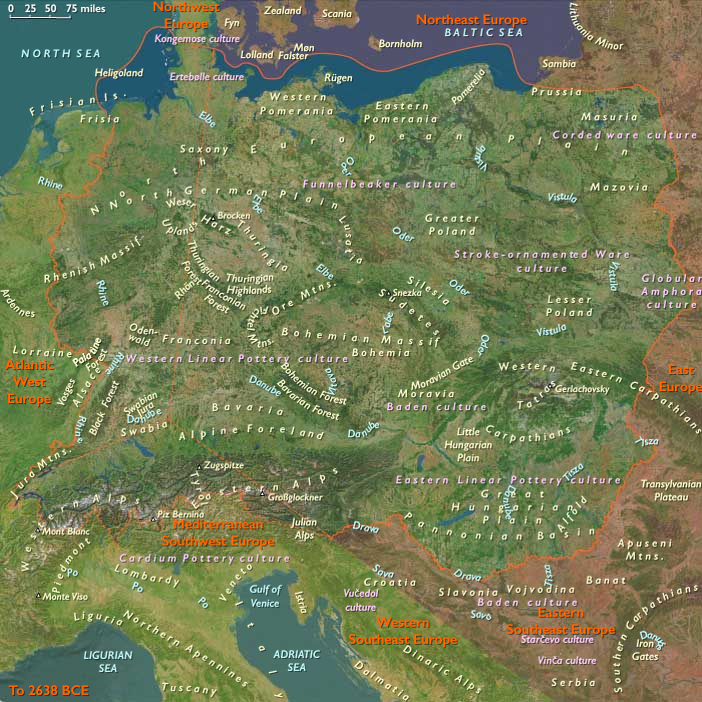
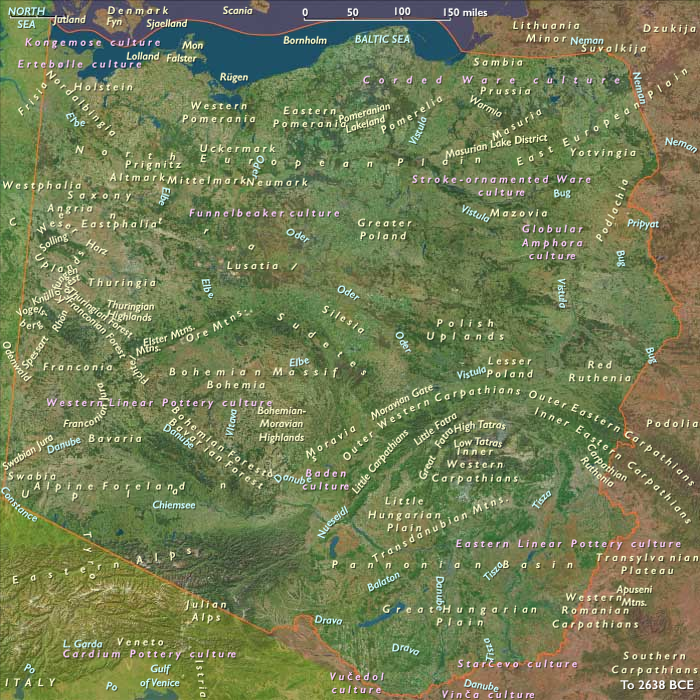
The fragments of a Neanderthal skull disinterred from a deposit of limestone at the Ehringsdorf quarries along the Ilm River, roughly two point four kilometers from Weimar, Germany, is known as the Ehringsdorf skull.
The deposits in which this skull were found came from the travertines belonging to the second half of the last (Eemian) interglacial period.
The estimated age of the remains are one hundred and fifty thousand to one hundred and twenty thousand years.
German anthropologist Franz Weidenreich will publish a monograph on the subject in 1928, titled Der Schädelfund von Weimar-Ehringsdorf, where he will describes it as the skullcap of an adult female.
His suggestion that the frontal area of the remains showed evidence of being struck leads to the conclusion that the subject was murdered.
In addition, he determined that the lack of a cranial base meant the skull had been opened for the purpose of extracting the brain.
However, the remains are so fragmentary that little attention was paid to this opinion.
Scottish anthropologist Arthur Keith made a study of the skull in 1931, concluding that it belonged to an individual less than twenty years old.
Although classed as an early Neanderthal type, the skull bears some features found in the species Homo sapiens.
In particular, it has a rounded occipital bone.
Locations
Groups
Topics
Subjects
Regions
Subregions
Related Events
Showing 1 events out of 1 total
Years: 132237BCE - 111502BCE
Locations
Groups
Topics
Subjects
Regions
Subregions