Filters:
People: Jérôme Bonaparte

The Fragmentation of …

Years: 964 - 1107

The Fragmentation of the Low Countries under the Holy Roman Empire (10th–12th Century)

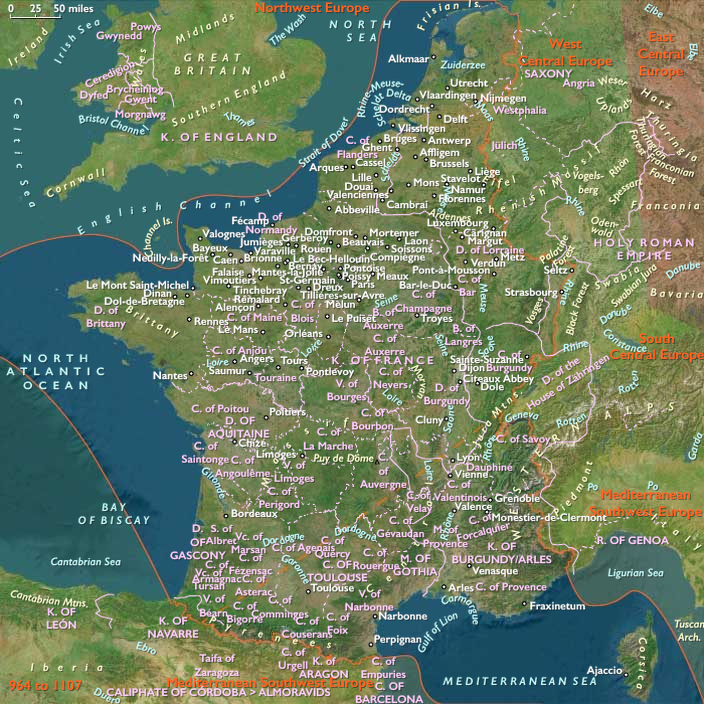
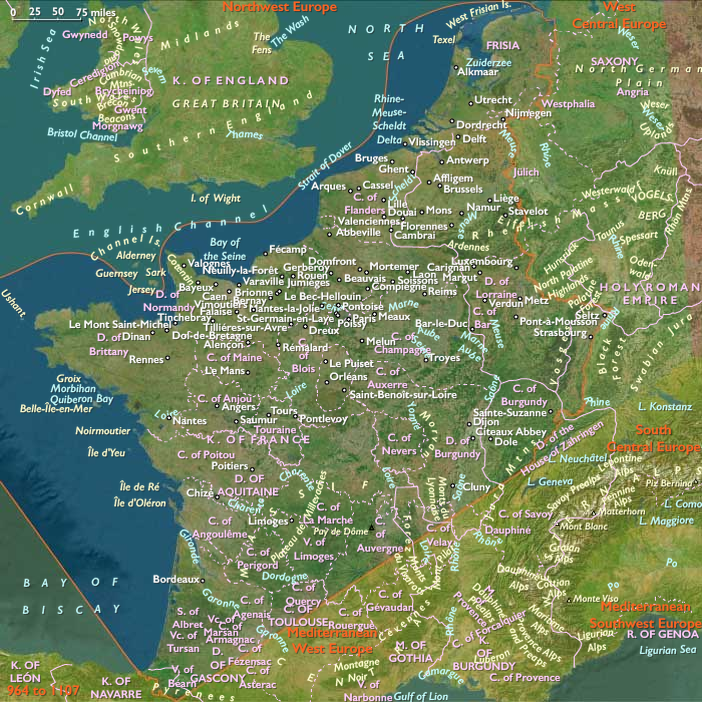
During the 10th and 11th centuries, the Holy Roman Empire, the successor to East Francia and parts of Lotharingia, nominally ruled over much of the Low Countries. However, the empire’s inability to maintain centralized authority allowed for the rise of powerful regional nobles, who effectively turned their counties and duchies into independent domains with little regard for imperial control.

Political Fragmentation and Regional Rivalries

The Low Countries became a patchwork of semi-autonomous territories, frequently engaged in warfare, shifting alliances, and personal unions:

  • Holland, Hainaut, Flanders, Gelre, Brabant, and Utrecht operated largely independently, often ignoring imperial decrees.
  • Flanders, as a French fief, had strong ties to the Capetian monarchy, leading to tensions with the Holy Roman Emperor.
  • Hainaut and Brabant fluctuated between competing power centers, with noble houses forming strategic marriage alliances to consolidate influence.
  • Utrecht, under the control of the Prince-Bishops, struggled to maintain both religious and secular authority against the ambitions of neighboring counts.

Meanwhile, Frisia in the north (modern Friesland and Groningen) rejected feudal rule, maintaining its own institutions under the Frisian Freedom, an early form of self-governance that resisted noble domination.

Linguistic and Cultural Shifts

The County of Holland, originally Frisian-speaking, experienced rapid Frankish settlement from Flanders and Brabant, leading to the adoption of Old Low Franconian (Old Dutch) as the dominant language. However, the northern Frisians continued to preserve their linguistic and cultural identity, reinforcing their independence from feudal authority.

Economic Transformation and Urban Growth

By 1000, agricultural innovations—such as drainage systems and land reclamation—led to increased productivity, allowing the expansion of trade and commerce. This economic boom fostered urban development, particularly around monasteries and castles, where a mercantile middle class emerged.

  • Flanders became a center of the textile industry, driving the rise of Bruges as a major trade hub.
  • Brabant, following Flanders’ example, saw rapid commercial growth, with Antwerp developing into an important port.
  • Wealthy cities began to purchase privileges from their rulers, effectively securing self-governance and developing into quasi-independent republics.

By 1100, Flemish and Utrechtian farmers were draining and cultivating swampy lands in the western Netherlands, enabling the rise of the County of Holland as a new political power. This expansion solidified Holland’s status as a dominant regional force, paving the way for its later economic and maritime dominance.

Legacy of the Period

The fragmentation of the Low Countries during this era set the stage for its distinct political and economic trajectory. While still technically under imperial authority, the region’s de facto independence fostered the development of strong urban economies, powerful merchant classes, and decentralized governance, factors that would shape the Dutch-speaking world for centuries to come.

Related Events

Filter results