
The Siege of Ciudad Rodrigo (April 26 …
Years: 1810 - 1810
July
The Siege of Ciudad Rodrigo (April 26 – July 9, 1810) – Ney’s Opening Move for the Invasion of Portugal
As a prelude to the third French invasion of Portugal, Marshal Michel Ney, commanding part of Marshal André Masséna’s Army of Portugal, laid siege to Ciudad Rodrigo, a strategic Spanish fortress town near the Portuguese border. The fall of Ciudad Rodrigo was essential to securing the French supply lines before launching the main offensive against Portugal.
The French Siege (April 26 – July 9, 1810)
- The siege began on April 26, 1810, as Ney’s troops encircled the fortress.
- Ciudad Rodrigo’s Spanish garrison, commanded by General Andrés Pérez de Herrasti, had about 5,500 defenders, including regular Spanish troops and militia, supported by 153 guns.
- The French besieging force numbered around 30,000 troops, with extensive siege artillery brought in to breach the walls.
- Over the course of more than two months, the French bombarded the fortress, dug trenches, and cut off all supply routes.
- The Spanish defenders resisted fiercely, repelling multiple French assaults.
The Fall of Ciudad Rodrigo (July 9, 1810)
- After enduring weeks of continuous bombardment, the Spanish walls were breached on July 9, 1810.
- Ney’s troops stormed the town, overwhelming the exhausted Spanish defenders.
- General Herrasti surrendered, and the French entered Ciudad Rodrigo, taking control of the fortress.
Strategic Impact – Clearing the Path to Portugal
- The capture of Ciudad Rodrigo was a major French success, securing a key supply and staging area for Masséna’s invasion of Portugal.
- It opened the way for the French to advance on Almeida, another fortress on the Portuguese border, which would soon be besieged and captured in August 1810.
- However, French advances into Portugal would soon be halted by Wellington’s defensive masterpiece—the Lines of Torres Vedras.
Conclusion – A Costly but Important Victory
- While Ney’s victory at Ciudad Rodrigo was strategically valuable, it was only the beginning of the campaign.
- The Spanish resistance had been fierce, showing that the war in Spain and Portugal was far from over.
- Wellington and the Anglo-Portuguese army were already preparing to defend Lisbon, leading to the decisive battles of the 1810–1811 campaign.
Though Ciudad Rodrigo fell to the French in 1810, it would later be recaptured by Wellington in January 1812, marking another turning point in the Peninsular War.
Locations
People
Groups
- Britain (United Kingdom of Great Britain and Ireland)
- France, (first) Empire of
- Spain, Bonapartist Kingdom of
Topics
Commodoties
Subjects
Regions
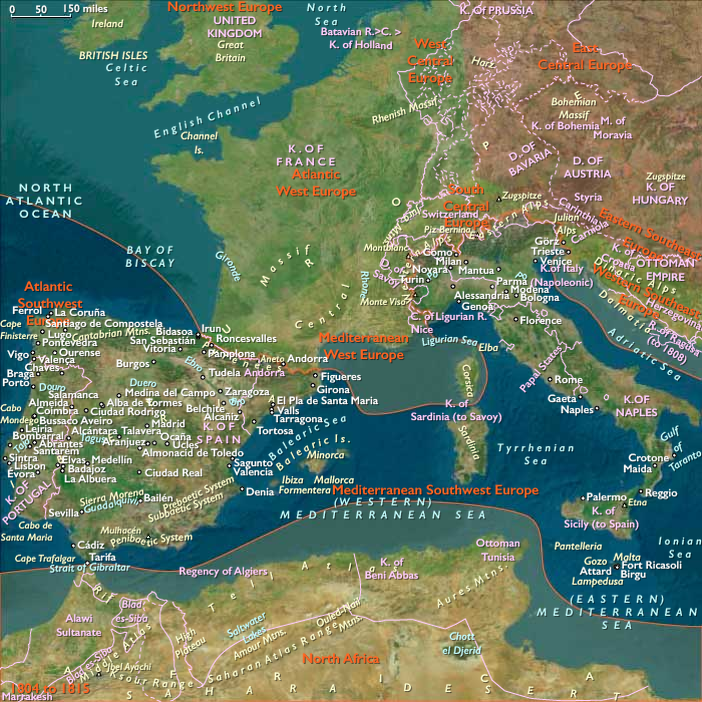
Subregions
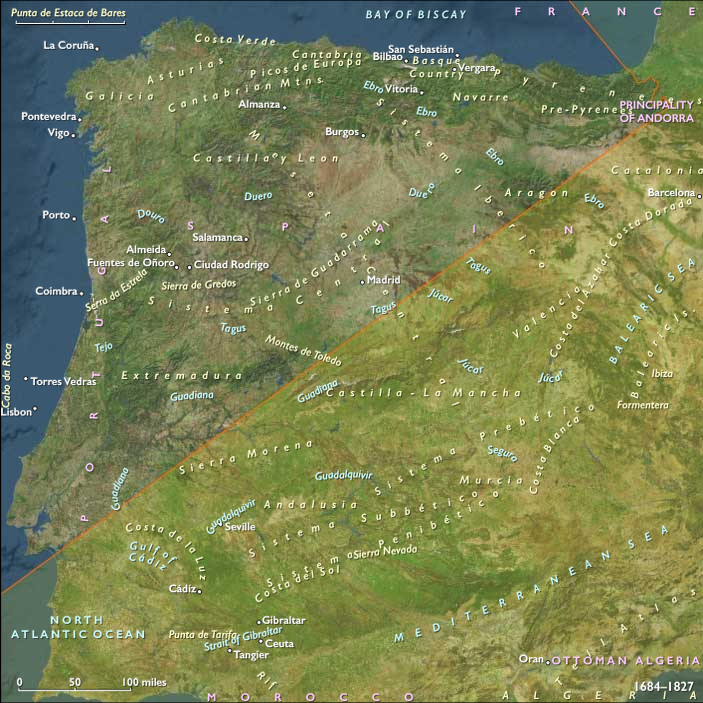
Related Events
Showing 10 events out of 21600 total
Years: 1810 - 1810
July
Locations
People
Groups
- Britain (United Kingdom of Great Britain and Ireland)
- France, (first) Empire of
- Spain, Bonapartist Kingdom of
Topics
Commodoties
Subjects
Regions
Subregions