
The German military commander Ernst von Mansfeld …
Years: 1626 - 1626
April
The German military commander Ernst von Mansfeld has disbanded his army on the Rhine shortly after the Battle of Stadtlohn on August 6, 1623, which had ended the "Palatine Phase" of the Thirty Years' War.
Mansfeld had in about 1624 paid three visits to London, where he had been hailed as a hero by the populace, and at least one to Paris.
James I, being the father-in-law of Frederick V, Elector Palatine, is anxious to furnish him with men and money for the recovery of the Palatinate, but it had not been until January 1625 that Mansfeld and his army of "raw and poor rascals" had sailed from Dover to the Netherlands.
Christian IV of Denmark, having renewed the Thirty Years' War under his leadership, had reentered Germany later in the year to take part therein.
With the entrance of Denmark into the war, Protestant forces that have been dealt one defeat after another are suddenly infused with fresh hope as Denmark becomes the first major European nation to formally enter the war since the Austrian defeat in the early years.
With the new alliance comes ambitious plans involving Christian of Brunswick, who had lost all but two thousand o his fifteen thousand man army at Stadtlohn.
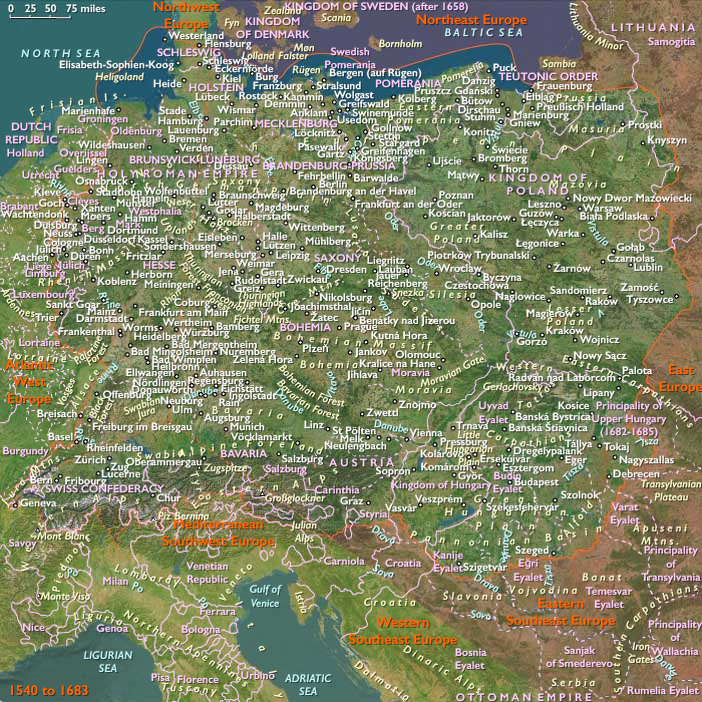
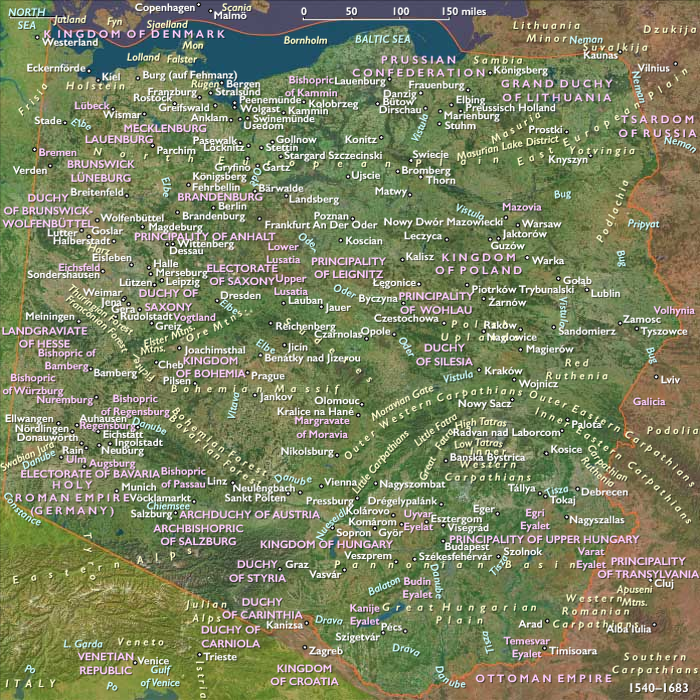
The projected campaign assigns Christian to assault the forces of Tilly in the Rhineland, and for Mansfeld to challenge Wallenstein in the Archbishopric of Magdeburg.
Mansfeld, moving first, begins his march towards Dessau in early spring, 1626, at the head of a Dutch-financed army.
Wallenstein learns of his movements though, and hurries his troops, some twenty thousand strong, to Dessau as well and establishes a bridgehead on the eastern side of the Elbe River.
The two sides meet soon after and, on April 25, Mansfeld begins the battle against the inexperienced Wallenstein.
With his infantry and artillery skilled to give the illusion that his army is smaller than the Catholics, Mansfeld attempts to use the sheer weight of the number of his men to push across the river.
This proves a great mistake as when the full extent of Wallenstein's forces is exposed, the assault quickly proves to be a deathtrap for Mansfeld.
Before he manages to retreat, Mansfeld's casualties number at some four thousand men, a third of his army.
This victory makes Ferdinand Germany’s virtual military master.
Locations
People
- Albrecht von Wallenstein
- Christian IV
- Ernst von Mansfeld
- Ferdinand II
- Johann Tserclaes, Count of Tilly
Groups
- Venice, (Most Serene) Republic of
- Denmark-Norway, Kingdom of
- Catholic League, the (German)
- Habsburg Monarchy, or Empire
Topics
- Protestant Reformation
- Counter-Reformation (also Catholic Reformation or Catholic Revival)
- Thirty Years' War
- Danish War of 1625-29
Commodoties
Subjects
Regions
Subregions
Years: 1626 - 1626
April
Locations
People
- Albrecht von Wallenstein
- Christian IV
- Ernst von Mansfeld
- Ferdinand II
- Johann Tserclaes, Count of Tilly
Groups
- Venice, (Most Serene) Republic of
- Denmark-Norway, Kingdom of
- Catholic League, the (German)
- Habsburg Monarchy, or Empire
Topics
- Protestant Reformation
- Counter-Reformation (also Catholic Reformation or Catholic Revival)
- Thirty Years' War
- Danish War of 1625-29
Commodoties
Subjects
Regions
Subregions