
Organized movement against Haitian domination of Santo …
Years: 1838 - 1838
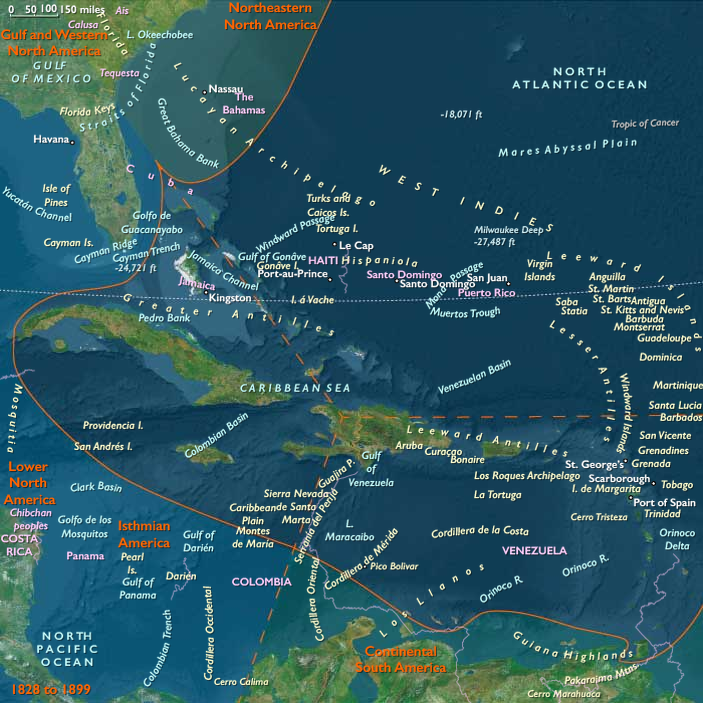
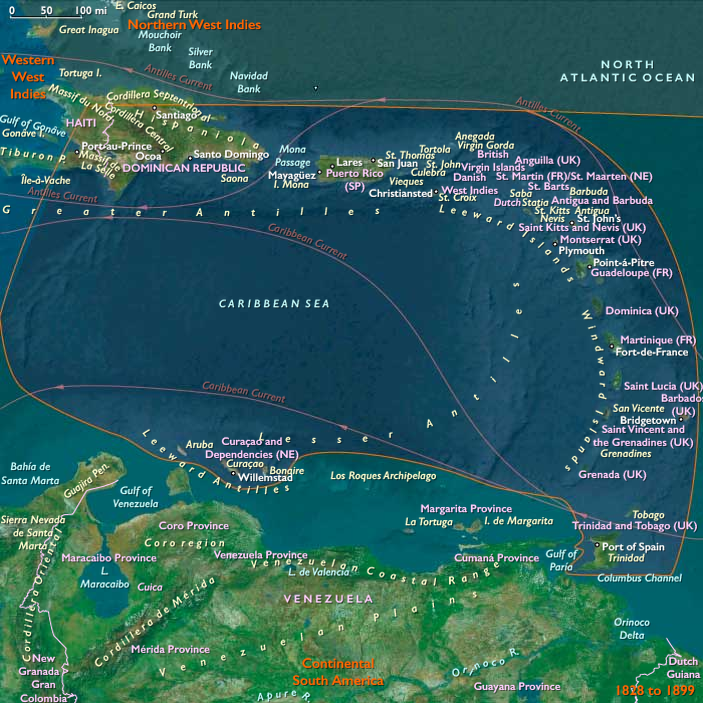
The Haitians, commanded by Jean-Pierre Boyer, had liberated the entire island of Hispaniola from slavery in 1822 after occupying the former Spanish colony of Santo Domingo with which Haiti shares the island.
The emigration of upper class Dominicans has served to forestall rebellion and to prolong the period of Haitian occupation because most Dominicans reflexively look to the upper class for leadership.
The occupation has proven unproductive for the Haitians, however.
Large-scale land expropriations have been accompanied by failed efforts to force production of export crops, impose military services, restrict the use of the Spanish language, and eliminate traditional customs such as cockfighting.
It has reinforced Dominicans' perceptions of themselves as different from Haitians in "language, race, religion and domestic customs."
Yet, this is also a period that has definitively ended slavery as an institution in the eastern part of the island.
In rural areas, the Haitian administration is usually too inefficient to enforce its own laws.
It is in the city of Santo Domingo that the effects of the occupation are most acutely felt, and it is here that the movement for independence has originated.
Juan Pablo Duarte, a Dominican of a prominent Santo Domingo family, had returned home five years earlier after seven years of study in Europe and been shocked by the deteriorated condition of his country.
The twenty-five-year-old Duarte and several other patriots, including Ramón Matías Mella and Francisco del Rosario Sanchez, organize a resistance movement to work toward independence and to stimulate liberalism.
Duarte dubs their secret society La Trinitaria (”The Trinity”) because its original nine members organize themselves into cells of three; the cells go on to recruit as separate organizations, maintaining strict secrecy, with little or no direct contact among themselves in order to minimize the possibility of detection or betrayal to the Haitian authorities.
Despite its elaborate codes and clandestine procedures, the burgeoning La Trinitaria movement will eventually be betrayed to the Haitians.
It is to survive largely intact, however, and emerge under the new designation, La Filantró.
Locations
People
Groups
Topics
Subjects
Regions
Subregions
Years: 1838 - 1838
Locations
People
Groups
Topics
Subjects
Regions
Subregions