
The major scene of a sarcophagus from …
Years: 909BCE - 766BCE
The major scene of a sarcophagus from Byblos, known as the sarcophagus of King Ahiram, portrays a bearded ruler seated on a throne that is flanked by winged sphinxes and topped by a lotus frieze.
A priestess offers him a lotus flower.
On the lid two male figures confront one another with addorsed seated lions between them.
Also depicted is a procession of servants and worshipers approaching a table laden with food; below the scene, four lions support the sarcophagus.
Many of the sarcophagus’s ornaments are Egyptian, but the figures wear Asiatic dress, and the lions are characteristic of Assyrian or Hittite art.
The Egyptian influence characteristic of Late Bronze Age art in northwest Canaan is replaced here by Assyrian influences in the rendering of figures and the design of the throne and a table.
Thin carvings in ivory found at Tel Megiddo in modern-day Israel dating from the same period, carved from hippopotamus incisors from Egypt, reflect a similar mixture of styles as well as a strong Aegean influence in the vigorous animal combat scenes.
An inscription of thirty-eight words, found on parts of the rim and the lid of the sarcophagus, is written in the Old Phoenician dialect of Byblos and is the oldest witness to the Phoenician alphabet of considerable length discovered to date.
This script is the parent script of all western alphabets.
The Phoenician alphabet, used for the writing of Phoenician, a Northern Semitic language, is a continuation of the Proto-Canaanite alphabet.
As the formulas of the inscription are so literary in nature, and the cutting of the archaic letters so assured, indicating a form of writing already in common use, a tenth-century BCE date for the inscription has become widely accepted.
Associated items dating to the Late Bronze Age either support an early dating, in the thirteenth century BCE or attest the reuse of an early shaft tomb in the eleventh century BCE.
The Phoenician alphabet, classified as an abjad in that it records only consonant sounds (with the addition of matres lectionis, the use of certain consonants to indicate a vowel), comes to the Greeks in the form of sixteen consonant signs.
However, the Greek alphabet modifies the script to represent vowel phonemes as well.
A total absence of Egyptian objects of the Twentieth and Twenty-first dynasties in Phoenicia contrasts sharply with the resumption of Phoenician-Egyptian ties in the Twenty-second Dynasty of Egypt.
Locations
Groups
- Phoenicians
- Tyre, Kingdom of (Phoenicia)
- Egypt (Ancient), Third Intermediate Period of
- Assyria, (New) Kingdom of (Neo-Assyrian Empire)
Topics
Subjects
Regions
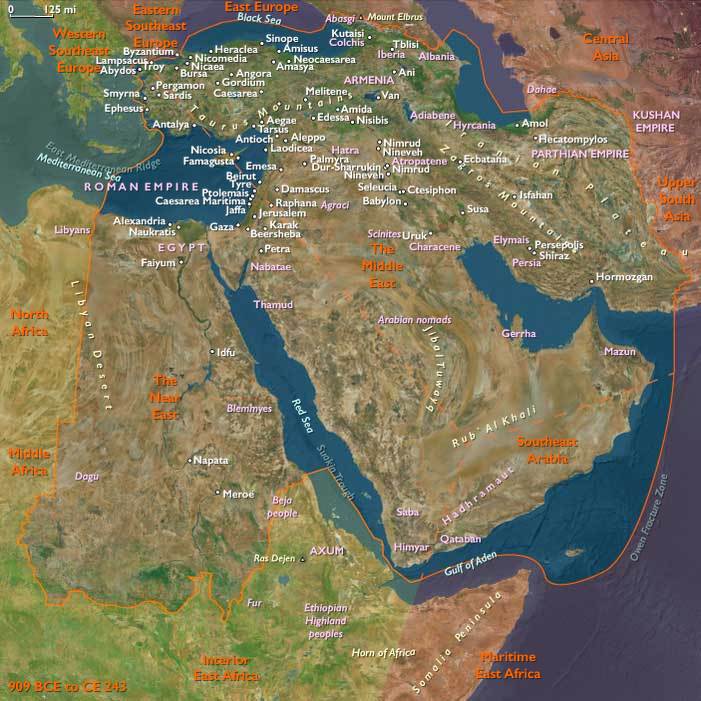
Subregions
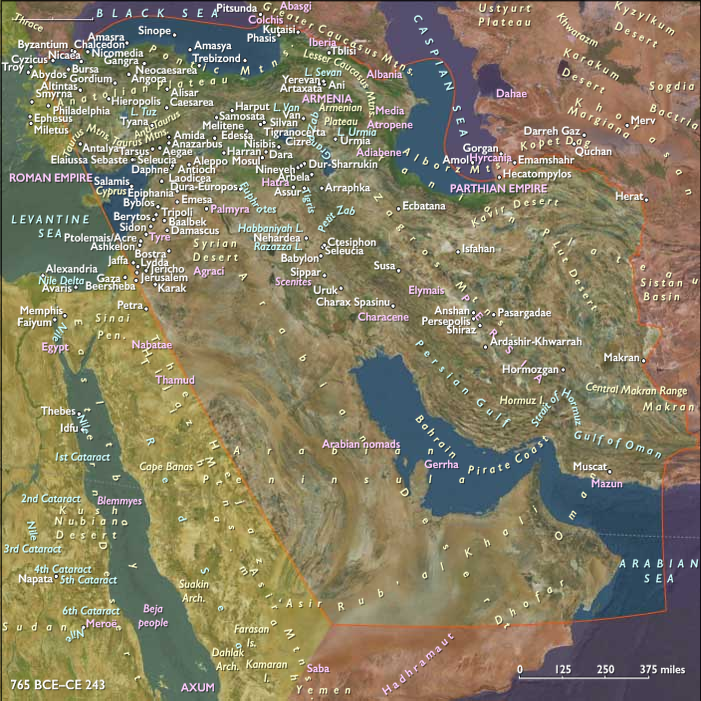
Years: 909BCE - 766BCE
Locations
Groups
- Phoenicians
- Tyre, Kingdom of (Phoenicia)
- Egypt (Ancient), Third Intermediate Period of
- Assyria, (New) Kingdom of (Neo-Assyrian Empire)
Topics
Subjects
Regions
Subregions