
The Iranian prophet Zoroaster (whose life is …
Years: 621BCE - 478BCE
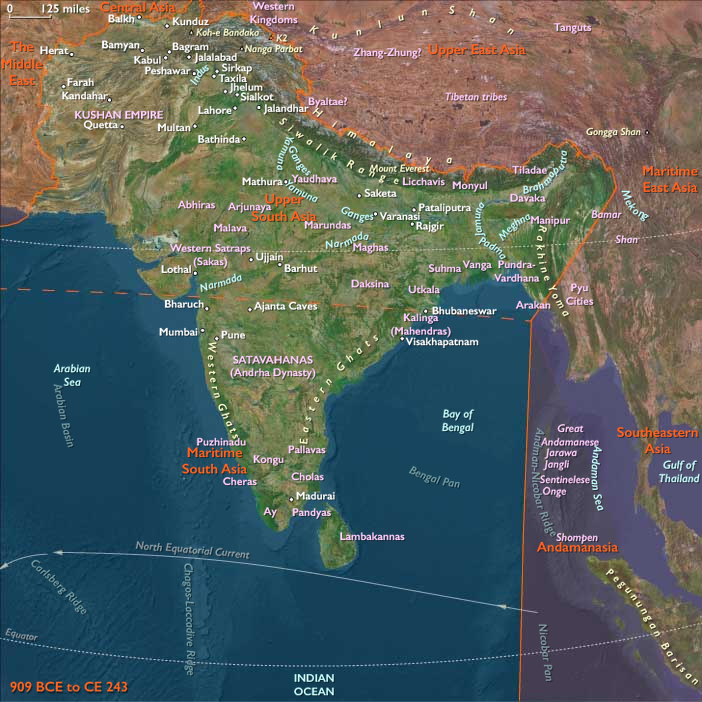
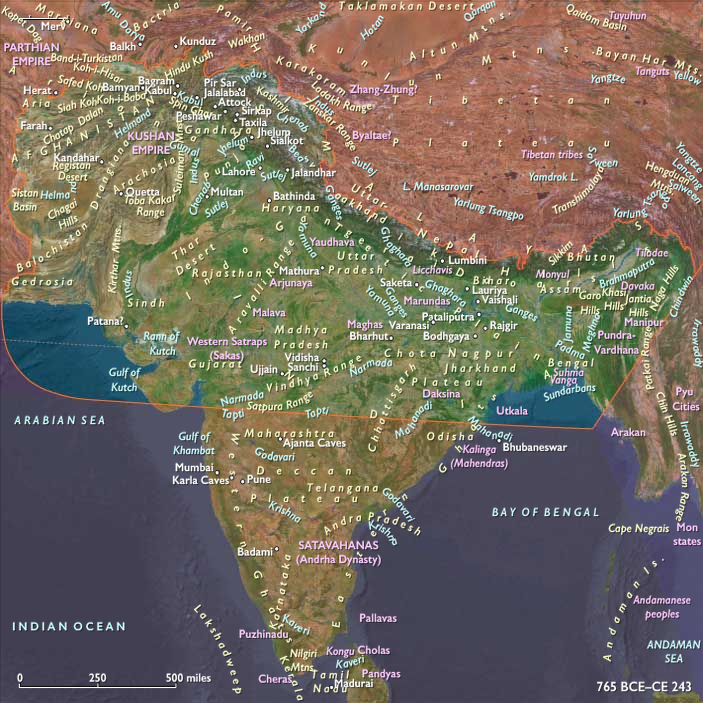
The Iranian prophet Zoroaster (whose life is traditionally given as 628 to 551 BCE, but many scholars argue for earlier dates) introduces his new, eponymous religion in Balkh, near where, according to one tradition, he dies during a nomadic invasion.
Locations
Groups
Topics
Subjects
Regions
Subregions
Related Events
Filter results
Showing 10 events out of 180 total
Central Europe (1828–1971 CE)
Revolutions, Empires’ Collapse, and Divided Modernities
Geography & Environmental Context
Central Europe includes three subregions:
-
East Central Europe — Germany east of 10°E, Czechia (Bohemia and Moravia), Slovakia, Poland, and Hungary.
-
West Central Europe — Germany west of 10°E, the Rhine-adjacent far northwest of Switzerland (Basel region), and parts of Luxembourg.
-
South Central Europe — western and southern Austria (except Salzburg), Liechtenstein, extreme southwestern Germany, and southeastern Switzerland, including Geneva and Zurich.
Anchors include the Rhine, Danube, and Elbe river systems; the Bohemian Massif, Alps, and Carpathian foothills; and the major cities of Berlin, Vienna, Munich, Warsaw, Budapest, Prague, Zurich, and Basel. The region’s continental climate favored cereals, vineyards, and industry, while its rivers and mountain passes made it Europe’s political and commercial hinge.
Climate & Environmental Shifts
Central Europe’s temperate climate supported intensive agriculture but was prone to seasonal floods and cold winters. Deforestation for coal and iron production expanded through the 19th century, giving way to reforestation and hydropower projects in the 20th. Industrial pollution grew around the Ruhr, Upper Silesia, and Vienna basins. After 1945, massive reconstruction and dam building (e.g., on the Danube and Rhine) reshaped river systems.
Subsistence & Settlement
-
Agrarian reform and industrialization: The 19th century brought enclosure of communal lands, railway expansion, and industrial zones in Saxony, Silesia, and Bohemia. Peasants became factory laborers; textile, iron, and machinery industries transformed cities like Lodz, Prague, and Leipzig.
-
Urban growth: Capitals such as Berlin, Vienna, and Budapest became imperial metropolises, centers of administration, culture, and intellectual life.
-
Postwar economies: After 1945, reconstruction divided trajectories: Western Germany and Switzerland pursued market economies, while Eastern bloc states collectivized agriculture and nationalized industries.
-
Migration: Millions of ethnic Germans, Poles, and Hungarians were displaced by wars and redrawn borders, particularly after World War II.
Technology & Material Culture
-
19th century innovations: Railways (Berlin–Vienna, Leipzig–Prague), telegraphs, and mechanized mills spread industrial modernity. Steelworks in Silesia and the Ruhr and engineering in Zurich and Vienna marked technological leadership.
-
20th century transformation: Electrification, automobiles (Volkswagen, Skoda), and modern architecture (Bauhaus, Werkbund) reshaped landscapes. Socialist-era prefabricated housing and Western modernist reconstruction reflected competing visions of progress.
-
Cultural industries: Printing, publishing, and music (Beethoven, Brahms, Dvořák, Liszt) gave the region global cultural authority that persisted into modern cinema and design.
Movement & Interaction Corridors
-
River routes: The Rhine–Danube corridor remained Europe’s main commercial artery.
-
Rail and road networks: Linked industrial centers to North Sea ports and Balkan markets.
-
Migration corridors: Seasonal labor moved from Poland and Galicia to Germany and Austria; postwar emigration carried intellectuals and refugees westward.
-
Air and Cold War lines: By mid-20th century, the Iron Curtain cut traditional corridors, dividing East Central Europe from West Germany, Austria, and Switzerland.
Cultural & Symbolic Expressions
Central Europe’s identity blended Enlightenment cosmopolitanism, nationalism, and later ideological rivalry.
-
Romantic nationalism: Poets and composers celebrated folk culture—Chopin, Smetana, Petőfi, Heine—fueling independence movements.
-
Modernism: The early 20th century produced Klimt, Kafka, Freud, and Schoenberg, whose works redefined art and thought.
-
Religious and philosophical diversity: Catholic, Protestant, and Jewish traditions coexisted, though the Holocaust annihilated much of Jewish life.
-
Postwar culture: Socialist realism dominated Eastern states, while Western zones embraced modernist abstraction and existentialism.
Environmental Adaptation & Resilience
Rural cooperatives, forest management, and Alpine water engineering stabilized agriculture and power. Urban reconstruction after WWII demanded massive planning and rebuilding; green belts and public transit shaped livable postwar cities. Pollution crises in mining basins spurred early environmental regulation by the 1960s.
Political & Military Shocks
-
Revolutions of 1848: Swept Vienna, Berlin, Budapest, and Prague; liberal constitutions and national aspirations briefly flourished before repression.
-
Unifications: The Austro-Hungarian Compromise (1867) created a dual monarchy; Germany unified under Prussia (1871).
-
World War I: Dissolved empires; Austria-Hungary and Germany collapsed; new states—Poland, Czechoslovakia, Yugoslavia, and Hungary—emerged.
-
Interwar fragility: Economic turmoil and fascist movements rose amid minority tensions.
-
World War II: Nazi expansion and genocide devastated the region; millions perished in camps such as Auschwitz, Theresienstadt, and Dachau.
-
Postwar division: Germany split into FRG and GDR; Eastern Europe entered the Soviet sphere. The Berlin Airlift (1948–49) and Hungarian Uprising (1956) symbolized Cold War polarization.
-
Reconstruction and détente: By the 1960s, West Germany’s “economic miracle” contrasted with Eastern stagnation; Prague Spring (1968) and its suppression revealed limits to reform.
Transition
Between 1828 and 1971, Central Europe transformed from a region of empires and revolutions into the symbolic heart of Europe’s ideological divide. Railways, factories, and universities forged modern society; wars and genocide shattered it; reconstruction and partition redefined it. The Rhine–Danube basin remained Europe’s industrial spine, while Vienna, Berlin, and Warsaw embodied its creative and political ferment. By 1971, Central Europe stood divided yet vital—where memory of empire, trauma of war, and promise of renewal continued to shape the continent’s future.
East Central Europe (1828–1971 CE): Industrial Corridors, Nation-Making, and Ideologies at War
Geography & Environmental Context
East Central Europe comprises the greater part of Germany east of 10°E (Brandenburg, Saxony, Thuringia, Franconia, eastern Bavaria, Silesia), Bohemia and Moravia, and the Austrian heartlands (Vienna, Lower/Upper Austria, Styria, Carinthia), with the Elbe, Oder, and upper Danube as arterial corridors. Urban anchors—Berlin, Leipzig, Dresden, Wrocław (Breslau), Prague, Vienna, Brno, Graz—sat in river basins ringed by the Ore/Sudetenand Alpine forelands.
Climate & Environmental Shifts
A temperate regime brought periodic river floods (Elbe, Oder, Danube) and droughts. The Little Ice Age tail faded by mid-19th century; industrial coal use then altered urban air and river quality. After WWII, flood controls, reforestation, and hydropower (Danube, Enns) expanded; by the 1960s, air and water pollution from lignite and steel complexes became a regional stress.
Subsistence & Settlement
-
Agriculture: Prussian and Austrian reforms (emancipation, consolidation) increased productivity; rye, wheat, barley, potatoes, sugar beet, hops, and vineyards (Danube, Franconia) fed growing cities. Alpine margins specialized in dairy.
-
Urbanization & industry:
-
Silesia, Saxony, Bohemia–Moravia: coal, iron, textiles, glass, and machine building formed a dense industrial crescent (Ruhr’s eastern counterpart).
-
Vienna grew into a metropolis of administration, culture, and food processing; Berlin, Leipzig, Dresden, Prague, Brno became manufacturing and publishing hubs.
-
-
Settlement patterns: Rail belts and factory districts reshaped towns; tenements and workers’ colonies spread; suburban rail (Berlin S-Bahn, Vienna Stadtbahn) prefigured car-age sprawl.
Technology & Material Culture
-
Transport: Railways (1830s–70s) knit Elbe–Oder–Danube basins; post-1918 motor roads, and post-1945 autobahns/highways accelerated internal trade. Danube regulation improved shipping; Elbe canals linked to North Sea ports.
-
Industry & energy: Hard coal, later lignite in Lusatia and North Bohemia, powered steel, chemicals, and electricity. Precision engineering (Saxon machine tools), porcelain (Meissen), glass (Bohemia), optics (Jena) achieved global reputations.
-
Everyday life: From guild crafts to mass goods—printed cottons, bicycles, radios, then TVs—while cooperative housing, the Gemeindebau (Vienna), and interwar modernism redefined domestic space.
Movement & Interaction Corridors
-
Trade & fairs: Leipzig remained a continental fair city; Prague and Vienna connected Danube markets to the Balkans and Adriatic.
-
Labor flows: Rural migrants flooded factory belts; after 1945, expulsions and resettlements (especially from Silesia and the Sudetenland) radically redrew demographics.
-
Knowledge circuits: Universities at Berlin, Jena, Prague, Vienna, Brno, Graz spread science, law, and arts; concert and publishing networks radiated from Vienna and Leipzig.
Cultural & Symbolic Expressions
-
Nations & languages: German, Czech, and Polish communities negotiated identity in multi-ethnic spaces. The Czech National Revival and German liberal nationalism turned folklore and language into politics; Habsburg Vienna staged an imperial cosmopolis of many tongues.
-
Arts: From Biedermeier to Secession and modernism—Vienna’s Ringstrasse culture (Mahler, Klimt), Prague’s Kafka-Hašek literary avant-garde, Leipzig’s music publishers, Dresden’s expressionism.
-
Science & ideas: Berlin and Vienna propelled physics, medicine, and social theory; psychoanalysis (Freud), logical positivism (Vienna Circle), and social democracy (Austro-Marxism) left enduring marks.
Environmental Adaptation & Resilience
-
Agrarian modernization: Potatoes, sugar beet, and scientific husbandry stabilized food supply; cooperative dairies and credit leagues cushioned shocks.
-
Urban public works: Waterworks, sewers, green belts, and workers’ housing in Vienna and Berlin improved health; river levees and hydropower reshaped flood regimes.
-
Postwar reconstruction: Rubble clearance, prefabricated housing (Plattenbau), and reforestation restored war-scarred landscapes; yet lignite and heavy chemicals produced new pollution challenges.
Political & Military Shocks
-
1848 Revolutions: Liberal and national uprisings in Vienna, Berlin, Prague; reforms mixed with repression; serfdom abolished in Habsburg lands.
-
Unification wars & dualism: Prussia’s victories (1866, 1870–71) unified Germany under Berlin; Austria restructured as Austria-Hungary (1867), retaining Vienna’s Danubian role.
-
World War I: Eastern fronts rolled through Galicia/Hungary (adjacent), but political collapse hit here: Austro-Hungarian dissolution (1918); new borders created Czechoslovakia, shifted Silesian districts, and left Vienna capital of a small republic.
-
Interwar strains: Hyperinflation in Austria/Germany; ethnic tensions in the Sudetenland; vibrant but polarized politics.
-
Nazi era & WWII: Annexation of Austria (Anschluss, 1938); Munich dismembered Czechoslovakia; occupation, deportations, and genocide annihilated Jewish communities of Vienna, Prague, and Silesia; cities (Dresden, Berlin, Vienna) heavily bombed.
-
Post-1945 settlements:
-
Germany divided; the GDR took Saxony, Thuringia, parts of Brandenburg; Poland received most of Silesia; the CSRS re-formed and expelled most Sudeten Germans; Austria re-established (State Treaty, 1955) as neutral.
-
Socialist industrialization in the GDR and Czechoslovakia prioritized heavy industry; Vienna became a neutral East–West interface.
-
-
Cold War crises: 1953 East German uprising; 1968 Prague Spring and Warsaw Pact invasion; Berlin a permanent flashpoint.
Transition
From 1828 to 1971, East Central Europe moved from imperial reform and industrial takeoff through unification, world wars, and totalitarian ruptures, into a Cold War checkerboard of socialist states and a neutral Austria. The Elbe–Oder–Danube system powered factories, fairs, and armies; cities like Vienna, Prague, Berlin, Leipzig, Dresden, Wrocław rose, fell, and rebuilt. By 1971, the subregion balanced high urban–industrial capacity and rich cultural capital against the environmental costs of lignite and steel, the wounds of expulsions and genocide, and the constraints of blocs—poised between reform currents and the hard architecture of the Iron Curtain.
A Prussian plan for a smaller union had been dropped in late 1850 after Austria threatened Prussia with war.
Despite this setback, desire for some kind of German unity, either with or without Austria, grows during the 1850s and 1860s.
It is no longer a notion cherished by a few, but has proponents in all social classes.
An indication of this wider range of support is the change of mind about German nationalism experienced by an obscure Prussian diplomat, Otto von Bismarck.
He had been an adamant opponent of German nationalism in the late 1840s.
During the 1850s, however, Bismarck concludes that Prussia will have to harness German nationalism for its own purposes if it is to thrive.
He believes too that Prussia's well-being depends on wresting primacy in Germany from its traditional enemy, Austria.
Descended from the Junker, Prussia's aristocratic landowning class, Bismarck hates parliamentary democracy and champions the dominance of the monarchy and aristocracy.
However, gifted at judging political forces and sizing up a situation, Bismarck contends that conservatives will have to come to terms with other social groups if they are to continue to direct Prussian affairs.
The king has summoned Bismarck to direct Prussia's government in the face of the Prussian parliament's refusal to pass a budget because it disagrees with army reforms desired by the king and
his military advisers.
Although he cannot secure parliament's consent to the government's budget, Bismarck is a tactician skilled and ruthless enough to govern without parliament's consent from 1862 to 1866.
Frederick William IV, who had suffered a stroke and become mentally disabled in 1857, had died on January 2, 1861, and his brother, the Prince Regent, had ascended the Prussian the throne as William I, inheriting a conflict between Frederick William and the increasingly liberal parliament.
Considered a political neutral, as he has intervened less in politics than his brother, William nevertheless finds a conservative solution for the conflict: he appoints former ambassador Otto von Bismarck to the office of Prime Minister.
According to the Prussian constitution, the Prime Minister is responsible solely to the king, not to parliament.
Otto von Bismarck becomes Prussian Prime Minister on September 24, following refusal by the country's Landtag to accept the military budget.
Bismarck delivers his Blood and Iron speech to the Prussian Landtag on September 29.
Concerning the unification of the German territories, it is also a transposed phrase that Bismarck utters near the end of the speech that has become one of his most widely known quotations.
Stressed the need for military preparedness to solve the German Question, he concludes his speech with the following statement: "The position of Prussia in Germany will not be determined by its liberalism but by its power [...] Prussia must concentrate its strength and hold it for the favorable moment, which has already come and gone several times. Since the treaties of Vienna, our frontiers have been ill-designed for a healthy body politic. Not through speeches and majority decisions will the great questions of the day be decided—that was the great mistake of 1848 and 1849—but by iron and blood (Eisen und Blut)."
This phrase, relying on a patriotic poem written by Max von Schenkendorf during the Napoleonic Wars, will be popularized as the more euphonious Blut und Eisen ("Blood and Iron"), and become symbolic of Bismarckian Machtpolitik ("Power politics").
Bismarck is an outstanding diplomat, but the phrase "blood and iron" will become a popular description of his foreign policy partly because he will on occasion resort to war to further the unification of Germany and the expansion of its continental power.
Therefore he will become known as "the iron chancellor."
Northeast Europe (1864–1875 CE): Political Realignments, Economic Expansion, and Cultural Resilience
Between 1864 and 1875 CE, Northeast Europe experienced significant national, economic, and social developments. Denmark faced severe territorial losses; Finland's economy surged due to industrial expansion driven by its lumber industry; Lithuania resisted Russian suppression, while Estonia and Latvia intensified national awakenings. Sweden and Norway navigated liberal political reforms amid persistent union tensions, and Prussia solidified its regional dominance through political and economic consolidation. The era thus marked pivotal shifts toward industrialization, political modernization, and heightened national consciousness throughout the region.
Denmark: Territorial Loss and Economic Reorientation
In 1864, Denmark faced war against the combined forces of Prussia and the Austrian Empire in the Second Schleswig War (February–October 1864). Following defeat, Denmark was compelled to cede the strategically and culturally important duchies of Schleswig and Holstein to Prussia. This significant loss marked the latest chapter in Denmark's prolonged history of territorial reduction since the seventeenth century. Consequently, Denmark adopted a pragmatic policy of diplomatic neutrality in Europe, refocusing inwardly on national stability and economic modernization.
The second half of the nineteenth century saw Denmark transition decisively toward industrialization. Initial railway construction in the 1850s significantly improved domestic communication, facilitating urban growth and industrial activity. Despite limited natural resources, Denmark developed industries bolstered by expanded overseas trade, particularly emphasizing agriculture centered on exporting dairy and meat products. From the 1870s onward, Danish trade unions emerged, reflecting growing urban labor movements and societal modernization.
Finland: Lumber-Driven Economic Expansion and National Development
Under the continued benevolent rule of Russian Tsar Alexander II (r. 1855–1881), Finland’s political autonomy supported profound economic and social progress. The booming Finnish lumber industry, beginning in the 1860s and accelerating markedly in the 1870s, became a primary catalyst for Finnish industrialization. Surging European demand for timber, wood pulp, paper, matches, cellulose, and plywood facilitated rapid economic growth. The lumber industry's success also generated capital and infrastructure essential for broader industrial diversification, spawning industries in textiles, cement, and metal products.
By the turn of the century, Finland’s leading trade partners would be Germany, Russia, and Britain, reflecting its successful integration into European markets. Moreover, the lumber trade fostered the growth of a substantial and modern Finnish merchant marine, which after 1900 would carry approximately half of Finland's foreign trade. Despite this success, the global transition from wooden-hulled sailing ships to iron- and steel-hulled steamships began curtailing Finland's traditional exports of naval stores, prompting adjustments in the country’s maritime economy.
Politically, Finland continued implementing the Language Ordinance of 1863, promoting Finnish linguistic equality with Swedish. This significantly enhanced Finnish national consciousness and contributed to the emergence of a vibrant Finnish-speaking educated class.
Lithuania: Cultural Resilience Under Russian Suppression
In Lithuania, the Russian Empire intensified efforts to eliminate Polish influence following unsuccessful Polish insurrections in 1831 and 1863. Under tsarist authority, Lithuanian schools were forcibly closed, Lithuanian publications using the Latin script were outlawed, and the Roman Catholic Church faced severe suppression. Despite these oppressive measures, Lithuanian national identity and indigenous cultural institutions persisted, demonstrating considerable resilience. Secret education networks and underground publishing efforts continued to preserve the Lithuanian language and culture, setting the stage for later national revival.
Latvia and Estonia: Deepening National Awakenings
Latvia and Estonia both continued their cultural and national awakenings. In Latvia, the First Latvian Awakening intensified efforts against Germanization and Russification, strengthening Latvian-language institutions, literature, and education. A new, distinctly Latvian elite emerged, demanding increased local governance and cultural autonomy.
Similarly, Estonia experienced rapid urbanization and demographic shifts toward Estonian majorities in previously German-dominated cities. Industrialization dismantled traditional social structures, accelerating the formation of a modern Estonian society. Estonian-language cultural institutions flourished, significantly deepening Estonian national consciousness.
Sweden-Norway: Liberalization Amid Persistent Tensions
Under kings Charles XV (r. 1859–1872) and subsequently Oscar II (r. 1872–1907), the union between Sweden and Norway continued with underlying national tensions. Sweden pursued liberal political reforms, notably modernizing its parliamentary structure in 1866 by transitioning from the traditional Estates system to a bicameral legislature (Riksdag), enhancing democratic participation and governance.
Norway also continued gradual liberalization, increasingly demanding greater autonomy within the union. Social and political reforms progressed slowly, amid persistent national aspirations for greater self-governance, foreshadowing later independence movements.
Prussia: Regional Dominance and Economic Strengthening
Under King (later Emperor) William I (r. 1861–1888) and Chancellor Otto von Bismarck, Prussia consolidated political and economic dominance. Following victories in the Second Schleswig War (1864), the Austro-Prussian War (1866), and later the Franco-Prussian War (1870–1871), Prussia became the leading power within the newly formed German Empire (1871). Internally, economic modernization, extensive railway development, industrialization, and educational reform significantly strengthened Prussia’s societal fabric. Strategic cities, notably Königsberg (Kaliningrad), benefited greatly from these advances, solidifying their economic and cultural importance.
Baltic Territories: Continued Rural and Urban Evolution
Estonia and Latvia’s rural societies continued incremental improvement following earlier emancipation and modernization. Although Baltic-German aristocratic dominance persisted, gradual social reforms improved rural living conditions, further integrating rural areas with urban economic centers.
Urban prosperity in cities like Reval (Tallinn) and Riga continued robustly, driven by maritime commerce and expanding trade networks. These urban centers became increasingly important as economic and cultural hubs, contributing significantly to regional stability and economic growth.
Economic Expansion and Urban Development
Across Northeast Europe, cities such as Stockholm, Copenhagen, Oslo, Helsinki, Königsberg, Riga, and Reval experienced substantial economic and infrastructural growth. Industrialization accelerated urbanization, with railroads significantly enhancing domestic and international connectivity. Enhanced urban infrastructure and economic activity integrated Northeast Europe more deeply into broader European economic systems.
Cultural, Religious, and Intellectual Flourishing
Educational and cultural institutions remained vibrant, reflecting the region’s growing national consciousness and modernization. Literary and artistic expression flourished, particularly in Finland, Latvia, and Estonia, enhancing national identity. Denmark and Sweden fostered intellectual and artistic growth, reflecting broader European cultural currents, while Lithuania maintained resilience in cultural preservation despite suppression.
Diplomatic Stability and Pragmatism
Diplomatic relations throughout Northeast Europe remained characterized by cautious pragmatism. Finland enjoyed peaceful coexistence under Russian rule, Denmark adopted neutrality following territorial losses, and Sweden-Norway maintained cautious diplomatic positions to manage internal union tensions. Prussia's ascendant political and economic position further influenced regional diplomatic dynamics.
Legacy of the Era
The years 1864 to 1875 CE significantly shaped Northeast Europe's trajectory. Denmark’s territorial loss and subsequent internal recovery set lasting diplomatic precedents. Finland's rapid economic expansion, led by the booming lumber industry, significantly advanced industrialization and economic diversification. Lithuania’s cultural resilience under suppression foreshadowed later national revival. Latvia and Estonia’s intensified national awakenings prepared essential foundations for future political autonomy. Sweden-Norway’s liberal reforms amid union tensions anticipated future political realignments, while Prussia’s solidified regional dominance profoundly influenced subsequent European geopolitics.
Collectively, these developments decisively established Northeast Europe’s modern economic, social, and national identities, preparing the region for substantial political and economic transitions into the late nineteenth and early twentieth centuries.
East Central Europe (1864–1875 CE): Austro-Prussian War, German Unification, Austro-Hungarian Compromise, and Polish Resistance
Between 1864 and 1875, East Central Europe—including modern-day Poland, Czechia, Slovakia, Hungary, and the eastern territories of Germany and Austria east of 10°E and northeast of the defined southeastern boundary—underwent decisive transformations, reshaping its geopolitical, economic, and social landscape. Dominated by the Austro-Prussian rivalry culminating in war, the subsequent rise of a unified German Empire, the Austro-Hungarian Compromise (Ausgleich), and the suppression of Polish uprisings, this era significantly redefined regional power structures.
Political and Military Developments
Austro-Prussian Rivalry and the War of 1866
Rivalry between Austria and Prussia reached a climax in the Austro-Prussian War of 1866. Following Austria's decisive defeat at the Battle of Königgrätz (Sadowa), Prussia emerged dominant, decisively shifting the balance of power in the German-speaking world.
Formation of the North German Confederation and the German Empire
The victorious Prussia, under Chancellor Otto von Bismarck, swiftly consolidated its influence by establishing the North German Confederation (1867). By 1871, following Prussia’s victory in the Franco-Prussian War, the German Empire was proclaimed at Versailles, unifying most German-speaking territories under Prussian dominance, significantly impacting the German states within East Central Europe (Saxony, Brandenburg, Mecklenburg, Silesia, Thuringia).
The Austro-Hungarian Compromise (Ausgleich of 1867)
Austria, weakened by defeat, pursued internal reforms. The Austro-Hungarian Compromise of 1867 created the dual monarchy of Austria-Hungary, granting significant autonomy to Hungary while maintaining centralized imperial authority from Vienna over other territories, including Bohemia, Moravia, and Galicia. This fundamentally reshaped the empire’s governance, giving Hungary co-equal status within the dual monarchy.
Polish January Uprising (1863–1864) and Subsequent Repression
The January Uprising in the Russian-controlled Kingdom of Poland (1863–1864) saw a major national rebellion brutally suppressed by Russian forces. Harsh repression followed, intensifying Russification and further stimulating Polish nationalism across Prussian, Russian, and Austrian-controlled areas.
Economic and Technological Developments
Industrial Expansion and Integration
Rapid industrialization accelerated, driven by extensive railway construction, coal mining, metallurgy, textiles, and manufacturing growth, particularly in Silesia, Bohemia, Saxony, and Hungarian industrial hubs like Budapest and Miskolc. German unification further integrated regional economies, fostering market expansion and industrial innovation.
Agricultural and Land Reform in Hungary and Austria
Following the Ausgleich, Hungary implemented land and economic reforms, modernizing agricultural productivity, strengthening landowner rights, and promoting capitalist agriculture. Austria, particularly in Bohemia and Galicia, similarly undertook reforms to stimulate economic modernization.
Cultural and Artistic Developments
Intensified National Cultural Movements
Nationalist fervor increased cultural production, notably in Czech, Polish, Hungarian, and German contexts. Composers like Antonín Dvořák and Ferenc Liszt, writers like Polish novelist Henryk Sienkiewicz, Hungarian poet János Vajda, and Czech playwrights and intellectuals continued shaping distinct national cultural identities.
Vienna and Budapest: Twin Capitals of Culture
Vienna and Budapest flourished culturally and artistically under the new Austro-Hungarian arrangement, embracing Historicism in architecture (Ringstrasse in Vienna, Hungarian Parliament building in Budapest) and becoming prominent European cultural centers.
Settlement and Urban Development
Urbanization and Expansion of Major Cities
Significant urban growth continued, with Vienna, Budapest, Prague, Leipzig, Dresden, Kraków, and Łódź rapidly expanding. Improved infrastructure, public services, and cultural institutions marked urban landscapes, reflecting industrial prosperity and imperial prestige.
Social and Religious Developments
Growing Working-Class Movements
Rapid industrialization intensified working-class struggles for improved working conditions, wages, and political representation. Social democratic and early socialist movements emerged, notably in industrialized German, Czech, Hungarian, and Polish regions, laying foundations for future labor movements.
Persistence of Religious Influence
The Catholic Church maintained significant influence, particularly in Polish, Czech, Austrian, and Hungarian territories, engaging actively in social welfare and education, often balancing conservative policies against emerging nationalist and liberal pressures.
Long-Term Consequences and Historical Significance
The years 1864–1875 decisively transformed East Central Europe, setting the stage for the modern political landscape. Prussia’s victory over Austria and the subsequent unification of Germany radically altered regional power dynamics, marginalizing Austrian influence within Germany and prompting Austria-Hungary’s internal restructuring. The Austro-Hungarian Compromise profoundly reshaped imperial governance, laying foundations for national tensions in subsequent decades. The suppression of the Polish January Uprising intensified nationalist aspirations, influencing Polish history deeply into the 20th century. Economic expansion, urbanization, and rising social tensions further defined the era, significantly shaping East Central Europe's trajectory into modernity.
Austria has been weakened by reverses abroad, including the loss of territory in Italy, and by the 1860s, because of clumsy diplomacy, has no foreign allies outside Germany.
Bismarck uses a diplomatic dispute to provoke Austria to declare war on Prussia in 1866.
Against expectations, Prussia quickly wins the Seven Weeks' War (also known as the Austro-Prussian War) against Austria and its south German allies.
Bismarck imposes a lenient peace on Austria because he recognizes that Prussia might later need the Austrians as allies, but he deals harshly with the other German states that had resisted Prussia and
expanded Prussian territory by annexing Hanover, Schleswig-Holstein, some smaller states, and the city of Frankfurt.
The German Confederation is replaced by the North German Confederation and is furnished with both a constitution and a parliament.
Austria is excluded from Germany.
South German states outside the confederation—Baden, Wurttemberg, and Bavaria—are tied to Prussia by military alliances.
In the Seven Weeks' War, the support they had given Austria had been lukewarm.
Years: 621BCE - 478BCE
Locations
Groups
Topics
Subjects
Regions
Subregions