
The long reign of Prince Stephen III …
Years: 1504 - 1504
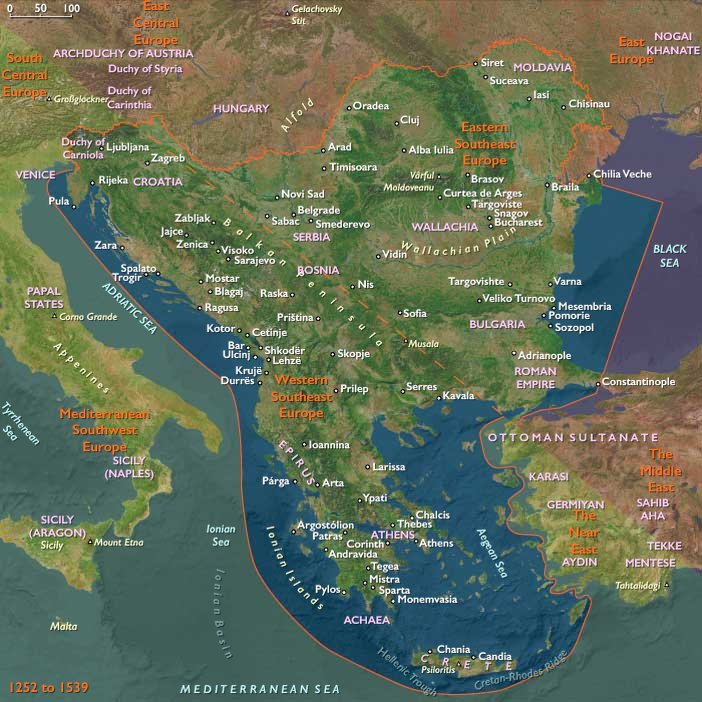
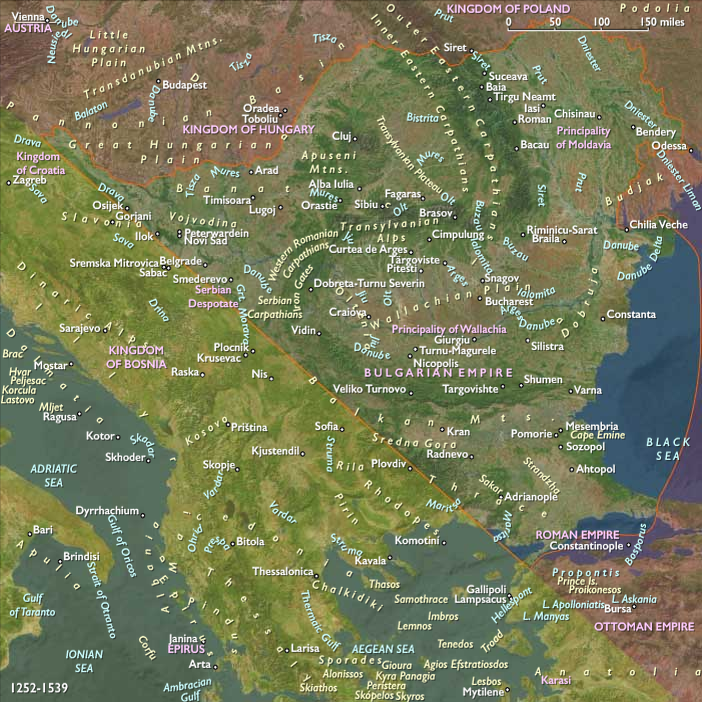
The long reign of Prince Stephen III of Moldavia, though marked by continual strife, has nonetheless brought considerable cultural development and has been a period of great ecclesiastical building and endowment.
Many churches and monasteries have been erected by Stephen himself; some of which, including Voroneț and Putna, are now part of UNESCO's World Heritage sites.
In 1462, during the assault of Chilia Nouǎ, Stephen had been shot in the leg, leaving a wound that has never fully healed.
In 1486, during the battle of Șcheia, his horse had been injured: both horse and rider ad fallen and Stephen had been trapped under the horse, his old leg injury further aggravated.
Over time, he has summoned to his royal court many doctors, astrologists and other persons, who have attempted to heal his wound.
Among these are Hermann, "bacalaurio in medicina", astrologist Baptista de Vesentio, Maestro Zoano Barbero from Genoa (in 1468), Isaac Beg (in 1473), Don Antonio Branca (skilled in fixing cut noses), Mateo Muriano from Venice (in 1502), and Hieronimo di Cesena from Venice (in 1503).has immobilized his hands and legs.
On November 9, 1503, Vladislav, King of Hungary had written to the Doge of Venice: "The voivode of Moldavia is tormented by an old illness."
On June 30, 1504, Stephen's wound is cauterized by the doctors present in Suceava (one of whom is Hieronimo di Cesena from Venice).
The operation causes great pain to the old voivode, who dies two days later, on the morning of July 2, 1504.
He is buried in the Monastery of Putna.
Stefan had reportedly told his son from his deathbed to submit to the Ottoman Turks if they offered an honorable suzerainty.
Succession struggles will weaken Moldavia after his death.
Locations
People
Groups
Commodoties
Subjects
Regions
Subregions
Years: 1504 - 1504
Locations
People
Groups
Commodoties
Subjects
Regions
Subregions