
The Lydians and Medes had formerly arranged …
Years: 549BCE - 538BCE
The Lydians and Medes had formerly arranged that the natural boundary between the two empires would be the Halys River.
Croesus, learning of the sudden Persian uprising and defeat of his longtime rivals, the Medes, attempts to opportunistically use these set of events to expand his borders upon the eastern frontier of Lydia.
He makes an alliance with Chaldea, Egypt and Sparta.
Croesus may have intended reinstating his brother-in-law, Astyages, on the Median throne.
It is also possible that he was trying to pre-empt a Persian invasion of Lydia.
Cyrus advances to halt the Lydian invasion.
The winter battle appears to have been fierce, but indecisive.
Croesus withdraws across the Halys.
As Herodotus refers to how the Lydians fell short in defeating the Persians, it seems clear that partly because of the battle, and having fewer troops than the Persians, it was enough for Croesus to retreat.
The Persians reclaim the land of the Medes in their name.
In this respect, the battle might be regarded as a strategic victory for the Persians, in that it helps to secure Cappadocia as part of the newly formed Achaemenid Empire.
Among historians, the outcome of the battle remains debatable and unclear.
Before all of this, and prior to his invasion, Croesus had asked the Oracle of Delphi for advice.
The Oracle had suggested vaguely that, "if King Croesus crosses the Halys River, a great empire will be destroyed."
Croesus received these words with delight, instigating a war that will ironically and eventually end not the Persian Empire but his own.
Locations
People
Groups
- Lydia, Kingdom of
- Persian people
- Assyrian people
- Sparta, Kingdom of
- Egypt (Ancient), Late Period of
- Neo-Babylonian, or Chaldean, Empire
- Medes, Kingdom of the
- Achaemenid Empire
Topics
- Younger Subboreal Period
- Iron Age, Near and Middle East
- Iron Age Cold Epoch
- Classical antiquity
- Persian Conquests of 559-509 BCE
- Persian Revolt
- Persian-Lydian War of 547-546 BCE
Commodoties
Subjects
Regions
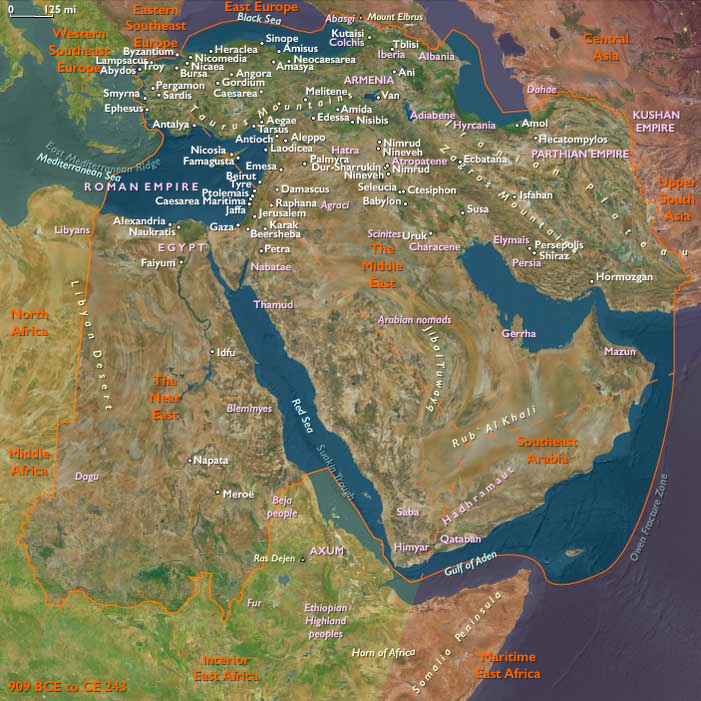
Subregions
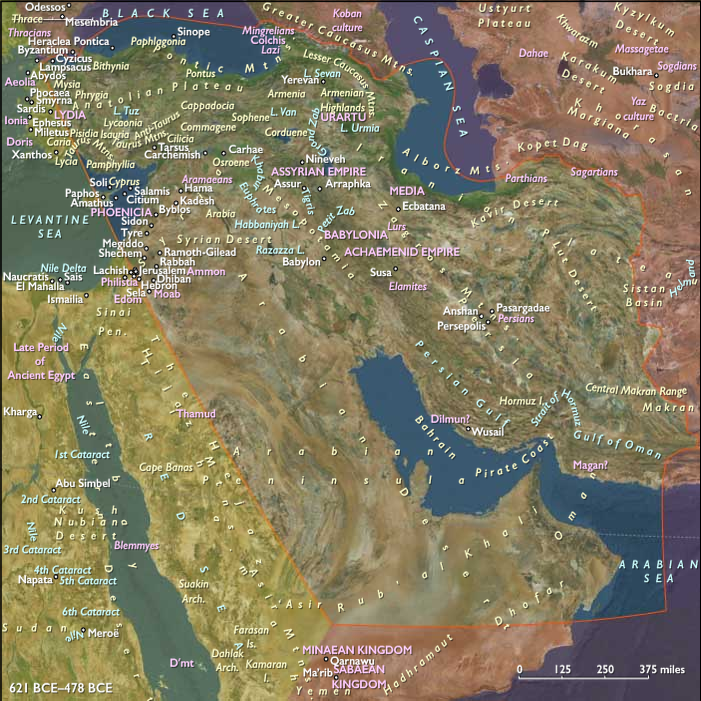
Years: 549BCE - 538BCE
Locations
People
Groups
- Lydia, Kingdom of
- Persian people
- Assyrian people
- Sparta, Kingdom of
- Egypt (Ancient), Late Period of
- Neo-Babylonian, or Chaldean, Empire
- Medes, Kingdom of the
- Achaemenid Empire
Topics
- Younger Subboreal Period
- Iron Age, Near and Middle East
- Iron Age Cold Epoch
- Classical antiquity
- Persian Conquests of 559-509 BCE
- Persian Revolt
- Persian-Lydian War of 547-546 BCE
Commodoties
Subjects
Regions
Subregions