
The Middle East: 316–327 CE Consolidation …
Years: 316 - 327
The Middle East: 316–327 CE
Consolidation of Christianity and Renewed Persian Conflict
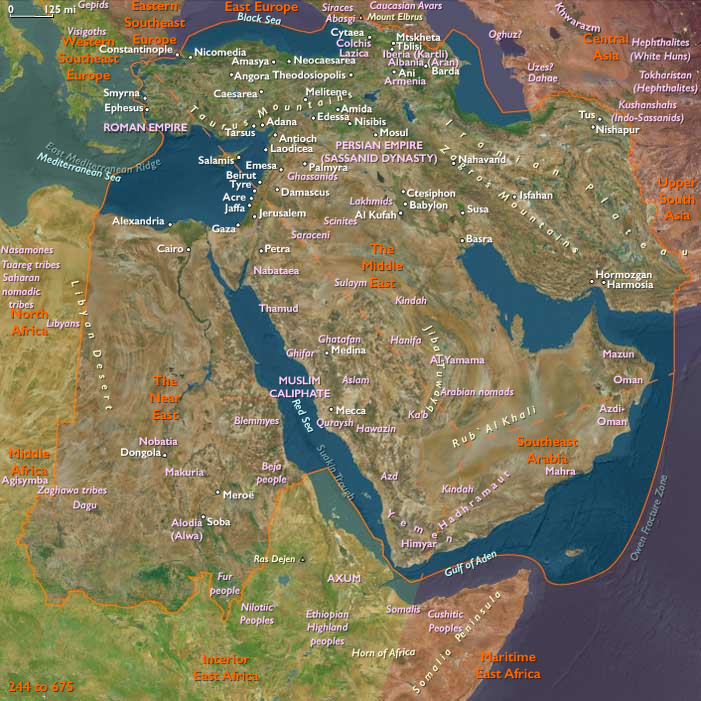
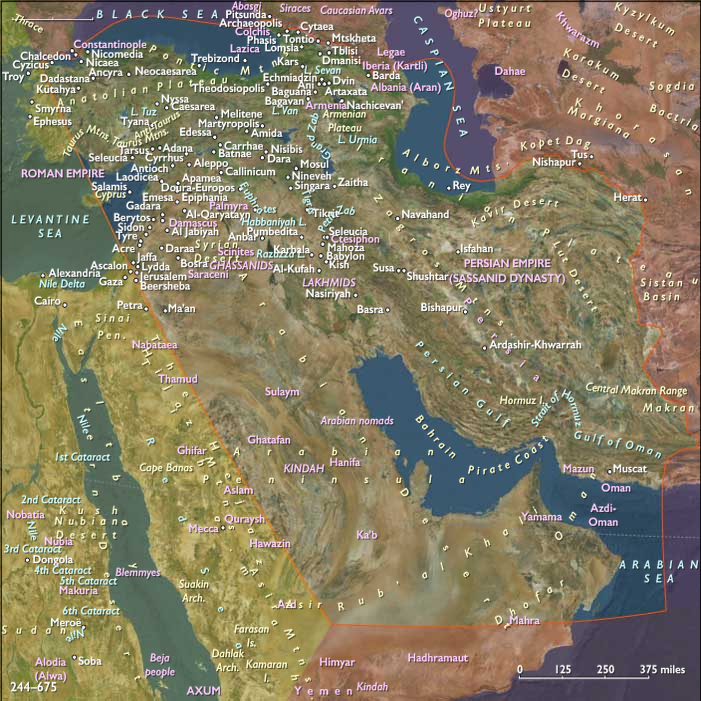
The era from 316 to 327 CE sees significant developments across the Middle East, characterized by continued religious consolidation and renewed hostilities between the Roman and Sassanid empires.
Religious Transformation and Institutionalization
Following Emperor Constantine’s adoption and legalization of Christianity, the religion rapidly strengthens its institutional roots throughout Roman territories. In 324 CE, Constantine decisively defeats his co-emperor Licinius at the Battle of Chrysopolis, gaining undisputed control over the entire Roman Empire, including the strategically crucial Middle Eastern provinces. This victory cements Constantine’s authority and accelerates Christianity's spread and acceptance as the favored religion of the state.
In the same period, Constantine lays the foundation for a new imperial capital, Constantinople, in 326 CE, strategically located on the Bosporus to dominate routes between Asia and Europe, further shaping the political and cultural landscape of the Middle East for centuries to come.
Armenia’s Christian Consolidation
Armenia, under King Tiridates III, continues to firmly establish Christianity as the kingdom’s official religion. The Armenian Apostolic Church expands its influence, constructing significant religious and educational institutions. This ecclesiastical development fortifies Armenia’s unique cultural identity, balancing political pressures from both Rome and Persia.
Renewed Persian–Roman Rivalries
The period witnesses heightened tensions between the Roman and Sassanid empires under the aggressive rule of Shapur II, who ascended the Persian throne as an infant but begins asserting his military authority as he comes of age around 325 CE. Although large-scale warfare does not fully erupt during this time, both empires intensively prepare their frontier defenses, anticipating inevitable conflicts over Armenia and Mesopotamia.
By 327 CE, Shapur II prepares a campaign intended to reclaim lost territories, setting the stage for prolonged and significant hostilities in the decades ahead.
Thus, the era 316–327 CE in the Middle East is defined by the accelerating institutionalization of Christianity within the Roman Empire, Armenia’s steadfast commitment to its new faith, and the mounting geopolitical tensions between Rome and the Sassanid Persians. These developments collectively set the stage for the turbulent conflicts and cultural exchanges of subsequent decades.
People
Groups
- Christians, Early
- Armenia, Kingdom of
- Persian Empire, Sassanid, or Sasanid
- Roman Empire: Tetrarchy
- Christians, Armenian Apostolic Orthodox
- Christianity, Nicene
Topics
Subjects
Regions
Subregions
Years: 316 - 327
People
Groups
- Christians, Early
- Armenia, Kingdom of
- Persian Empire, Sassanid, or Sasanid
- Roman Empire: Tetrarchy
- Christians, Armenian Apostolic Orthodox
- Christianity, Nicene
Topics
Subjects
Regions
Subregions