
The Middle East: 21–10 BCE Stabilization …
Years: 21BCE - 10BCE
The Middle East: 21–10 BCE
Stabilization and Diplomatic Consolidation
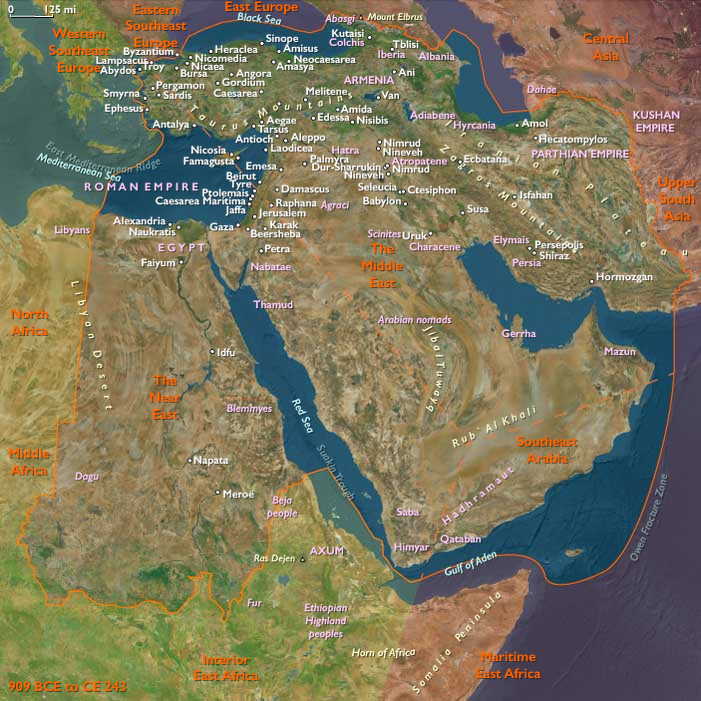
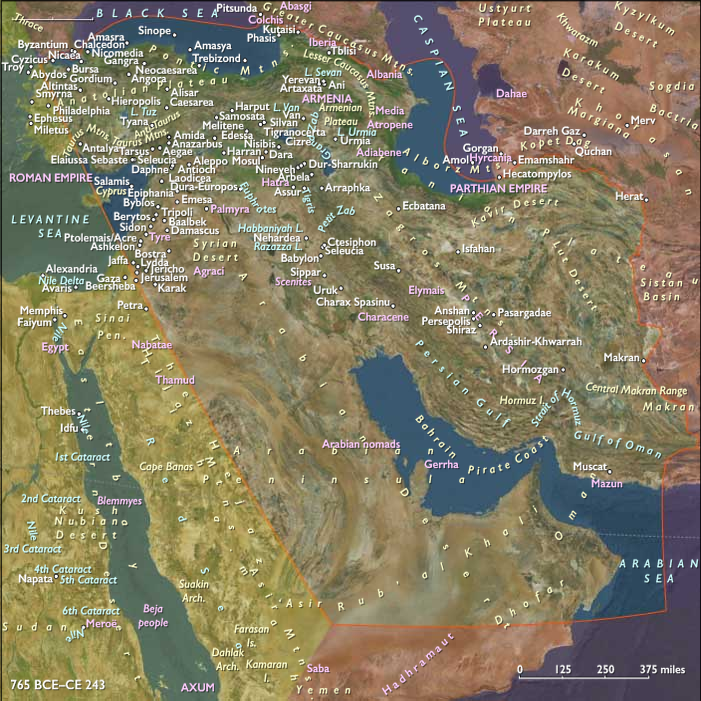
In 20 BCE, tensions between Rome and Parthia ease significantly following successful diplomatic negotiations led by Augustus. To solidify this diplomatic understanding, Phraates IV returns the Roman standards previously captured from Crassus at the Battle of Carrhae (53 BCE) and from Mark Antony's campaign (36 BCE). This symbolic act restores Roman pride and greatly enhances Augustus’s prestige in Rome, reinforcing his image as a powerful yet prudent leader who achieves victory through diplomacy rather than warfare.
Phraates IV further solidifies peace by sending several of his sons as hostages to Rome, a common practice meant to guarantee good behavior between powerful empires. These royal hostages not only serve as assurances against future conflicts but also as a bridge for cultural and political exchanges between Parthia and Rome.
Meanwhile, Parthia itself enjoys a period of relative stability and internal consolidation under Phraates IV, despite lingering discontent among certain segments of the nobility. The empire continues to benefit economically from its strategic control of trade routes linking the Mediterranean world with Central and South Asia, ensuring the region's continued prosperity.
In the broader Near East, Roman influence steadily expands through a careful blend of direct control and client kingships, with client rulers managing local affairs under Roman oversight. This era thus marks a critical phase of diplomatic stability and controlled expansion, emphasizing the Roman Empire's strategic preference for maintaining peace and influence through carefully managed alliances and diplomacy rather than outright conquest.
People
Groups
Topics
Subjects
Regions
Subregions
Years: 21BCE - 10BCE
People
Groups
Topics
Subjects
Regions
Subregions