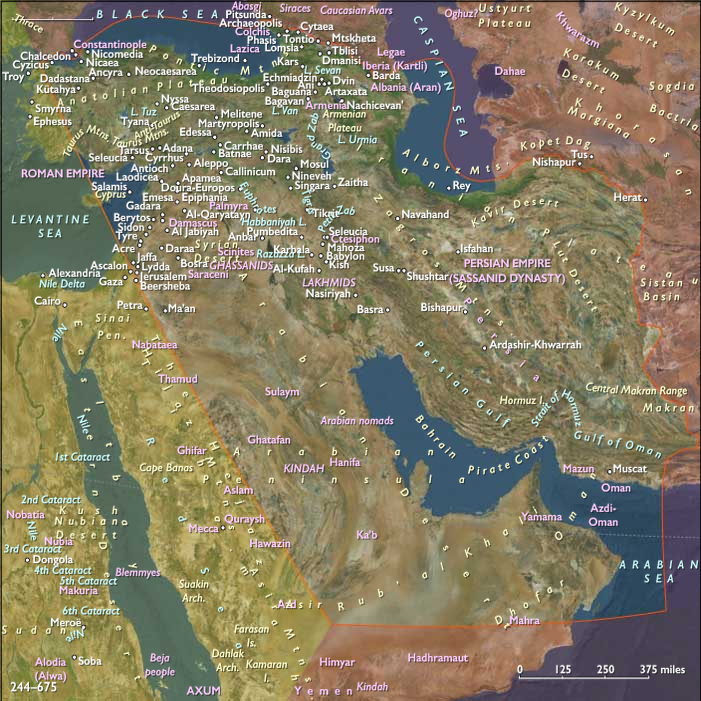
The Middle East: 388–399 CE Stability …
Years: 388 - 399
The Middle East: 388–399 CE
Stability and Religious Consolidation
The period from 388 to 399 CE in the Middle East is characterized primarily by a temporary stabilization of geopolitical tensions between the Roman and Sassanid Empires following the significant Peace of Acilisene in 387 CE. This agreement, which divides Armenia into distinct Roman and Persian spheres of influence, ushers in a brief phase of diplomatic calm, allowing both empires to consolidate their control and focus internally.
Armenian Division and Regional Stability
Armenia, previously a focal point of Roman–Persian rivalry, is now officially partitioned between Rome and Persia. The Roman-controlled west and the Sassanian-dominated east coexist under a pragmatic arrangement that significantly reduces regional tensions. This division helps maintain a fragile peace that will endure for some decades, stabilizing the volatile Caucasian frontier.
Expansion and Strengthening of Christianity
Christianity continues its expansive growth during this era, further solidifying its influence in regional politics and culture. Armenia, under Roman influence, remains committed to Christianity, deepening its religious and cultural ties to Byzantium. Similarly, Christianity further entrenches itself in Georgia, bolstered by the earlier conversion under King Mirian III. These Christian communities continue to develop distinctive traditions, which will profoundly shape their national identities.
Persian Religious and Cultural Consolidation
Within the Sassanid Empire, the Zoroastrian priesthood continues to hold significant influence, reinforcing the empire's internal stability through strict social and religious structures. The Persian authorities intensify their efforts to promote Zoroastrian beliefs and Persian cultural norms across their territories, particularly within the Persian Gulf region, maintaining the agricultural colonies and strategic arrangements with local tribes established previously.
Economic and Urban Prosperity
Greater Syria, under Roman governance, experiences continued economic prosperity and urban development. Important trade centers such as Damascus, Palmyra, and Busra ash Sham thrive due to well-established infrastructure and effective administrative practices. The sustained economic vitality of these cities reinforces the Roman administrative efficiency established by Emperor Constantine, with Syria continuing to serve as a crucial economic and cultural bridge between East and West.
Thus, the era from 388 to 399 CE in the Middle East represents a brief but critical interlude of geopolitical calm and internal consolidation, laying a stable foundation for the transformative developments of subsequent decades.
Years: 388 - 399
Groups
- Zoroastrians
- Armenia, Kingdom of
- Persian Empire, Sassanid, or Sasanid
- Christianity, Nicene
- Roman Empire: Theodosian dynasty (Constantinople)
- Armenia, (East Roman [Byzantine] vassal) Principality of
Subjects
Regions
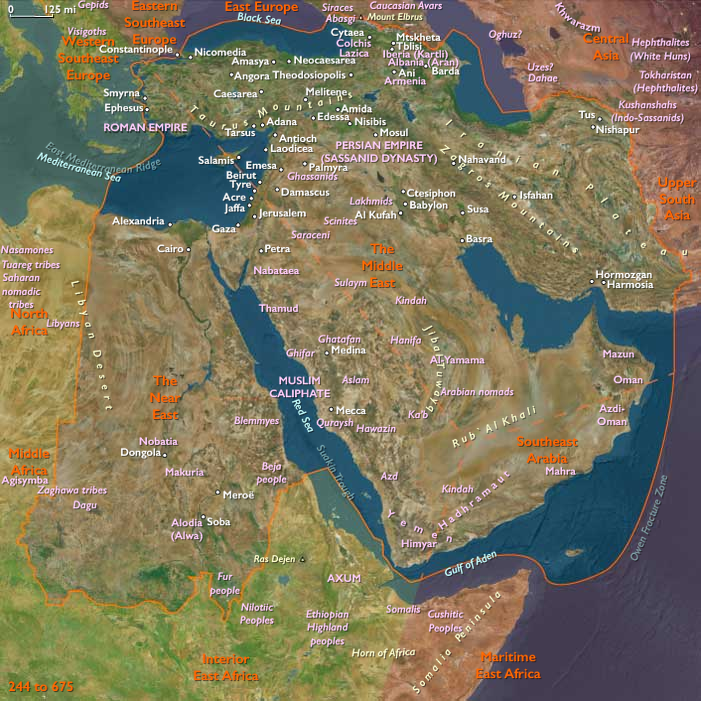
Subregions