
The Middle East: 369–358 BCE Revolts …
Years: 369BCE - 358BCE
The Middle East: 369–358 BCE
Revolts and Realignments within the Persian Empire
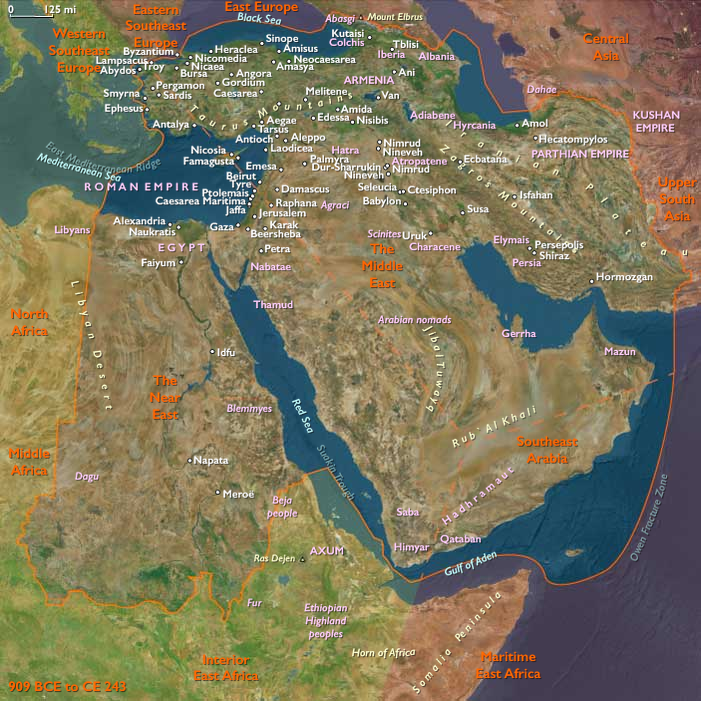
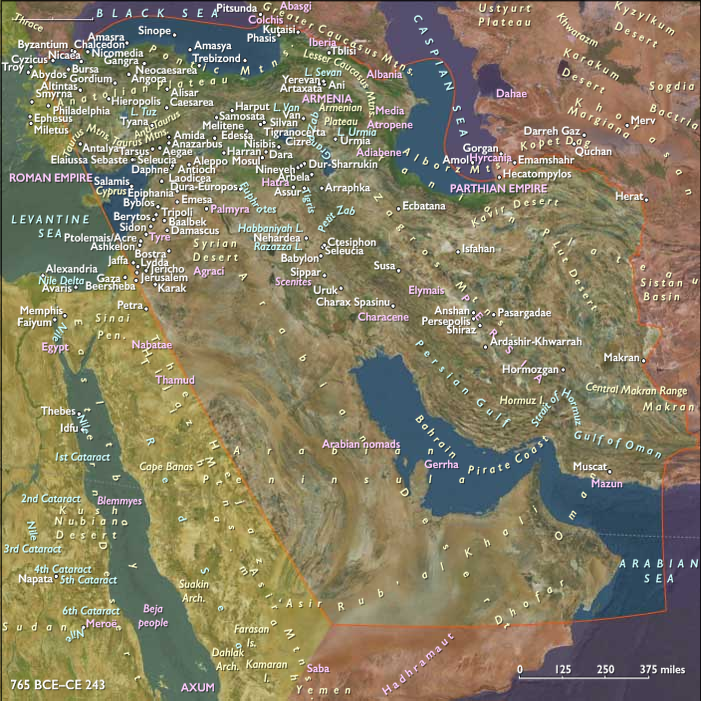
This era in the Persian Empire under Artaxerxes II is marked by continued political turbulence, with satraps frequently challenging central authority. Following the resolution of Evagoras' rebellion in Cyprus, unrest flares again in the empire’s western provinces, notably in Anatolia, Phoenicia, and Egypt. These regions are consistently restive, driven by local ambitions, dissatisfaction with Persian rule, and encouragement from external powers, particularly Greek city-states.
In Egypt, Pharaoh Nectanebo I (reigned 380–362 BCE) strengthens defenses against Persian reconquest attempts and sponsors revolts in Syria and Palestine to divert Persian resources. This results in prolonged but indecisive warfare that weakens Persian control in the Levant.
Meanwhile, in Anatolia, Persian satraps continue to assert semi-autonomous authority, often forming informal alliances with influential Greek states. The Persian Empire, though still powerful, increasingly appears strained by internal dissent and external pressures, foreshadowing greater difficulties in maintaining cohesion over its extensive territories.
Despite these tensions, Artaxerxes II successfully manages the immediate crises through strategic use of diplomacy and selective military interventions. The empire remains intact, though clearly demonstrating vulnerabilities that future opponents, such as the rising kingdom of Macedon, will later exploit.
People
Groups
Topics
Subjects
Regions
Subregions
Years: 369BCE - 358BCE
People
Groups
Topics
Subjects
Regions
Subregions