
The Middle East: 693–682 BCE Cimmerian …
Years: 693BCE - 682BCE
The Middle East: 693–682 BCE
Cimmerian Invasions and Lydian Resilience
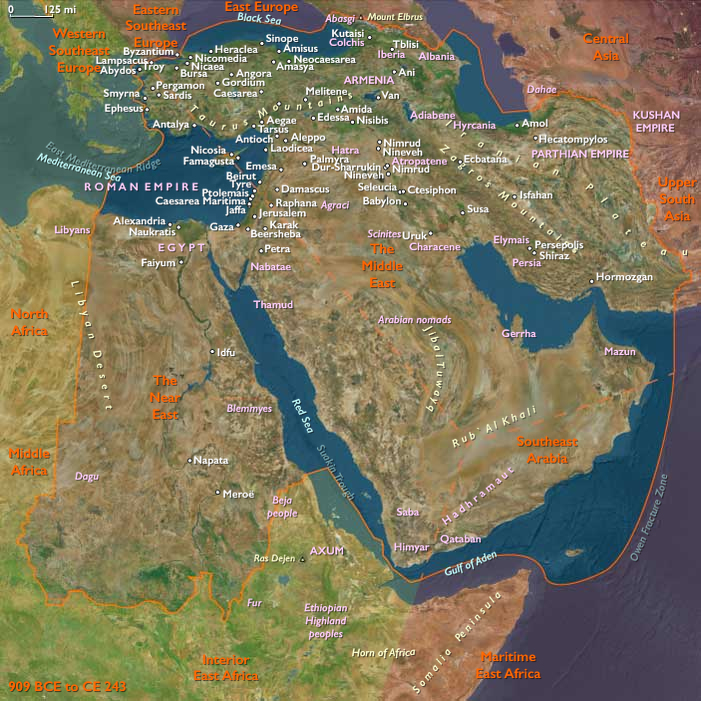
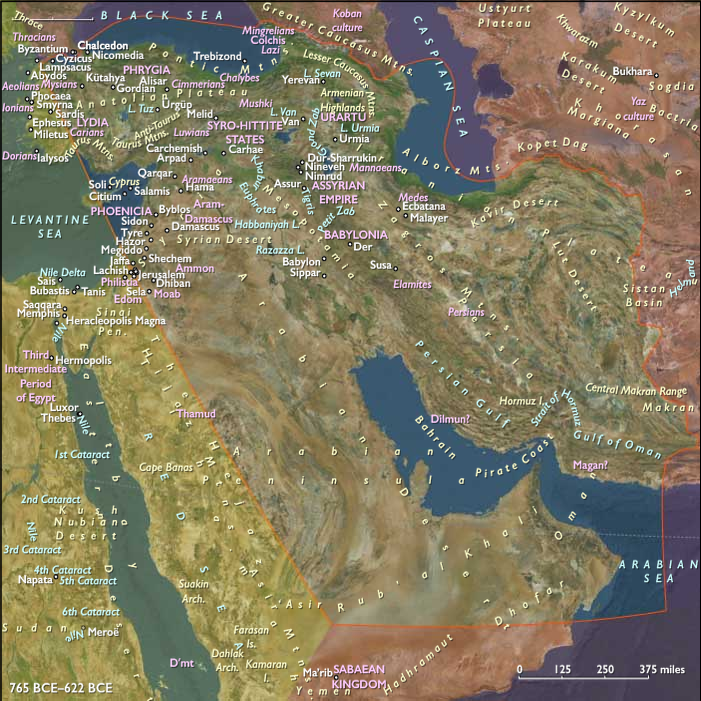
During this era, western Anatolia witnesses continued turmoil as the nomadic Cimmerians, driven by earlier conflicts with the Assyrians and Scythians, intensify their attacks on the rising power of Lydia. The Cimmerian raids severely disrupt the economic stability and social structure of Lydia, the newly established regional hegemon succeeding the now-destroyed Phrygian kingdom. Ultimately, these relentless incursions are halted by the Scythians, another formidable nomadic group from the Eurasian steppes, who force the Cimmerians eastward into Cappadocia, reducing their immediate threat to western Anatolia.
Phrygia’s Aftermath and Cultural Legacy
Following its devastating collapse at the hands of the Cimmerians in the previous era, Phrygia now survives primarily as a geographic and cultural expression rather than an independent political entity. Under successive foreign rulers of Anatolia, the region’s population declines significantly in status, with many Phrygians captured and sold into slavery, especially to Greek merchants and cities. Despite losing political autonomy, Phrygia’s rich cultural legacy endures, influencing regional customs, mythology, and artistic traditions well beyond its political demise.
This era (693–682 BCE) underscores a phase of turbulence and reshaping in western Anatolia, marked by shifting balances of power and the continuing influence of migratory invasions that redefine the region’s political and cultural landscape.
People
Groups
- Lydia, Kingdom of
- Phrygia, Kingdom of
- Babylon, Kingdom of
- Cimmerians
- Assyria, (New) Kingdom of (Neo-Assyrian Empire)
- Greece, classical
- Scythians, or Sakas
- Greeks, Classical
Topics
Commodoties
Subjects
Regions
Subregions
Years: 693BCE - 682BCE
People
Groups
- Lydia, Kingdom of
- Phrygia, Kingdom of
- Babylon, Kingdom of
- Cimmerians
- Assyria, (New) Kingdom of (Neo-Assyrian Empire)
- Greece, classical
- Scythians, or Sakas
- Greeks, Classical
Topics
Commodoties
Subjects
Regions
Subregions