
The Middle East: 748–759 CE The …
Years: 748 - 759
The Middle East: 748–759 CE
The Abbasid Revolution and the Fall of the Umayyads
The Rise of the Abbasids
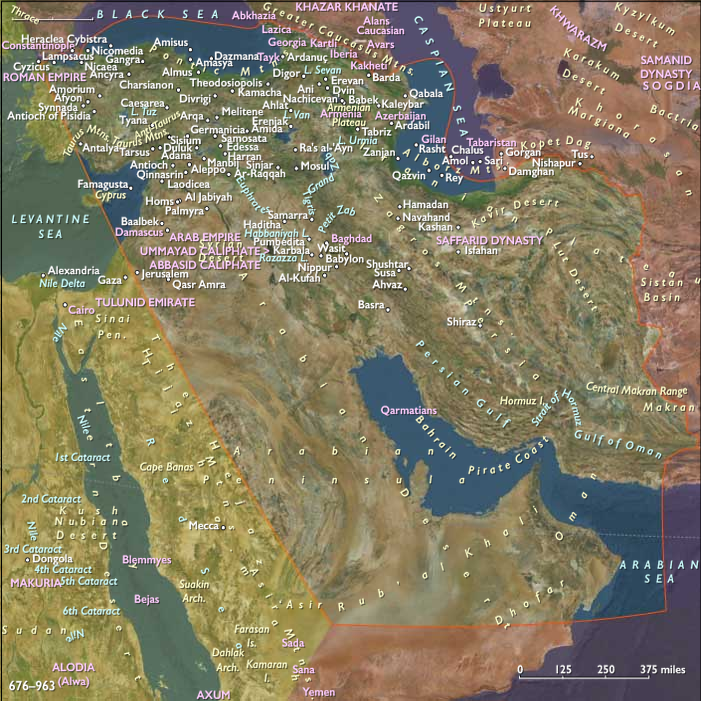
In 747 CE, Abu Muslim, a charismatic leader from eastern Persia, marshals a powerful army against the Umayyad Caliphate. By 748 CE, his forces decisively occupy Iraq, setting the stage for a fundamental shift in the political landscape of the Islamic world.
Establishment of the Abbasid Dynasty
In 750 CE, the Umayyad dynasty dramatically collapses, replaced by the newly ascendant Abbasids, who trace their lineage to Abbas, an uncle of the Prophet Muhammad. Abu al-Abbas al-Saffah becomes the first Abbasid caliph, establishing his capital initially in Kufa, and soon thereafter shifting administrative authority toward the newly founded city of Baghdad, positioned strategically along vital trade routes.
Political Continuity Amidst Change
Although the Abbasids come to power by promising a new era of justice, piety, and egalitarian governance—earning the label "the blessed dynasty"—their administration in practice mirrors many policies of their predecessors. They adopt Umayyad methods of governance, taxation, and military organization, and despite their revolutionary rhetoric, the social and political hierarchies remain largely intact.
Centralization in Baghdad
Under Abbasid rule, the administrative center decisively shifts from Damascus to Baghdad, soon becoming one of the most important cities in the world, a renowned center of culture, learning, and commerce. The choice of Baghdad symbolizes the Abbasid desire to distance themselves from the Syrian-dominated politics of the Umayyads, emphasizing Persian and Iraqi influence instead.
Cultural and Religious Developments
The early Abbasid period witnesses significant cultural flourishing. The translation movement, initiated by the Abbasids, involves the systematic translation of Greek, Persian, and Indian works into Arabic, laying the groundwork for the Islamic Golden Age. Yet, tensions persist, particularly with the Shia, who initially supported the Abbasids but soon find themselves marginalized under Sunni-dominated rule.
By 759 CE, the Abbasid Dynasty has firmly consolidated its control, marking a decisive new chapter in Islamic history, even as echoes of Umayyad rule linger within the structure and ethos of the new regime.
People
Groups
- Muslims, Sunni
- Muslims, Kharijite
- Umayyad Caliphate (Damascus)
- Muslims, Shi'a
- Umayyad Caliphate (Harran)
- Abbasid Caliphate (Kufa)
Topics
Subjects
Regions

Subregions
Years: 748 - 759
People
Groups
- Muslims, Sunni
- Muslims, Kharijite
- Umayyad Caliphate (Damascus)
- Muslims, Shi'a
- Umayyad Caliphate (Harran)
- Abbasid Caliphate (Kufa)
Topics
Subjects
Regions
Subregions