
The Middle East: 760–771 CE The …
Years: 760 - 771
The Middle East: 760–771 CE
The Alid Revolt and Abbasid Consolidation
Rise of the Alid Opposition
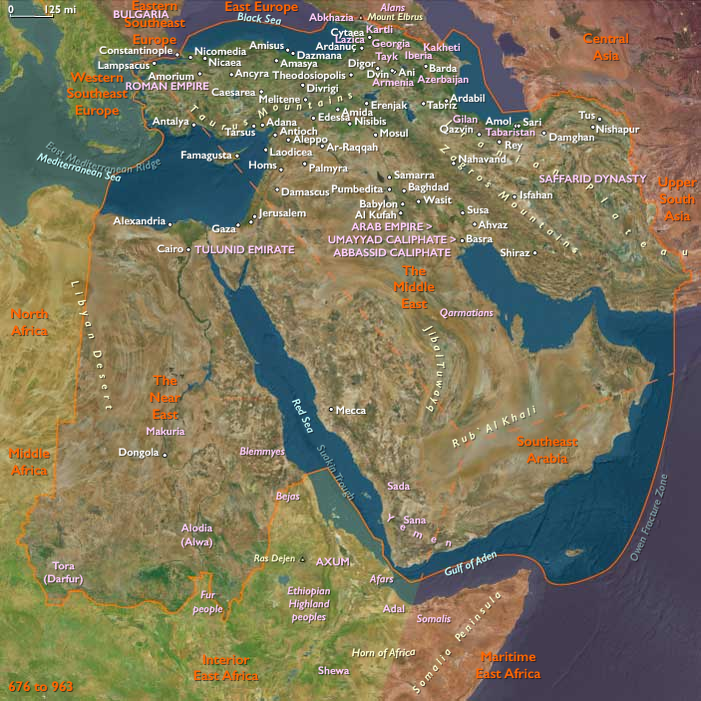
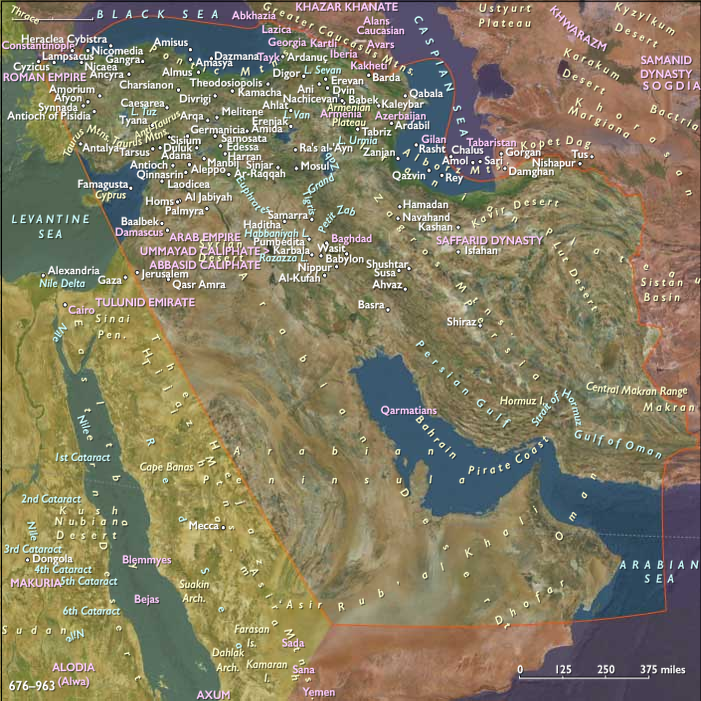
In 762 CE, the Abbasid Caliphate faces a significant challenge to its legitimacy from the Hasanid branch of the Alids, descendants of Hasan ibn Ali, the grandson of the Prophet Muhammad. Angered by Abbasid oppression and asserting their own superior lineage, the Hasanid brothers Muhammad ibn Abdallah, known as "the Pure Soul," and his brother Ibrahim ibn Abdallah, ignite rebellions in different regions of the caliphate.
The Revolt in the Hejaz and Iraq
Muhammad "the Pure Soul" leads the uprising from Medina, declaring himself the legitimate ruler in September 762 CE. His brother Ibrahim simultaneously raises the standard of rebellion in Basra (modern-day Iraq) in November. However, the revolt suffers from a critical lack of coordination between the two fronts, undermining their potential effectiveness.
Abbasid Response and Military Defeat
The Abbasid Caliph, al-Mansur, swiftly reacts. He dispatches forces first against Muhammad's rebellion, which is rapidly contained and crushed within mere weeks. With the Hejaz firmly back under control, al-Mansur then focuses his resources on the southern Iraqi front.
Battle of Bakhamra and Aftermath
Although Ibrahim initially enjoys some success, his army becomes fractured due to internal disagreements, primarily among different Shia factions with conflicting visions for the rebellion's political future. This disunity severely weakens the rebellion, culminating in a decisive Abbasid victory at the Battle of Bakhamra in January 763 CE, during which Ibrahim sustains fatal injuries.
Impact on Abbasid Authority
While this defeat temporarily quells open resistance from the Hasanid Alids, it does not end Alid unrest permanently. Nevertheless, the Abbasid Caliphate emerges from this conflict significantly strengthened, solidifying its political authority and reasserting its dominance over rival claimants to the Islamic community’s leadership.
People
Groups
Topics
Subjects
Regions
Subregions
Related Events
Filter results
Showing 10 events out of 55179 total
These efforts had stopped short of making Buddhism the state religion, but Nara Buddhism has heightened the status of the imperial family.
Buddhist influence at court increased under the two reigns of Shomu's daughter.
As Empress Koken from 749 to 758, she brings many Buddhist priests into court.
Koken abdicates in 758 on the advice of her cousin, Fujiwara Nakamaro.
When the retired empress comes to favor a Buddhist faith healer named Dokyo, Nakamaro rises up in arms in 764 but is quickly crushed.
Koken charges the ruling emperor with colluding with Nakamaro, and has him deposed and reascends the throne as Empress Shotoku from 764 to 770.
It is at this point that she commissions the printing of one million prayer charms, many examples of which survive, and which are known as the earliest printing in the world until an earlier example dating 751 will be discovered in Korea in 1966.
Shotoku has the charms printed to placate the Buddhist clergy.
She may even have wanted to make Dokyo emperor, but she dies before she can act.
Her actions shock Nara society and lead to the exclusion of women from imperial succession and the removal of Buddhist priests from positions of political authority.
The An Lushan rebellion spans the reigns of three Tang emperors before it is quashed, and involves a wide range of regional powers; besides the Tang dynasty loyalists, others involved are anti-Tang families, especially in An Lushan's base area in Hebei, and Arab, Gökturk, and Sogdian forces or influences, among others.
The rebellion and subsequent disorder result in a huge loss of life and large-scale destruction.
It significantly weakens the Tang dynasty, and leads to the loss of the Western Regions.
An Lushan’s rebellion ends on February 17, 763, when Yan falls (although the effects last past this).
This event is also known (especially in Chinese historiography) as the An–Shi Rebellion or An–Shi Disturbances, as it had continued after An Lushan's death under his son An Qingxu and his deputy and successor Shi Siming, or as the Tianbao Rebellion, as it began in the fourteenth year of that era.
East Central Europe (760–771 CE): Bavarian and Saxon Dominance, Emerging Slavic States, and the Eve of Carolingian Influence
Between 760 and 771 CE, East Central Europe—encompassing Poland, Czechia, Slovakia, Hungary, and those portions of Germany and Austria lying east of 10°E and north of a line stretching from roughly 48.2°N at 10°E southeastward to the Austro-Slovenian border near 46.7°N, 15.4°E—experienced further consolidation of Bavarian and Saxon influence, continued political and economic stabilization among Slavic communities, and sustained internal coherence within the Avar Khaganate. Thuringia remained effectively independent of diminishing Merovingian power, setting the regional stage for the transformative emergence of Carolingian power to the west.
Political and Military Developments
Bavarian Consolidation over Carantania
-
The Duchy of Bavaria solidified its protectorate over the Slavic principality of Carantania, further embedding the region within Bavarian political and cultural influence and reinforcing the strategic divide between southern Slavs and their northern and eastern kin.
Sustained Saxon Power
-
Saxon dominance remained firmly established east of the Elbe River, maintaining influential control over eastern Germany and extending political, economic, and cultural influence into western Poland and northern Czechia.
Early Slavic State Formation
-
Principalities in Bohemia and Moravia matured significantly, further clarifying territorial boundaries, administrative structures, and defensive systems, laying foundational structures for medieval statehood.
Continued Autonomy in Thuringia
-
Thuringian dukes preserved their political autonomy, reinforcing the ongoing decentralization and decline of Merovingian royal authority.
Diplomatic Stability of the Avar Khaganate
-
The Avars retained internal political stability and carefully managed diplomatic relations with neighboring Bavarian, Saxon, and Slavic territories, maintaining regional equilibrium.
Economic and Technological Developments
Flourishing Regional Economy
-
Prosperous trade networks continued connecting Bavarian, Saxon, Slavic, Thuringian, Avar, and Frankish territories, exchanging agricultural produce, metals, textiles, luxury items, and crafts.
Expansion of Fortifications and Infrastructure
-
Saxon, Slavic, Bavarian, and Avar communities expanded and refined their fortified settlements, reflecting stable governance, economic prosperity, population growth, and advanced technological capabilities.
Cultural and Artistic Developments
Germanic Cultural Expansion
-
Bavarian and Saxon cultural traditions further permeated Slavic regions, significantly shaping artistic styles, pottery, metalwork, burial practices, and jewelry throughout the area.
Continued Development of Slavic Regional Identities
-
Bohemian, Moravian, and Carantanian Slavic groups deepened their distinct regional identities, archaeologically visible in differentiated ceramics, settlement patterns, and material culture.
Avar Artistic Continuity
-
Avar cultural and artistic traditions remained influential, particularly evident in sophisticated metalworking techniques, jewelry designs, and equestrian accessories.
Settlement and Urban Development
Saxon and Bavarian Territorial Integration
-
Saxon and Bavarian territories expanded settlement networks, developing fortified urban centers and economically productive rural communities, solidifying regional stability.
Slavic Urban and Administrative Growth
-
Bohemian, Moravian, and Carantanian urban centers grew increasingly prominent, reflecting stable political leadership, economic prosperity, and demographic growth.
Continued Stability in Thuringia
-
Thuringian communities maintained their economic vitality and regional political stability, benefiting from sustained peaceful trade and minimal external pressures.
Social and Religious Developments
Solidified Germanic Leadership Structures
-
Bavarian and Saxon societies reinforced hierarchical structures under powerful warrior aristocracies, ensuring cohesive regional governance and military effectiveness.
Centralization of Slavic Authority
-
Slavic communities in Bohemia, Moravia, and Carantania continued centralizing political authority, enhancing governance, defense, and regional integration.
Continued Stability of Avar Society
-
Avar societal organization remained cohesive, effectively managed by a stable hierarchy and strong leadership, maintaining internal stability and diplomatic effectiveness.
Long-Term Consequences and Historical Significance
The era 760–771 CE further entrenched key political and cultural structures that would shape East Central Europe's medieval future. Bavarian and Saxon dominance, Slavic state formation, persistent Thuringian independence, and ongoing Avar stability created the conditions for the transformative developments soon to emerge with the rise of the Carolingian Empire. These dynamics fundamentally influenced the region's long-term historical trajectory.
Eastern Southeast Europe (760–771 CE): Emergence of the Serbian Principality
Settlement and Migration Patterns
Establishment of the Serbian Principality
Around 768 CE, the Serbs established a principality in the northeastern region of modern Serbia, within Eastern Southeast Europe. This political formation marked the beginning of Serbia's increasing influence and strategic significance in regional politics, laying foundational elements for its subsequent historical role.
Stability Amid Bulgarian Turmoil
Between 760 and 771 CE, Eastern Southeast Europe maintained demographic stability despite political disruptions within the neighboring Bulgarian state. Regional populations, including previously relocated communities, continued consolidating their presence and reinforcing territorial security.
Political and Military Developments
Serbian Political Consolidation
The newly established Serbian principality gradually gained regional prominence, becoming an important political and military actor that would play a critical role in later regional dynamics, particularly in interactions with the Byzantine and Bulgarian empires.
Bulgarian Political Instability
Bulgarian power significantly faltered during this era, characterized by the assassination of one khan, swiftly followed by another, and the rapid, successive elections of two more khans. This political instability within Bulgaria led directly to a period of peace lasting five years between Bulgaria and the Byzantine Empire.
Imperial Advantage
The turmoil in Bulgaria provided the Byzantine Empire an opportunity to consolidate its territorial and military gains without immediate threats from the north. This period of peace enabled further strengthening of defensive and administrative systems within the empire.
Economic and Technological Developments
Economic Consolidation
Economic conditions continued to benefit from prolonged peace and stability, fostering growth in trade and agricultural productivity. The absence of Bulgarian military threats further secured economic routes and resource allocations.
Continued Defensive Enhancements
Defensive infrastructure and fortifications, particularly along critical frontier regions, were maintained and improved. These strategic preparations reinforced regional security during this peaceful interval.
Cultural and Artistic Developments
Sustained Cultural Flourishing
Cultural and artistic activities thrived due to the stability afforded by the temporary cessation of northern military threats. This allowed further investments in religious and cultural institutions, enhancing regional identity and artistic expression.
Intellectual Resilience
Educational and scholarly institutions continued to preserve classical and theological knowledge, ensuring cultural and intellectual continuity. This period of relative peace enabled scholarly communities to expand their activities further.
Social and Religious Developments
Strengthening of Eastern Orthodox Identity
Eastern Orthodoxy's role within society remained robust, continuously shaping communal cohesion and cultural identity. Religious institutions continued to support societal stability, especially during this brief respite from external pressures.
Persistent Iconoclast Debate
The ongoing Iconoclast controversy continued to shape social and religious discourse. Despite political and military stability, theological tensions persisted, influencing interactions within religious communities and the broader society.
Long-Term Consequences and Historical Significance
The period from 760 to 771 CE was marked by significant political instability within Bulgaria, providing a valuable strategic respite for the Byzantine Empire and witnessing the establishment of the Serbian principality. These developments significantly influenced regional political dynamics, laying important foundations for future historical trajectories in Eastern Southeast Europe.
Bulgarian power falters as first one khan is assassinated, then another, followed by the successive elections of two more khans, resulting in a five-year peace with Constantinople.
The Alid Revolt of 762–763, or Revolt of Muhammad the Pure Soul, is an uprising by the Hasanid branch of the Alids against the newly established Abbasid Caliphate.
The Hasanids, led by the brothers Muhammad (called "the Pure Soul") and Ibrahim, reject the legitimacy of the Abbasid family's claim to power.
Reacting to mounting persecution by the Abbasid regime, they launch a rebellion in 762, with Muhammad raising in revolt Medina in September and Ibrahim following in Basra in November.
The lack of coordination and organization, as well as the lukewarm support of their followers, allows the Abbasids under Caliph al-Mansur to react swiftly.
The Caliph contains Muhammad's rebellion in the Hejaz and crushes it only two weeks after Ibrahim's uprising, before turning his forces against the latter.
Ibrahim's rebellion achieves some initial successes in southern Iraq, but his camp is riven by dissent among rival Shi'a groups as to the prosecution of the war and future political objectives.
Ibrahim's army is decisively defeated at Bakhamra in January 763, with Ibrahim dying of his wounds shortly after.
The failure of the rebellion does not mark the end of Alid unrest, but it consolidates the power of the Abbasid dynasty.
North Africa (760–771 CE)
Rise of the Rustamids, Arrival of the Muhallabids, and Regional Fragmentation
Between 760 and 771 CE, North Africa witnesses significant political shifts, characterized by the solidification of indigenous Berber dynasties, notably the Rustamids, alongside the emergence of the Arab Muhallabid dynasty as influential governors in Ifriqiya, reshaping regional power dynamics within the context of Abbasid governance.
In 761 CE, the Berber leader Abd ar-Rahman ibn Rustam, renowned for his Ibadi Kharijite convictions, firmly establishes the Rustamid Dynasty in the newly founded city of Tahert (modern-day Tiaret, Algeria). Rustamid governance emphasizes piety, justice, and scholarly achievement, earning respect across the Maghreb. Its leaders are chosen through elective processes, reflecting Ibadi ideals of egalitarian governance and religious purity. The Rustamids become widely recognized as a scholarly and religious authority, rapidly attracting intellectuals and traders from throughout North Africa and beyond.
In the meantime, recognizing the complexity of managing distant territories, the Abbasid Caliphate, centered in Baghdad, entrusts administrative control of Ifriqiya to the prominent Arab Muhallabid family, originally influential in Basra and Khurasan. Starting from 768 CE, Muhallabid governors based in Kairouan (Al Qayrawan) implement extensive reforms, dramatically reinvigorating local agriculture through improved irrigation systems and infrastructure. Under their administration, Ifriqiya enjoys notable economic prosperity and relative internal stability despite ongoing Berber revolts and regional fragmentation.
However, the Muhallabids' governance is limited in scope, restricted primarily to the immediate region of Ifriqiya. They prove unable to prevent or reverse the growing autonomy of surrounding areas. Berber polities, particularly the Rustamids, expand significantly, becoming influential regional powers. Likewise, in Morocco, the independent Barghawata confederation consolidates its unique religious and cultural identity, further distancing itself from eastern caliphal control. Additionally, the important trading center of Sijilmasa, situated strategically on trans-Saharan routes managed by powerful Tuareg tribes, asserts significant economic autonomy, highlighting the broader trend of localized independence and economic prosperity.
By the conclusion of 771 CE, the political landscape of North Africa clearly reflects substantial regional fragmentation, characterized by robust indigenous Berber states, effective but limited Abbasid Arab governance under the Muhallabids, and a growing mosaic of culturally and economically vibrant entities. This era firmly establishes the patterns of autonomy, diversity, and decentralized governance that will continue to shape North Africa's historical trajectory in subsequent periods.
Atlantic Southwest Europe (760–771 CE): Strengthening Asturian Authority and Regional Stability
Between 760 and 771 CE, Atlantic Southwest Europe—covering Galicia, northern and central Portugal, Asturias, Cantabria, and northern Spain south of the Franco-Spanish border (43.05548° N, 1.22924° W)—experienced further political consolidation under the Asturian kingdom. The reign of King Fruela I (757–768 CE) and his successor Aurelius (768–774 CE) marked continued stabilization, economic resilience, enhanced ecclesiastical leadership, and strengthened regional identities amid ongoing pressure from Islamic al-Andalus.
Political and Military Developments
Asturian Centralization under Fruela I
King Fruela I, known for his energetic and ambitious rule, continued consolidating royal power and territorial security. He reinforced defensive measures along the kingdom’s southern frontiers, particularly the strategic "Desert of the Duero," effectively limiting Islamic incursions. Fruela’s assertive policies sometimes generated internal tensions, yet overall they bolstered central authority, enabling Asturias to emerge as a more unified political entity.
Regional Autonomy and Stability under Aurelius
After Fruela’s assassination in 768 CE, King Aurelius ascended to the throne, adopting a more diplomatic approach that reduced internal conflict. Aurelius respected regional autonomy and maintained cooperative relationships with local aristocrats, bishops, and tribal leaders. His reign stabilized the kingdom internally, setting the stage for sustained future growth.
Economic Developments
Stable and Expanding Regional Economies
Under Fruela I and Aurelius, regional economies continued their steady growth and diversification. Villa-based agriculture (grain, olives, wine), livestock husbandry, and artisanal production (textiles, pottery, metalwork) provided stable economic foundations. Mining, notably of gold and silver in Galicia and Asturias, remained economically significant, contributing considerably to the kingdom’s overall prosperity.
Moderate Revival of Maritime and Regional Trade
Coastal cities such as Bracara Augusta (Braga) and smaller ports along Galicia and northern Portugal sustained consistent maritime trade networks, connecting Atlantic Southwest Europe to broader Atlantic and Mediterranean commerce. Though modest, this renewed trade contributed essential economic stability.
Cultural and Religious Developments
Strengthened Ecclesiastical Governance
Influential bishoprics—particularly Braga, Lugo, Asturica Augusta, and Iria Flavia—further enhanced their roles as civic and cultural leaders. Bishops served as key administrators and moral authorities, significantly shaping local governance and embedding orthodox Christianity into regional identity.
Expansion and Influence of Monastic Communities
Monastic communities continued to expand, profoundly influencing regional culture, education, and economy. Monasteries functioned as vital centers of manuscript production, literacy, education, agricultural innovation, and social welfare, decisively shaping regional cultural continuity and religious devotion.
Enduring Cultural Syncretism
The synthesis of orthodox Christianity with indigenous Celtic and Iberian traditions remained robust, particularly in rural Galicia, Asturias, and northern Portugal. This enduring cultural blend reinforced regional identity, providing unity and continuity amid ongoing external challenges.
Civic Identity and Governance
Increasing Centralization of Regional Governance
Asturian political structures became increasingly centralized, especially under Fruela I’s active governance, though considerable local autonomy continued under Aurelius. Civic identities coalesced around Asturian royal authority, clearly identifying Asturias as the political center of Iberian Christian resistance.
Notable Tribal Groups and Settlements
-
Astures and Cantabri: Provided essential military strength and political stability, decisively shaping the emerging Asturian identity and governance structures.
-
Galicians and Lusitanians: Retained effective local governance, economic autonomy, and cultural identity, pragmatically cooperating with the Asturian kingdom.
-
Vascones: Maintained their historical neutrality, territorial independence, and cultural distinctiveness, largely isolated from broader Iberian conflicts.
Long-Term Significance and Legacy
Between 760 and 771 CE, Atlantic Southwest Europe:
-
Further solidified the Asturian kingdom’s central authority, enhancing territorial stability and governance, thus laying a robust foundation for future medieval kingdoms.
-
Reinforced regional economic prosperity, ecclesiastical authority, and resilient cultural identity, significantly shaping subsequent medieval society.
-
Sustained regional autonomy and distinctive cultural traditions, directly influencing the enduring medieval character of northern Iberia.
This era marked significant progress in Asturian political consolidation and provided lasting foundations for Atlantic Southwest Europe’s medieval trajectory.
Atlantic West Europe, 760–771: The Transition from Pepin to Charlemagne
From 760 to 771, Atlantic West Europe experienced a decisive transition as Pepin III ("the Short") concluded his reign, firmly establishing Carolingian legitimacy, and passing his authority to his sons, particularly Charlemagne, who inherited and expanded the Frankish legacy. This era marked the stabilization of political authority, intensified expansionist efforts, and laid critical foundations for future cultural and religious transformation.
Political and Military Developments
-
Final Consolidation Under Pepin III (760–768)
- Pepin the Short continued consolidating Frankish rule across western France, Burgundy, and Aquitaine, firmly establishing Carolingian authority and significantly diminishing the power of regional ducal rivals.
- The subjugation of Aquitaine accelerated, with decisive victories over Duke Waifar in the late 760s (Waifar killed in 768), effectively integrating Aquitaine into the Frankish kingdom and ending prolonged resistance.
-
Succession and Division (768–771)
- Upon Pepin's death in 768, his kingdom was divided between his sons, Charlemagne and Carloman I. Charlemagne assumed control of Neustria, Aquitaine, and most of western Francia, while Carloman inherited territories centered in Austrasia and Burgundy.
- Tensions quickly arose between the two brothers, but open conflict was averted by Carloman’s sudden death in December 771. This left Charlemagne as the undisputed ruler of a reunified Frankish kingdom.
Economic and Social Developments
-
Economic Stability and Growth
- Enhanced stability under Pepin and subsequent Carolingian rule promoted economic revival in Aquitaine, Neustria, and Burgundy. Agricultural productivity increased with continued land clearances and improved farming techniques.
- Regional commerce benefited from secure trade routes, particularly along major waterways and coastal towns such as Nantes, Bordeaux, and Rouen, encouraging gradual urban recovery and commercial growth.
-
Reorganization of Land and Governance
- Carolingian administrative restructuring improved local governance, securing greater royal control and effective tax collection across Atlantic West Europe.
- Feudal arrangements evolved, granting loyal aristocrats land in exchange for military and administrative services, laying foundations for the later medieval feudal system.
Religious and Cultural Developments
-
Strengthening Ecclesiastical Authority
- Pepin actively supported ecclesiastical reform, seeking greater control over monasteries and bishoprics to bolster royal authority and religious unity.
- Charlemagne continued these reforms, further standardizing liturgical practices and church administration, setting the stage for later Carolingian religious unity and the educational renaissance.
-
Growth of Monasticism and Learning
- Monastic centers in Burgundy, Aquitaine, and along the Loire increasingly became prominent cultural and intellectual hubs, with growing networks of scriptoria that preserved classical and Christian texts.
Intellectual and Artistic Developments
- Early Carolingian Cultural Foundations
- Artistic and scholarly activity flourished in monastic and ecclesiastical contexts, notably in the production of illuminated manuscripts and religious artifacts, foreshadowing the full flowering of the Carolingian Renaissance.
- Emerging educational institutions, though still limited in scope, began attracting scholars and intellectuals, preparing the ground for the greater cultural revival under Charlemagne.
Long-Term Significance
The period 760–771 was pivotal, bridging Pepin III's successful reign with Charlemagne's transformative era. Pepin's final consolidation of power, the resolution of Aquitaine’s independence, and Charlemagne’s subsequent sole rule created political stability and territorial unity. These developments facilitated significant cultural, religious, and economic advances that would reach their peak in the ensuing Carolingian Renaissance, shaping the trajectory of Atlantic West Europe for centuries to come.
The great Wu Daozi, famous for his Buddhist and Daoist landscape and figure paintings on the walls of temples, dies in about 760. (Although almost none of his works survive, contemporaries hailed his brushwork as extraordinarily bold and spontaneous, in contrast to the mannered Tang court style of painting.)
After Emperor Xuanzong's return to Chang'an, he had taken residence at Xingqing Palace, which is converted from his residence as an imperial prince.
Gao Lishi and the general Chen Xuanli attend to him, as do Emperor Xuanzong's younger sister Li Chiying the Princess Yuzhen, the lady in waiting Ru Xianyuan, and the eunuchs Wang Cheng'en and Wei Yue.
These attendants of Emperor Xuanzong do not respect Li Fuguo.
To retaliate, Li Fuguo begins to try to persuade Emperor Suzong that Emperor Xuanzong and his attendants were plotting to seize power back.
With Emperor Suzong's tacit, although not explicit, approval in 760, on one occasion when Emperor Xuanzong is out riding, Li Fuguo intercepts him and forces him to move back to the main palace.
Even on this occasion, however, Gao will not submit to Li Fuguo, and even yells at Li Fuguo to force him to get off his horse and to escort Emperor Xuanzong on foot, along with Gao.
Soon after Emperor Xuanzong is forcibly moved, Li Fuguo forces Chen to retire, Li Chiying to return to her temple (she had become an ordained Taoist nun in 711), and exiles Gao, Wang, Wei, and Ru.
Emperor Suzong has his daughters Princesses Wan'an and Xianyi attend to Emperor Xuanzong, but Emperor Xuanzong, depressed over his forced movement and the exile of his attendants, begins to be ill.
Emperor Suzong regrets this and considers killing Li Fuguo, but fears the fact that Li Fuguo has command of the imperial guards, and therefore does not act.
Years: 760 - 771
People
Groups
Topics
Subjects
Regions
Subregions