
Filters:
Darius I revolutionizes the economy by placing …
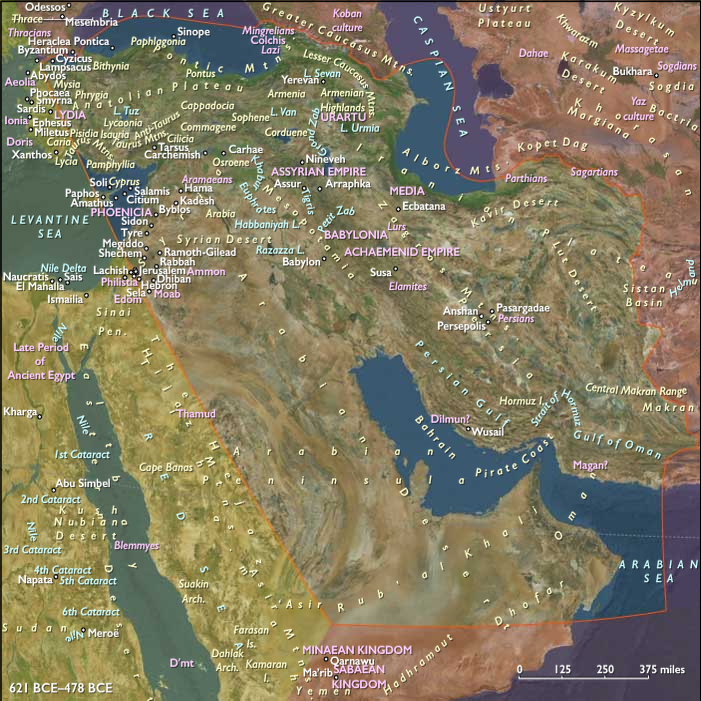
Years: 621BCE - 478BCE
Darius I revolutionizes the economy by placing it on a system of silver and gold coinage.
Trade is extensive, and under the Achaemenians an efficient infrastructure facilitates the exchange of commodities among the far reaches of the empire.
As a result of this commercial activity, Persian words for typical items of trade become prevalent throughout the Middle East and will eventually enter the English language; examples include asparagus, bazaar, lemon, melon, orange, peach, sash, shawl, spinach, tiara, and turquoise.
Trade is one of the empire's main sources of revenue, along with agriculture and tribute.
Other accomplishments of Darius's reign include codification of the data, a universal legal system upon which much of later Iranian law will be based, and construction of a new capital at Persepolis, where vassal states offer their yearly tribute at the festival celebrating the spring equinox.
In its art and architecture, Persepolis reflects Darius's perception of himself as the leader of conglomerates of people to whom he has given a new, single identity.
The Achaemenian art and architecture found here is at once distinctive and highly eclectic.
The Achaemenians take the art forms and the cultural and religious traditions of many of the ancient Middle Eastern peoples and combine them into a single form.
This Achaemenian artistic style is evident in the iconography of Persepolis, which celebrates the king and the office of the monarch.
Trade is extensive, and under the Achaemenians an efficient infrastructure facilitates the exchange of commodities among the far reaches of the empire.
As a result of this commercial activity, Persian words for typical items of trade become prevalent throughout the Middle East and will eventually enter the English language; examples include asparagus, bazaar, lemon, melon, orange, peach, sash, shawl, spinach, tiara, and turquoise.
Trade is one of the empire's main sources of revenue, along with agriculture and tribute.
Other accomplishments of Darius's reign include codification of the data, a universal legal system upon which much of later Iranian law will be based, and construction of a new capital at Persepolis, where vassal states offer their yearly tribute at the festival celebrating the spring equinox.
In its art and architecture, Persepolis reflects Darius's perception of himself as the leader of conglomerates of people to whom he has given a new, single identity.
The Achaemenian art and architecture found here is at once distinctive and highly eclectic.
The Achaemenians take the art forms and the cultural and religious traditions of many of the ancient Middle Eastern peoples and combine them into a single form.
This Achaemenian artistic style is evident in the iconography of Persepolis, which celebrates the king and the office of the monarch.
Locations
People
Groups
Topics
Subjects
Regions
Subregions
Years: 621BCE - 478BCE
Locations
People
Groups
Topics
Subjects
Regions
Subregions