
The Near East, 1936 to 1947 CE: …
Years: 1936 - 1947
The Near East, 1936 to 1947 CE: Escalating Nationalism, War, and Shifting Alliances
Egyptian Nationalism and Political Turmoil
Political tensions escalate dramatically in Egypt from 1936 onward. Prime Minister Ismail Sidky, previously a key opponent of the nationalist Wafd Party, negotiates with the British to withdraw troops from Egyptian cities, although the status of Sudan remains unresolved, sparking further nationalist agitation. Sidky's resignation in December 1946 leads to Mahmoud El Nokrashy becoming Prime Minister, who unsuccessfully appeals to the United Nations over Sudanese sovereignty. His demand for British evacuation and renegotiation of the 1936 Anglo-Egyptian Treaty triggers widespread anti-British demonstrations and violence in Cairo and Alexandria.
During the Second World War, British strategic interests dominate Egyptian politics. In 1942, facing Axis advances under General Erwin Rommel, the British compel King Farouk to appoint Wafdist leader Mustafa Nahhas as Prime Minister. This incident starkly illustrates British dominance and erodes the Wafd Party's credibility, already weakened by allegations of corruption from former member Makram Ubayd.
Emergence of Militant Nationalist Organizations
As mainstream nationalist parties like the Wafd lose popularity, more radical groups gain prominence. Young Egypt, established in 1933 by Ahmad Husayn, promotes a militant nationalism infused with fascist elements, including admiration for Nazi Germany. Its paramilitary wing, the Green Shirts, openly opposes British influence.
Meanwhile, the Muslim Brotherhood, founded by Hasan al Banna in 1928, grows significantly, advocating an Islamic revivalist state based on early Islamic principles. The Brotherhood organizes cells nationwide and develops a secret apparatus to conduct underground activities. These movements represent a new political landscape characterized by militancy and ideological rigor.
British-Egyptian Relations and the Second World War
The 1936 Anglo-Egyptian Treaty permits Britain to maintain military bases in the Suez Canal Zone, solidifying its strategic presence while exacerbating nationalist sentiments. Although nominally ending British capitulations and foreign judicial privileges, the treaty's limitations spur widespread discontent, weakening the Wafd Party.
The outbreak of the Second World War transforms Egypt into a strategic asset for Britain, although Egyptians view the conflict primarily as a European issue. British authorities closely manage Egyptian neutrality, particularly as Axis victories initially mount. The Sudan Defence Force (SDF) expands its role, notably contributing to Allied victories against Italian forces in East Africa and participating in the successful North African campaign.
Sudanese Nationalism and Administrative Reforms
Sudanese nationalism intensifies post-war, driven by the educated elite. The Graduates' General Conference in 1942 submits demands for self-determination and administrative reforms, rejected initially but subsequently prompting the British colonial administration to consider greater Sudanese participation in governance. In response to ongoing nationalist pressures, the British further modernize indirect rule and administrative structures, gradually preparing Sudan for self-governance.
Intensifying Conflict in Palestine
In Palestine, the mid-1930s see sharply increased violence due to heightened Arab resistance to Jewish immigration and Zionist settlement efforts. Adolf Hitler’s rise in Germany drives unprecedented numbers of Jewish refugees toward Palestine, leading to major violence, notably the Arab-Jewish riots of 1936. These conflicts lead the British to impose stricter immigration controls, exacerbating tensions.
The Nazi persecution in Europe profoundly impacts Palestine, with immigration reaching record highs in 1935. Arab fears that Palestine will become predominantly Jewish fuel significant resistance, shaping the region's increasingly volatile demographic and economic landscape.
Legacy of the Era: Prelude to Decolonization and Ongoing Strife
From 1936 to 1947, the Near East is shaped by rising nationalist fervor, World War II upheavals, and deepening colonial tensions. Britain's presence in Egypt and Sudan remains a focal point of nationalist struggle, as Egyptians and Sudanese intensify demands for complete sovereignty. In Palestine, the conflict between Arabs and Jews enters a more violent and irreversible stage, laying the foundations for future regional turmoil.
People
- Adolf Hitler
- Ahmed Hussein
- Erwin Rommel
- Farouk of Egypt
- Hassan al-Banna
- Ismail Sidky
- Mahmoud an Nukrashi Pasha
- Makram Ebeid
- Mostafa el-Nahas
- Saad Zaghloul
Groups
- Egyptians
- Arab people
- Jews
- Islam
- Ottoman Empire
- Palestine, Ottoman
- Britain (United Kingdom of Great Britain and Ireland)
- Egypt, British Protectorate of
- Zionism
- Sudan, Anglo-Egyptian
- Muslim Brotherhood, the
- United Nations, The (U.N.)
Topics
- Aliyah, Fifth
- Young Egypt Party (1933)
- Aliyah Bet
- Anglo-Egyptian Treaty Protests
- 1936–1939 Arab revolt in Palestine
- World War, Second (World War II)
Subjects
Regions
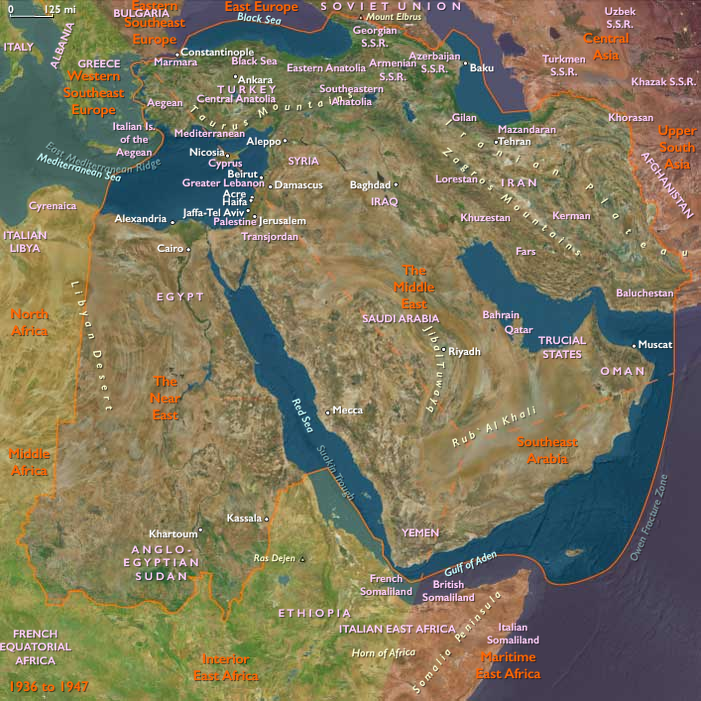
Subregions
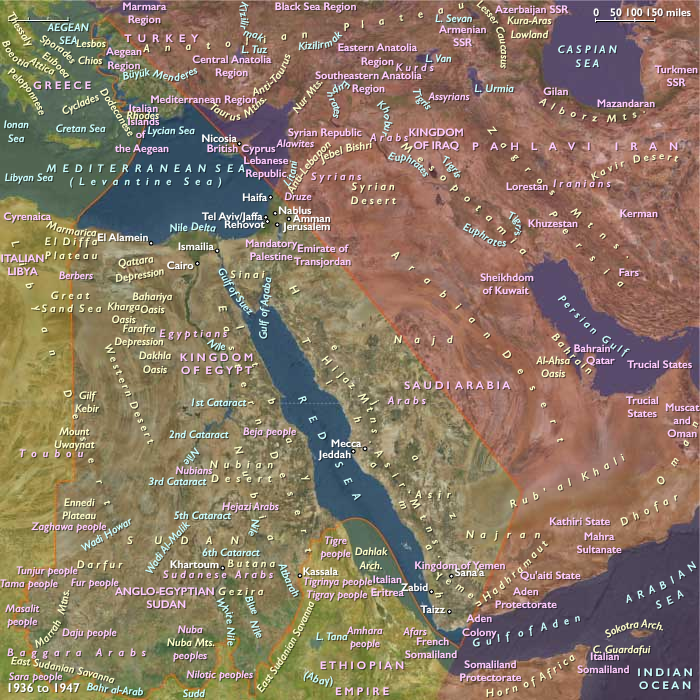
Related Events
Showing 10 events out of 6145 total
Years: 1936 - 1947
People
- Adolf Hitler
- Ahmed Hussein
- Erwin Rommel
- Farouk of Egypt
- Hassan al-Banna
- Ismail Sidky
- Mahmoud an Nukrashi Pasha
- Makram Ebeid
- Mostafa el-Nahas
- Saad Zaghloul
Groups
- Egyptians
- Arab people
- Jews
- Islam
- Ottoman Empire
- Palestine, Ottoman
- Britain (United Kingdom of Great Britain and Ireland)
- Egypt, British Protectorate of
- Zionism
- Sudan, Anglo-Egyptian
- Muslim Brotherhood, the
- United Nations, The (U.N.)
Topics
- Aliyah, Fifth
- Young Egypt Party (1933)
- Aliyah Bet
- Anglo-Egyptian Treaty Protests
- 1936–1939 Arab revolt in Palestine
- World War, Second (World War II)
Subjects
Regions
Subregions